NID Admissions 2027-28: Application Dates, Eligibility, Fees and Entrance Exam Guide

NID Admissions 2027-28 applications are open. Students planning to pursue design after Class 12 can submit their online application until 30 November 2026 at 11:59 pm IST. The NID DAT Prelims examination will be held on Sunday, 20 December 2026, for admission to the 2027-28 academic session. Applications must be submitted through the official NID admissions website.

For aspiring designers, the first step is understanding the programme options and admission requirements. The 2027-28 handbook covers Bachelor of Design (B.Des) and the 5.5-year Master of Design Integrated Pathway, with offerings depending on the institute.

At Pahal Design, we help students build their creative skills and approach design entrance preparation with a clear plan. This guide explains the NID admission process, important dates, eligibility, application fees, examination stages and preparation priorities.

NID Admissions 2027-28: Important Dates

Keep these dates in your calendar to stay on track with your application and preparation.


Admission activityDate and time
Online applications open10 September 2026
Last date to submit the application30 November 2026, 11:59 pm
Application correction window1 December 2026, 4:00 pm to 3 December 2026, 11:59 pm
DAT Prelims admit card downloadFrom 10 December 2026, 4:00 pm
NID DAT Prelims examinationSunday, 20 December 2026
One-time category-certificate correction window16 February 2027, 4:00 pm to 28 February 2027, 11:59 pm
DAT Prelims result16 March 2027, 4:00 pm
DAT Prelims marks retotalling window16 March 2027, 4:00 pm to 17 March 2027, 11:59 pm
DAT Mains admit card and examinationsTo be announced
DAT Mains resultsTo be announced
Separate online application for admissionTo be announced
Counselling, fee payment and document verificationTo be announced


All times are in IST. NID may revise the schedule, so check the official portal regularly. The published timetable does not list a late-fee application window. Source: NID Admissions Handbook, Section 3.

NID B.Des and Integrated M.Des: Understanding Your Options

Students searching for NID B.Des admission 2027 should carefully review the programme structure described in the current handbook.

NID Ahmedabad, Gandhinagar and Bengaluru

The handbook lists a 5.5-year Professional Education Master of Design programme — Integrated Pathway at NID Ahmedabad and its extension campuses in Gandhinagar and Bengaluru.

The programme comprises 11 semesters, with 15 disciplines across five design streams. It is covered by the admission route for students applying after Class 12 or an equivalent qualification.

NID Andhra Pradesh, Assam, Haryana and Madhya Pradesh

These institutes are listed under B.Des / 5.5-year Integrated M.Des in the handbook. Applicants must consult the respective institute’s website for its specific programmes, disciplines and category-wise seat availability.


InstituteOfficial website
NID Andhra PradeshVisit NID Andhra Pradesh
NID AssamVisit NID Assam
NID HaryanaVisit NID Haryana
NID Madhya PradeshVisit NID Madhya Pradesh


Before applying, confirm the degree title, programme duration and campus you are considering.

The independent 2.5-year specialised M.Des follows a separate admission route. The handbook states that candidates cannot apply for both that route and the B.Des/Integrated Pathway route because the examinations are scheduled simultaneously. Source: NID Admissions Handbook, Sections 2 and 4.

NID Eligibility 2027: Who Can Apply?

Applicants must meet both the educational qualification and age requirements.

Educational Qualification

Students who have passed Class 12 or will appear for their qualifying examination in the 2026-27 academic year can apply, subject to the handbook’s conditions.

Eligible school streams include:

  • Science
  • Commerce
  • Arts
  • Humanities

A particular school stream is not compulsory. Applicants with equivalent qualifications, diplomas or qualifications from outside India should check the recognised qualification requirements and whether an equivalence certificate is needed.

Age Limit for NID Admissions 2027-28


Applicant categoryMust be born on or after
Indian nationals: General and General-EWS1 July 2006
Indian nationals: OBC-NCL, SC and ST1 July 2003
Indian nationals: PwD1 July 2001
Foreign nationals: Overseas category1 July 2006


Check eligibility using your exact date of birth.

Requirements for Class 12 Appearing Students

Section 5.3 requires students appearing in Class 12 during 2026-27 to:

  • Appear for the qualifying examination before physical document verification.
  • Pass the qualifying examination in the first attempt.
  • Submit the qualifying marksheet on or before 15 July 2027.
  • Submit the prescribed undertaking where admission is provisional because results are pending.

The handbook specifies cancellation and fee-forfeiture consequences for uncleared results, backlogs, compartments, supplementary status or failure to fulfil the qualifying-result requirements. Source: NID Admissions Handbook, Section 5.

NID Application Fees 2027-28

The application fee depends on the applicant’s category and applicable concession.


Applicant groupApplication fee
General, General-EWS and OBC-NCL Indian applicants, subject to concessions below₹3,000
Female candidates, except SC, ST and PwD₹2,000
SC and ST candidates₹1,500
PwD candidates₹500
Third Gender applicants₹500
Overseas applicantsUS$125 equivalent, as specified by NID


Application fees are non-refundable and non-transferable. Bank transaction or convenience charges are additional.

For Overseas applicants, the handbook specifies conversion into rupees, rounded up to the next ₹100 at the time admissions are announced. Source: NID Admissions Handbook, application fee table.

The application fee is separate from tuition and other institutional charges. Check your preferred institute’s applicable fee notification for programme, hostel, mess and other expenses.

How to Apply for NID Admissions 2027-28

Complete your NID application through the official admissions portal.

  1. Read the admissions handbook. Check your programme, eligibility, category and required documents.
  2. Register online. Use an active email address and mobile number for OTP validation and future communication.
  3. Complete the application form. Enter the requested personal, educational and examination-related details.
  4. Upload your documents. Add your photograph, signature and applicable certificates in the prescribed formats.
  5. Review your details. Check your name, date of birth, category and examination-city preference.
  6. Pay the application fee. The handbook lists debit card, credit card and net banking as payment methods.
  7. Download the completed application. Save the auto-generated form after successful payment.

The application is considered complete when the auto-generated form can be viewed, downloaded or printed following successful payment.

Your name, date of birth, programme applied for, registered email address and registered mobile number cannot be changed. Keep the registered contact details active until 31 August 2027. Source: NID Admissions Handbook, Section 7.

Documents Required for NID Admission

Prepare your documents early so that the application process does not interrupt your examination preparation.

For the Initial Application

Depending on your category, the required uploads include:

  • Recent colour photograph.
  • Scanned signature.
  • EWS or OBC-NCL certificate.
  • SC or ST certificate.
  • Disability certificate or UDID card.
  • Applicable Third Gender identity documentation.
  • Valid foreign passport for Overseas applicants.

EWS and OBC-NCL certificates must follow the prescribed Central Government format, be issued in the candidate’s name on or after 1 April 2026, and use the applicable 2025-26 financial-year income. OBC-NCL applicants must also check the Central OBC list.

For Counselling and Verification

Keep your Class 10 and Class 12 marksheets, identity proof, date-of-birth proof and applicable certificates ready. Appearing students may also need the prescribed undertaking and first-attempt certificate.

Follow the latest instructions for originals, copies, translations and equivalence certificates. Source: NID Admissions Handbook, Sections 6, 7 and 9.7.

NID DAT 2027 Exam Pattern and Selection Process

The selection process consists of DAT Prelims and DAT Mains.

Stage 1: DAT Prelims

DAT Prelims is a paper-and-pencil/pen examination. Questions may involve text and visuals, and the question paper is in English only.

The examination duration will be stated in the admit card.

DAT Prelims marks are used only to shortlist candidates for DAT Mains. They do not contribute to the final merit calculation.

The handbook states that candidates equal to 2.5 times the available seats in each category will be shortlisted, subject to the tie-break policy.

Stage 2: DAT Mains

DAT Mains comprises:

  • Studio Sensitivity Test
  • In-Person Sensitivity Test

Candidates must appear for both components to be eligible for the merit list. Final merit is based on DAT Mains, with the component weightages to be announced later.

The detailed Mains format and dates are also awaiting announcement. Use the current instructions when released to guide your preparation. Source: NID Admissions Handbook, Section 8.

A Separate Admission Application Is Required After Mains

After DAT Mains results, eligible candidates must submit an online application for admission within the announced window.

This step is mandatory for participation in seat allotment. Completing the initial DAT application and examinations does not complete the later admission application.

Seat allotment depends on merit, category-wise availability and the preferences submitted. Source: NID Admissions Handbook, Section 9.6.

NID Integrated Pathway: Design Streams and Seats

The handbook lists 15 disciplines with nine seats each for the Integrated Pathway at NID Ahmedabad and its extension campuses. This gives a calculated total of 135 seats, excluding the separately listed Overseas seats.


Design streamDisciplines
Industrial DesignCeramic & Glass Design; Transportation & Automobile Design; Product Design
Communication DesignAnimation Film Design; Film & Video Communication; Graphic Design
Spatial Experience DesignExhibition Design; Furniture & Interior Design; Design for Retail Experience
Textile and Apparel DesignTextile Design; Apparel Design; Lifestyle Accessory Design
Digital Design FuturesDigital Game Design; Interaction Design; Information Design


Disciplines are distributed across Ahmedabad, Gandhinagar and Bengaluru. Check the handbook for the campus assigned to each discipline.

The 135-seat figure is not the combined intake of all participating NIDs. Other institutes’ programme and seat details must be checked separately. Source: NID Admissions Handbook, Section 4.

How to Prepare for NID DAT 2027

A useful preparation routine develops your ability to observe, generate ideas, communicate visually and explain design decisions.

The following are preparation suggestions, rather than an official topic-by-topic syllabus.

Build an Observation and Sketching Habit

Sketch everyday objects, people and spaces. Focus on proportion, perspective, composition and how things are used. Make brief notes about problems you notice and possible improvements.

Practise Creative Problem-Solving

Choose a practical problem and develop several solutions. Think about the user, available materials and constraints before selecting your strongest idea.

For example, explore how a student could carry fragile art materials safely on public transport. Explain how your solution addresses the problem.

Explore Materials and Three-Dimensional Forms

Work with paper, cardboard, clay and other accessible materials. Experiment with structure, balance, joining methods and usability.

Practise explaining your material choices and what you would change after testing a model.

Review Your Timed Practice

Complete practice tasks within a set time and review your work for clarity, relevance and completeness. Keep a record of recurring mistakes and revisit them regularly.

Explore Pahal Design’s NID practice-paper resources while checking the applicable year and current examination instructions.

Balance Entrance Preparation with Schoolwork

Class 12 qualification remains part of admission eligibility. Plan creative practice around your school schedule and prepare your application documents well before the deadline.

Prepare for NID 2027 with Pahal Design

At Pahal Design, we have supported aspiring designers since 1999. Our programmes cover design fundamentals, aptitude and creative skills, helping students develop a structured approach to entrance preparation. Learn more about Pahal Design.

Our NID coaching programmes offer practical training, study materials and personalised guidance. Students can explore classroom programmes, live online learning and mock-test resources according to their preparation needs.

Planning to apply for NID Admissions 2027-28? Speak with our counselling team about your goals, preparation level and available batches.

Book a FREE Career Counselling Session
Call or WhatsApp: 880022-6864
Enquire About NID Coaching on WhatsApp
Explore Pahal Design Programmes

Frequently Asked Questions About NID Admissions 2027-28

The answers below follow the NID Admissions Handbook 2027-28.

What is the last date to apply for NID 2027?

The last date to submit the online DAT application is 30 November 2026 at 11:59 pm IST.

When is the NID DAT 2027 entrance exam?

DAT Prelims for the 2027-28 admission session will be held on Sunday, 20 December 2026. DAT Mains dates will be announced later.

Can Commerce and Arts students apply for NID?

Yes. Students from any stream can apply if they meet the educational qualification and age requirements.

Can students appearing for Class 12 in 2027 apply?

Yes, students appearing during the 2026-27 academic year can apply, subject to the handbook’s conditions. They must fulfil the examination requirements and submit the qualifying marksheet by 15 July 2027.

Can I apply for the Integrated M.Des after Class 12?

The 5.5-year Integrated Pathway is covered by the after-10+2 application route. Check the programme offered by your preferred institute before applying.

Do DAT Prelims marks count in the final result?

No. DAT Prelims marks are used for shortlisting. Final merit is based on DAT Mains.

Is a separate application required after DAT Mains?

Yes. Eligible candidates must submit the later online admission application to participate in seat allotment.
NID M.Des Cut Off 2026–27: Last Rank & Score for All Disciplines

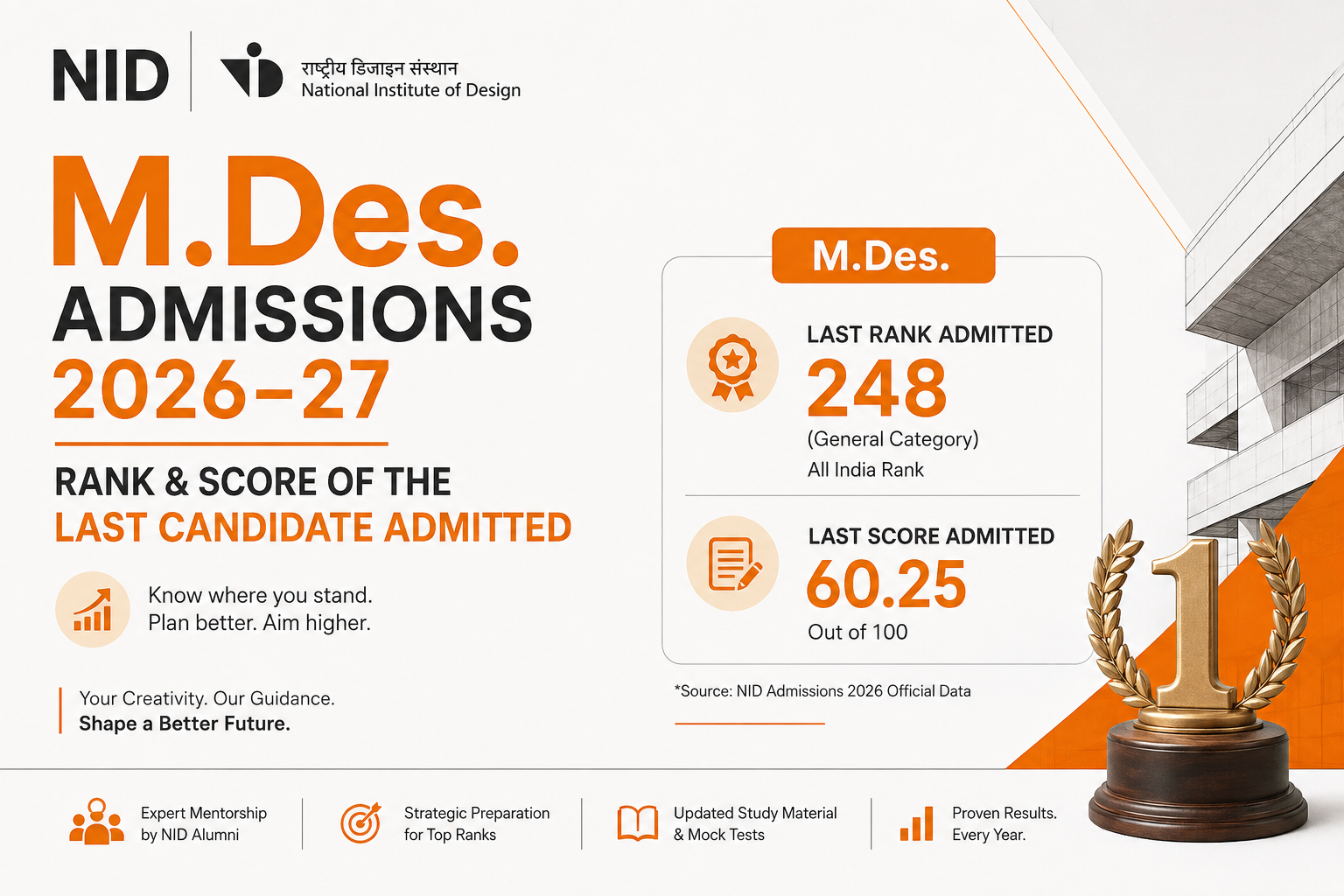
The National Institute of Design (NID) M.Des Admission 2026–27 data provides an important benchmark for aspirants preparing for admission to one of India’s most prestigious design institutes. NID has released the Rank and Score of the Last Candidate Allotted a Seat as on 17 July 2026, covering different M.Des disciplines and reservation categories.

For students planning to appear for NID DAT M.Des 2027, understanding the NID M.Des cut-off, closing rank and last admitted candidate’s score can help them evaluate the level of competition and set realistic preparation targets.

At Pahal Design, aspirants can use this previous admission data as a reference while preparing strategically for NID DAT Prelims, DAT Mains and the complete M.Des admission process.

NID M.Des Cut Off 2026–27: Discipline-Wise Open Category Closing Rank & Score

According to the official NID admission data, the following were the Open Category rank and score of the last candidate allotted a seat:

M.Des Discipline Open Rank Score
Animation Film Design 10 70.83
Ceramic & Glass Design 8 45.68
Furniture & Interior Design 18 48.18
Film & Video Communication 11 60.85
Graphic Design 9 65.10
Product Design 8 57.13
Textile Design 9 70.30
Apparel Design 14 54.70
Lifestyle Accessory Design 9 74.50
New Media Design 13 48.88
Photography Design 15 50.63
Strategic Design Management 8 76.28
Transportation & Automobile Design 12 56.75
Toy & Game Design 5 65.55
Digital Game Design 8 59.53
Design for Retail Experience 10 76.30
Information Design 11 61.88
Interaction Design 11 67.78
Universal Design 19 45.25

The official table shows substantial variation across disciplines. For example, Furniture & Interior Design closed at Open Rank 18 with a score of 48.18, Film & Video Communication at Rank 11 with 60.85, Graphic Design at Rank 9 with 65.10, and Product Design at Rank 8 with 57.13.

Similarly, Lifestyle Accessory Design recorded an Open score of 74.50, while Strategic Design Management recorded 76.28.

Among the disciplines listed in the official document, Design for Retail Experience had an Open score of 76.30, while Interaction Design had an Open score of 67.78.

Category-Wise NID M.Des Cut Off 2026–27

The official NID admission document provides closing rank and score information across:

  • OPEN
  • GEN-EWS
  • OBC-NCL
  • SC
  • ST
  • PwD
  • Overseas

The document also uses NE for “No Eligible Candidate” and NA for “No Applicant.”

This is important because the last allotted rank and score vary significantly depending on both the M.Des discipline and admission category.

NID Graphic Design Cut Off 2026

Graphic Design remains one of the key specialisations considered by NID M.Des aspirants.

For Graphic Design, the last allotted candidates recorded were:

Category Rank Score
Open 9 65.10
GEN-EWS 3 52.55
OBC-NCL 9 41.15
SC 5 53.58
ST 1 60.28
PwD 1 58.03
Overseas 1 62.48

These figures are taken from NID’s 2026–27 admission data.

NID Product Design Cut Off 2026

For Product Design, the Open Category last allotted candidate had:

Open Rank: 8 Score: 57.13

The same official data reports GEN-EWS Rank 2 at 51.85, OBC-NCL Rank 7 at 43.60, SC Rank 5 at 51.10, ST Rank 1 at 44.80 and PwD Rank 2 at 40.95.

Students targeting NID Product Design should remember that previous closing scores are useful benchmarks but should not be treated as guaranteed future cut-offs.

NID Interaction Design Cut Off 2026

For Interaction Design, the Open Category last allotted candidate had:

Open Rank: 11 Score: 67.78

The official document also records GEN-EWS Rank 2 at 49.23, OBC-NCL Rank 8 at 44.13, SC Rank 3 at 58.58 and ST Rank 1 at 53.80.

With the growing importance of UX, digital products and human-computer interaction, Interaction Design is an important discipline for students exploring postgraduate design education.

Which NID M.Des Discipline Had the Highest Open Score?

Based on the published last-allotted-candidate data, Design for Retail Experience recorded the highest Open score at 76.30, closely followed by:

Strategic Design Management – 76.28 Lifestyle Accessory Design – 74.50 Animation Film Design – 70.83 Textile Design – 70.30 Interaction Design – 67.78

The official discipline-wise figures show how widely scores can differ between programmes.

Importantly, a higher closing score should not automatically be interpreted as a programme being “better” or more difficult. Closing figures can be influenced by factors such as applicant performance, category and seat allocation.

What Does NID M.Des Closing Rank Mean?

The closing rank refers to the rank of the last candidate allotted a seat for the relevant discipline and category at the stated point in the admission process.

Therefore, if the Open Rank for a particular discipline is 10, it means the last Open-category candidate allotted a seat in the published data held Open Rank 10.

The NID document specifically states that these figures represent the “Rank and Score of the Last Candidate Allotted a Seat as on 17 July 2026.”

This distinction is important when students analyse previous-year NID cut-offs.

How to Use NID M.Des 2026 Cut-Off Data for 2027 Preparation

Previous admission data should primarily be used as a benchmark rather than a guaranteed target.

An aspirant preparing for the next NID M.Des admission cycle should aim to perform comfortably above previous closing-score levels rather than preparing only to match them.

Your preparation should focus on developing:

  • Strong design aptitude and visual thinking
  • Observation and analytical abilities
  • Creative problem-solving
  • Concept development
  • Visual communication and presentation
  • Discipline-specific understanding
  • Portfolio and project presentation skills where relevant
  • Consistent practice for the different stages of the NID admission process

Why NID M.Des Aspirants Need a Discipline-Specific Preparation Strategy

M.Des applicants generally come with more specialised interests than undergraduate design aspirants. A candidate interested in Graphic Design may require a different portfolio and conceptual orientation from someone targeting Transportation & Automobile Design, Strategic Design Management, Animation Film Design or Interaction Design.

Therefore, simply practising generic design entrance questions may not be sufficient.

Students should understand their preferred discipline, analyse previous NID admission trends and develop their creative thinking and presentation accordingly.

Prepare for NID M.Des with Pahal Design

Pahal Design provides preparation support for students aspiring to enter leading design institutes in India.

For NID M.Des aspirants, effective preparation requires more than attempting previous papers. Students need to build their ability to think creatively, communicate ideas visually, solve unfamiliar design problems and present concepts with clarity.

A structured preparation approach can include:

NID DAT Preparation: Regular practice to improve aptitude, creativity, observation and problem-solving.

Creative & Design Thinking: Developing original concepts rather than relying on repetitive solutions.

Portfolio Guidance: Helping students organise and present their design work effectively where portfolio preparation is relevant.

Mock Tests & Practice: Working under examination conditions to improve speed, decision-making and presentation.

Personalised Feedback: Identifying individual strengths and areas that require improvement.

The objective should not simply be to cross a previous cut-off but to build a strong overall performance for the NID admission process.

FAQs – NID M.Des Cut Off 2026–27

1. What is the NID M.Des cut off for 2026?

There is no single cut-off applicable to every M.Des discipline. The rank and score of the last candidate allotted a seat differ according to discipline and admission category. The official document provides separate figures for OPEN, GEN-EWS, OBC-NCL, SC, ST, PwD and Overseas candidates.

2. What was the NID Graphic Design closing rank in 2026?

For Graphic Design, the last allotted Open-category candidate had Rank 9 with a score of 65.10.

3. What was the NID Product Design closing rank in 2026?

For Product Design, the Open-category last allotted candidate had Rank 8 and a score of 57.13.

4. What was the NID Interaction Design closing rank?

For Interaction Design, the Open-category last allotted candidate had Rank 11 with a score of 67.78.

5. Which NID M.Des discipline had the highest Open closing score in the published 2026–27 data?

Among the disciplines listed, Design for Retail Experience had the highest Open score at 76.30, followed closely by Strategic Design Management at 76.28.

6. What do NE and NA mean in the NID cut-off table?

According to the official document, NE means “No Eligible Candidate” and NA means “No Applicant.”

7. Will the NID M.Des cut off remain the same next year?

No. Previous admission figures should only be treated as reference points. Closing ranks and scores can change from one admission cycle to another.

8. Is NID M.Des difficult to crack?

Admission is competitive because candidates are evaluated on design aptitude and creative abilities, and seats are discipline-specific. Consistent practice and a well-planned preparation strategy can help candidates improve their performance.

9. How should I prepare for NID M.Des 2027?

Start with design aptitude, observation, creative problem-solving, visual communication and regular timed practice. Aspirants should also understand their preferred M.Des discipline and develop relevant design skills and portfolio work where required.

10. Where can I prepare for NID M.Des entrance examination?

Students looking for structured NID M.Des coaching and design entrance preparation can explore Pahal Design for preparation, mentoring, practice and guidance for design entrance examinations.
Contact Us

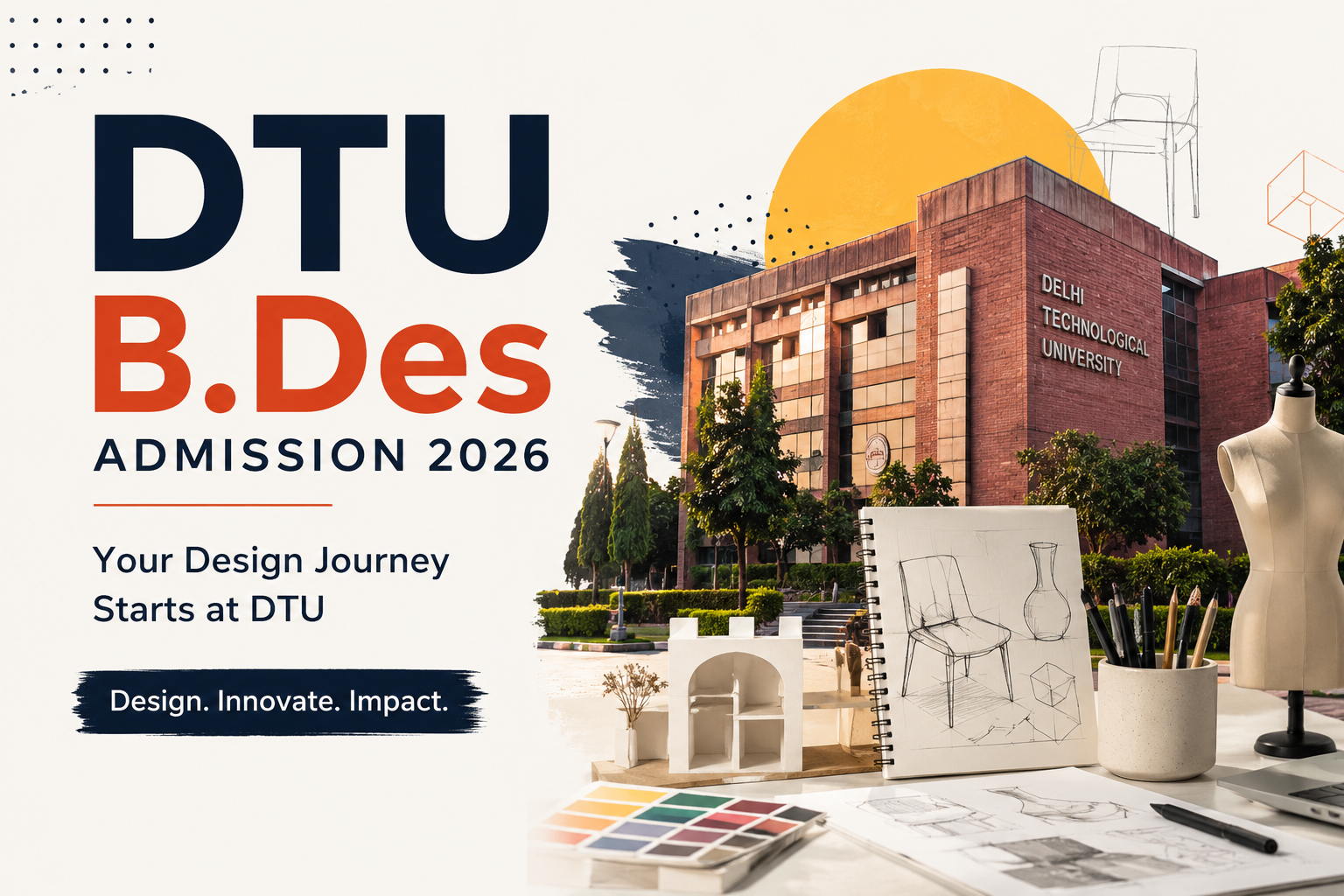
DTU B.Des Admissions 2026 First Round Counselling Announced: Complete Guide for UCEED Aspirants

If you appeared for UCEED 2026 and are aiming for a top design college in India, there’s an important update for you. Delhi Technological University (DTU) has officially released the B.Des (Bachelor of Design) First Round Counselling List for Admissions 2026–27, bringing exciting opportunities for design aspirants looking for admissions in one of India’s reputed public universities.

At Pahal Design, we understand how critical this stage is for students and parents. This guide will help you understand the counselling process, admission fees, required documents, deadlines, and what to do next.

DTU B.Des 2026 First Round Counselling – Key Highlights

According to the official notification released by DTU on 20 May 2026, the counselling process for selected candidates will be conducted at the Department of Design, Delhi Technological University, Delhi.

Important Dates

  • Counselling Reporting Date: 25 May 2026
  • Reporting Time: 10:00 AM to 11:00 AM
  • Last Date for Admission Fee Payment: 25 May 2026 (by 5:00 PM)

Admission Fee

Candidates selected in the first round must pay an admission fee of:

₹2,69,700

Payment Mode:

  • Demand Draft (DD) only
  • In favour of: Registrar, Delhi Technological University
  • Payable at: New Delhi

Documents Required for DTU B.Des Counselling 2026

Students must carry original documents for verification along with self-attested photocopies.

Required documents include:

  • DTU Application Form
  • UCEED 2026 Scorecard
  • Class 10 Marksheet
  • Class 10 Passing Certificate
  • Class 12 Marksheet
  • Class 12 Passing Certificate
  • Address Proof
  • Aadhaar Card
  • Category Certificate (if applicable)
  • Demand Draft for admission fee
  • Medical Certificate (DTU format)
  • 3 Passport Size Photographs

If Class 12 result is awaited, candidates can bring the admit card issued by the board.

DTU B.Des 2026 Cutoff Snapshot (First Round)

The first-round merit list reflects strong competition among design aspirants.

Delhi General Category

Top score selected:
191.08

Approximate closing score:
151.24

Outside Delhi General

Top score selected:
190.87

Approximate closing score:
179.58

This clearly indicates how competitive DTU B.Des admissions have become through UCEED.

Important Rules Students Must Know

DTU has clearly mentioned:

  • No extension in reporting or fee payment deadline
  • Admission subject to document verification
  • Wrong information may lead to cancellation
  • Missing the deadline may lead to seat forfeiture
  • Authority reserves the right to modify results if discrepancies arise

Why DTU B.Des is a Strong Option for Design Aspirants

DTU’s Bachelor of Design program is becoming increasingly popular because of:

Government University Advantage

Affordable compared to many private design colleges.

Strong Brand Value

DTU is among India’s well-known technical institutions.

UCEED-Based Admission

Merit-driven transparent selection process.

Growing Design Ecosystem

Better exposure to design innovation, interdisciplinary learning, and peer network.

Didn’t Make the DTU First List? Don’t Panic.

Design admissions don’t end with one list.

Many top design colleges across India still offer admissions based on:

  • UCEED scores
  • Portfolio reviews
  • Entrance tests
  • Direct admission counselling
  • Management quota opportunities (where applicable)

This is where expert guidance matters.

Get Expert Design Admission Counselling with Pahal Design

At Pahal Design, we help students with:

✅ College shortlisting
✅ Admission counselling
✅ Portfolio guidance
✅ Career roadmap planning
✅ Backup college options after NID / NIFT / UCEED
✅ Design course counselling across India

With 26 years of experience in design education, Pahal Design has guided thousands of aspirants toward successful careers in design.

Need Help with Design College Admissions 2026?

If you’re confused about:

  • Which design college suits your rank
  • Backup options after UCEED
  • Private vs government design colleges
  • Portfolio requirements
  • Admission deadlines

Connect with our expert counsellors today.

Pahal Design
🌐 www.pahaldesign.com
📞 8800-22-6864

NID PI & Sensitivity Test 2026: Real Student Experience & Actual Questions Asked

The NID PI (Personal Interview) and Sensitivity Test 2026 is one of the most important stages in the admission journey for aspiring designers. While many students prepare extensively for sketching, portfolio presentation, and design aptitude, the interview round often surprises them with deeply personal, intellectual, and situation-based questions.

At Pahal Design, we believe in preparing students for the real interview environment, not just theoretical practice.

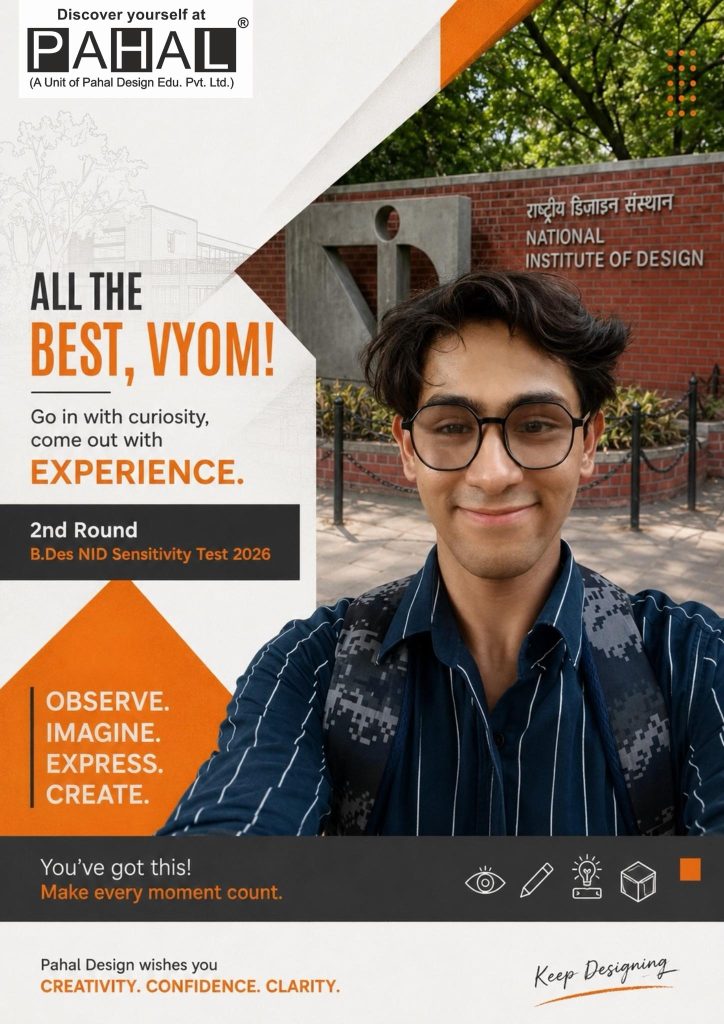
Here’s an authentic experience shared by our student Vyom, who recently appeared for the NID PI & Sensitivity Test 2026.

Real NID Interview Experience 2026 – Student Review

According to Vyom, the interview felt surprisingly comfortable and natural.

“The feeling was as if I was just having a casual conversation with a friend.”

This reflects something many successful NID candidates experience — the panel is not trying to intimidate you. Instead, they want to understand who you are, how you think, and whether you genuinely belong in design.

Actual Questions Asked in NID PI 2026

Here are some of the real questions Vyom faced during his interview:

1. Questions About Your State & Cultural Background

The panel asked:

  • Which state do you belong to?
  • What literature is associated with your state?
  • Can you recite a poem originating from your region?

Why They Ask This

NID values students with cultural awareness, originality, and rooted thinking. Design is deeply connected with context, storytelling, and heritage.

2. Questions About Gap Year / Drop Year

The interview panel asked:

  • Why did you take a drop year?
  • What did you do during this period?
  • How did you utilise your time?

What They Evaluate

They want to check:

  • maturity
  • honesty
  • commitment
  • growth mindset

A drop year is never a weakness if you can explain how it helped you evolve.

3. Indian Philosophy Based Questions

One of the most interesting discussions revolved around Indian philosophies.

Questions included:

  • Why are you interested in Indian philosophy?
  • Which philosophies have you read?
  • What did you learn from them?
  • How do those learnings influence your thinking?

Why This Matters

NID is interested in how deeply you think—not just what you know.

Students who demonstrate reflection, curiosity, and original interpretation often stand out.

4. Design Interest & Product Design Situation-Based Questions

The panel explored Vyom’s interest in design by asking:

  • Why design?
  • Why product design?
  • Situation-based problem-solving questions related to product design

These questions assess:

  • creativity
  • empathy
  • structured thinking
  • real-world design awareness

5. Family Background Questions

Common personal questions included:

  • What do your parents do?
  • What is your family background?

This helps the panel understand your upbringing, support system, and communication style.

6. Questions About Your City / Living Environment

They asked:

  • Where do you live?
  • What is your city known for?
  • Questions related to your surroundings

This is another way to judge observation skills and awareness of context—an essential design quality.

7. Reverse Question Opportunity

An interesting moment came when the panel asked Vyom to ask them questions.

This often happens to evaluate:

  • curiosity
  • confidence
  • maturity
  • genuine interest in NID

Good examples:

  • How does interdisciplinary collaboration work at NID?
  • What qualities do you see in successful NID students?
  • How does product design education evolve with emerging technologies?

8. Portfolio & Background Questions

Vyom also shared:

“They asked about my background most of the time and some questions related to my works.”

This means your portfolio should never just look visually good—you must be ready to explain:

  • your thought process
  • material choices
  • challenges faced
  • iterations
  • learnings

Key Learning from This NID Interview Experience

This real experience clearly shows that NID interviews are not rapid-fire GK sessions.

They are conversations designed to understand:

✔ your personality
✔ your awareness
✔ your design mindset
✔ your communication skills
✔ your curiosity
✔ your cultural depth
✔ your authenticity

Pahal Design’s Expert Tips for NID PI 2026 Aspirants

Based on years of mentoring NID aspirants, here’s what we recommend:

Prepare Your Personal Story

Be clear about:

  • who you are
  • your background
  • why design
  • why NID
  • why your chosen specialization

Read Beyond Design

Explore:

  • Indian philosophy
  • culture
  • literature
  • current design trends
  • social observations

Be Honest About Drop Years

Panels appreciate authenticity more than rehearsed answers.

Practice Situation-Based Thinking

Product design aspirants especially should prepare for:

  • usability problems
  • empathy scenarios
  • redesign challenges
  • real-life problem solving

Ask Smart Questions

Prepare 2–3 thoughtful questions for the panel.

Why Pahal Design for NID Preparation?

For over 26 years, Pahal Design has mentored thousands of design aspirants for:

  • NID
  • NIFT
  • UCEED
  • CEED
  • NATA
  • BFA
  • JEE Paper 2

Our preparation includes:

  • NID mock interviews
  • portfolio guidance
  • sensitivity test mentoring
  • studio test preparation
  • design aptitude development
  • one-to-one mentoring

Final Thoughts

Vyom’s experience proves one important thing:

The NID interview is less about perfect answers and more about authentic conversations.

If you understand yourself, think deeply, stay observant, and communicate honestly—you already have a strong foundation.

If you’re preparing for NID DAT Mains 2026 or NID 2027, structured mentorship can make a significant difference.

Start Your NID Preparation with Pahal Design

🌐 www.pahaldesign.com
📞 8800-22-6864

Join India’s Best Online Design Entrance Coaching for 2026–27 Admissions – Pahal Design

If you are dreaming of getting into NID, NIFT, IIT-UCEED, IIT-CEED, NATA, JEE Paper 2, or top BFA colleges, the right guidance can make all the difference.

At Pahal Design, we bring 26 years of excellence in design entrance coaching, helping thousands of students transform their creativity into successful careers.

Our Online Live Interactive Classes for the 2026–27 batch are specially designed for students who want expert mentorship, structured preparation, flexibility, and proven results—all from the comfort of home.

Why Choose Pahal Design Online Coaching?

1. Live Interactive Learning

Unlike recorded courses, our classes are fully live and interactive, allowing students to:

  • Ask questions in real-time
  • Get immediate faculty feedback
  • Participate in creative discussions
  • Solve doubts instantly
  • Stay motivated through structured mentorship

This creates a classroom-like experience online.

2. Expert Faculty from Top Design Institutes

Learn from experienced mentors with backgrounds from:

  • NID
  • NIFT
  • IIT Design Programs
  • CEPT
  • JJ College of Art
  • Industry Professionals

Our faculty understand exactly what design entrance exams demand.

3. Preparation for Multiple Design Entrance Exams

Our online coaching covers complete preparation for:

NID Coaching

Preparation for:

  • Design Aptitude
  • Creative Thinking
  • Sketching
  • Studio Test Preparation
  • Design Problem Solving

NIFT Coaching

Complete preparation for:

  • CAT
  • GAT
  • Situation Test
  • Portfolio Guidance
  • Interview Preparation

IIT-UCEED Coaching

Comprehensive coaching for:

  • Visualisation & Spatial Ability
  • Observation Skills
  • Analytical & Logical Reasoning
  • Design Thinking
  • Drawing & Sketching

IIT-CEED Coaching

Advanced preparation for:

  • Design Aptitude
  • Analytical Ability
  • Problem Solving
  • Sketching
  • Product Thinking

NATA Coaching

Structured training for:

  • Architecture Aptitude
  • Perspective Drawing
  • Visual Reasoning
  • Mathematics
  • Architectural Awareness

JEE Paper 2 Coaching

Focused preparation for:

  • B.Arch Entrance
  • Drawing Test
  • Aptitude
  • Mathematics
  • Visualization

BFA Entrance Coaching

Preparation for Fine Arts admissions:

  • Creative Drawing
  • Composition
  • Sketching
  • Colour Theory
  • Practical Art Training

Benefits of Pahal Design Online live Classes 2026

Personalized Mentoring

Every student gets:

  • Individual attention
  • Performance tracking
  • Personalized feedback
  • Exam strategy guidance
  • Career counselling

Structured Study Material

Students receive:

  • Design study notes
  • Practice sheets
  • Sketching assignments
  • Mock tests
  • Previous year questions
  • Creative exercises

Proven Results

Pahal Design has consistently delivered excellent results in:

  • NID
  • NIFT
  • UCEED
  • CEED
  • NATA
  • BFA
  • Architecture Admissions

Thousands of successful students have built their careers through our mentorship.

Who Should Join?

This course is ideal for:

✅ Class 11 students
✅ Class 12 students
✅ Gap year students
✅ College students preparing for CEED
✅ Architecture aspirants
✅ Fine Arts aspirants
✅ Working professionals switching to design careers

Why Online Coaching Works Better Today

Online learning provides:

  • Flexibility
  • Time savings
  • Access to top faculty from anywhere in India
  • Recorded revision support
  • Better consistency
  • Personalized doubt-solving

Students from Delhi, Gurgaon, Noida, Jaipur, Lucknow, Chandigarh, Patna, Bengaluru and across India can learn with Pahal Design.

About Pahal Design

Pahal Design is one of India’s most trusted design coaching institutes with 26 years of experience in design education.

We specialize in:

  • NID Coaching
  • NIFT Coaching
  • UCEED Coaching
  • CEED Coaching
  • NATA Coaching
  • JEE B.Arch / Paper 2 Coaching
  • Fine Arts Entrance Preparation

Our mission is simple:
Transform creative students into successful designers.

Admissions Open for 2026–27 Batch

Seats are limited for our Online Live Interactive Classes.

If you are serious about cracking India’s top design entrance exams, this is the right time to begin.

📞 Call Now: 8800-22-6864
🌐 Website: www.pahaldesign.com

FAQs

Which is the best online coaching for NID preparation?

Pahal Design offers comprehensive online coaching for NID with live classes, expert faculty, studio preparation, and mentorship.

Does Pahal Design provide coaching for IIT-UCEED and IIT-CEED?

Yes, Pahal Design provides structured coaching for both IIT-UCEED and IIT-CEED.

Is NATA coaching available online?

Yes, students can prepare for NATA through live online interactive classes at Pahal Design.

Does Pahal Design offer JEE Paper 2 coaching?

Yes, we provide complete preparation for JEE Paper 2 (B.Arch).

Can BFA aspirants join?

Absolutely. Dedicated Fine Arts entrance coaching is available.

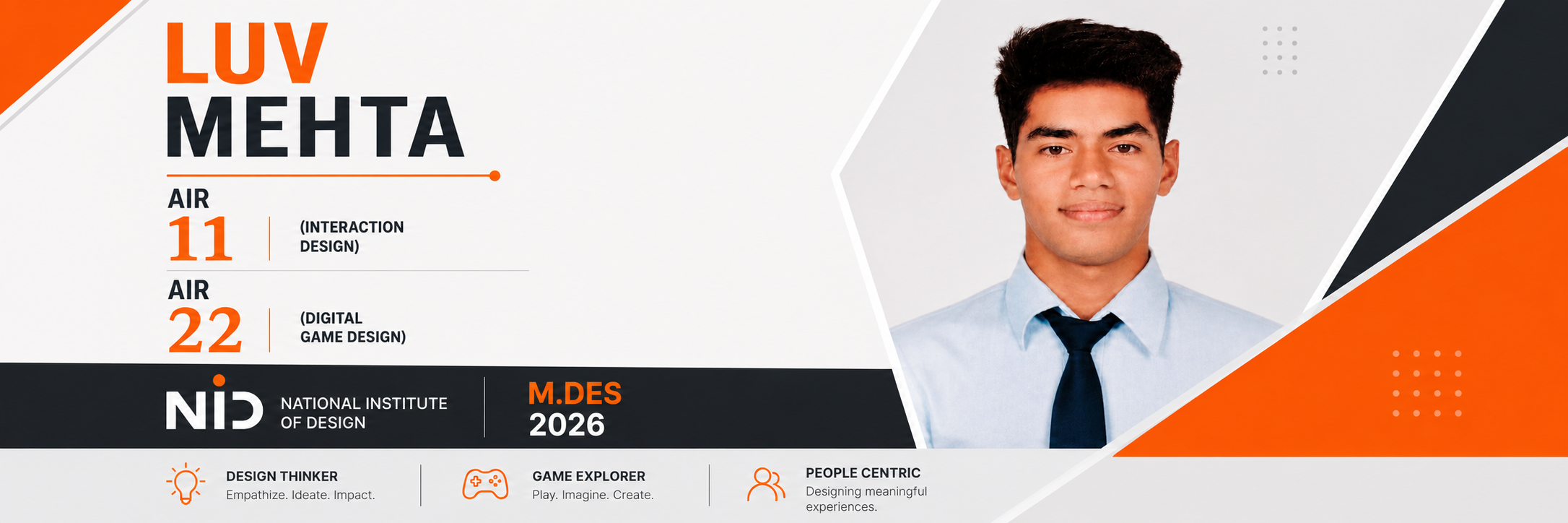
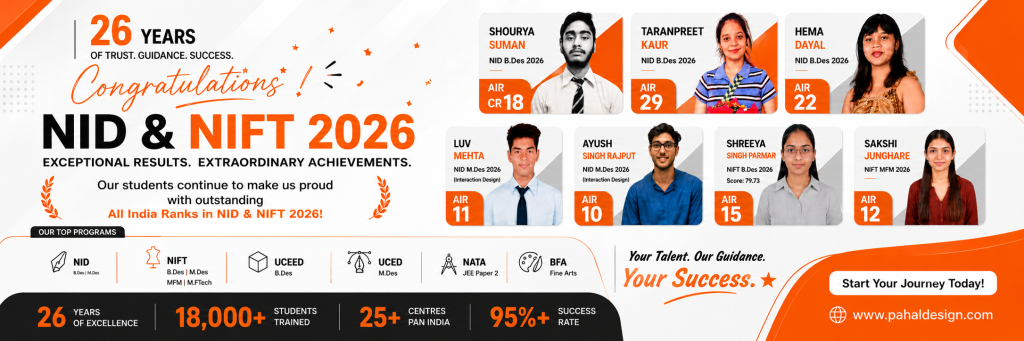
Pahal Design Celebrates Outstanding NID M.Des 2026 Success – Luv Mehta Secures AIR 11 & AIR 22

Success in design education comes from creativity, discipline, innovation, and the right mentorship. Pahal Design proudly celebrates the exceptional achievement of Luv Mehta, who has delivered an outstanding performance in NID M.Des 2026, securing:

AIR 11 – Interaction Design
AIR 22 – Digital Game Design

This remarkable success reflects not only Luv’s dedication and creative excellence but also Pahal Design’s commitment to building future design leaders.

Luv Mehta’s Inspiring NID M.Des 2026 Success Story

The National Institute of Design (NID) is one of India’s most prestigious design institutions, and cracking the NID M.Des Entrance Exam is a dream for thousands of design aspirants every year.

Achieving top ranks in specialized domains such as Interaction Design and Digital Game Design requires:

  • Strong design thinking
  • User-centered problem solving
  • Creative ideation
  • Visual communication skills
  • Portfolio excellence
  • Interview confidence
  • Strategic exam preparation

Luv Mehta’s success demonstrates what focused preparation and expert mentorship can achieve.

At Pahal Design, we are proud to have supported this inspiring journey.

About NID M.Des Entrance Examination 2026

The NID Master of Design (M.Des) entrance process is one of the most competitive design admissions in India.

The selection process evaluates candidates through:

Design Aptitude Test

Candidates are assessed on:

  • Creativity
  • Concept development
  • Visualization
  • Problem solving
  • Observation
  • Design sensitivity
  • Communication skills

Studio Test / Interview 2026

Shortlisted candidates are evaluated on:

  • Portfolio presentation
  • Design process understanding
  • Innovation mindset
  • Practical thinking
  • Communication and articulation

Success requires much more than theoretical preparation.

Why This Achievement Matters

Securing AIR 11 in Interaction Design and AIR 22 in Digital Game Design places Luv Mehta among India’s top design talents.

Interaction Design

Interaction Design focuses on creating meaningful digital experiences through:

  • UX/UI thinking
  • User behavior understanding
  • Interface systems
  • Human-centered design
  • Digital product experiences

Digital Game Design

Digital Game Design requires expertise in:

  • Storytelling
  • Gameplay thinking
  • Visual creativity
  • User engagement
  • Interactive systems
  • Design innovation

Excelling in both demonstrates remarkable versatility.

Why Students Choose Pahal Design for NID Coaching 2027

For over 26 years, Pahal Design has helped thousands of students secure admissions in top design institutes.

Expert Mentorship

Guidance from experienced faculty with strong academic and creative backgrounds.

Portfolio Development

Structured support to build compelling portfolios.

Studio-Based Creative Learning

Hands-on training focused on real design thinking.

Mock Tests & Interview Preparation

Comprehensive exam simulations and interview practice.

Individual Attention

Personal mentoring for each aspirant.

Proven Results

Consistent success across:

  • NID
  • NIFT
  • UCEED
  • CEED
  • NATA
  • BFA Entrance Exams

Preparing for NID M.Des 2027? Start Now

If you are planning to appear for NID M.Des 2027, early preparation creates a major advantage.

A strong preparation strategy should include:

✅ Design aptitude development
✅ Creative problem solving
✅ Portfolio building
✅ Studio test preparation
✅ Interview mentorship
✅ Mock assessments
✅ Conceptual design thinking

Pahal Design – India’s Trusted NID Coaching Institute

Whether you are targeting:

  • NID M.Des
  • NID B.Des
  • NIFT
  • UCEED
  • CEED
  • NATA
  • BFA

Pahal Design offers structured coaching programs to help you succeed.

🌐 Website: www.pahaldesign.com
📞 Call: 8800-22-6864

Final Words

Luv Mehta’s exceptional success in NID M.Des 2026 is an inspiration for every aspiring designer.

At Pahal Design, we celebrate not just results—but creative journeys that shape future innovators.

Congratulations, Luv Mehta!

You dream it. We design the path.

FAQ’s

Is Pahal Design good for NID M.Des coaching?

Yes, Pahal Design is one of India’s leading design coaching institutes with proven results in NID, NIFT, UCEED, and CEED.

What is a good rank in NID M.Des?

A top AIR rank significantly improves admission opportunities in preferred disciplines and campuses.

How should I prepare for NID M.Des?

Focus on design aptitude, creativity, portfolio, interview preparation, and expert mentoring.

Does Pahal Design provide online NID coaching?

Yes, both online and offline coaching options are available.

Which design specializations are available in NID M.Des?

Specializations include Interaction Design, Product Design, Digital Game Design, Communication Design, and others depending on NID campuses

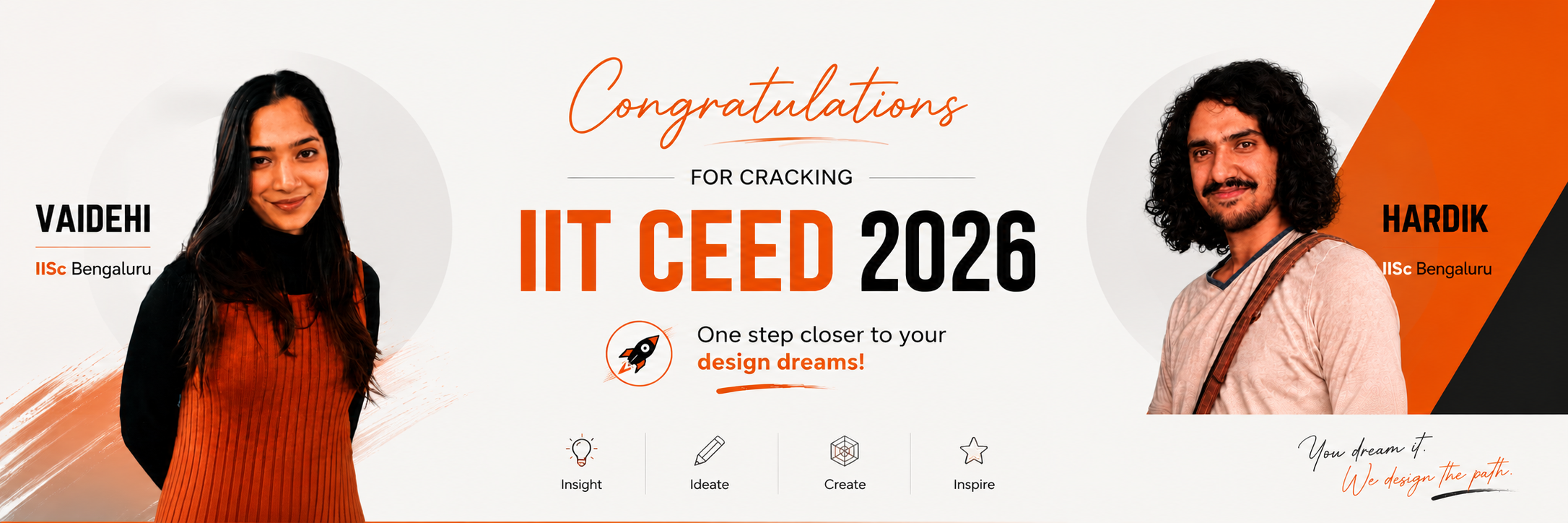
Pahal Design Celebrates IIT CEED 2026 Success: Vaidehi & Hardik Crack CEED with IISc Bengaluru Admissions

Success in design entrance exams is not just about talent—it’s about the right mentorship, structured preparation, creative thinking, and consistent practice. Pahal Design proudly celebrates the exceptional success of Vaidehi and Hardik, who have successfully cracked IIT CEED 2026 and secured admission to the prestigious Indian Institute of Science (IISc), Bengaluru for their Master of Design journey.

This remarkable achievement once again reinforces why Pahal Design continues to be one of India’s most trusted institutes for CEED, UCEED, NID, NIFT, and design entrance exam preparation.

Vaidehi & Hardik’s Inspiring CEED 2026 Journey

Cracking the Common Entrance Examination for Design (CEED) is a dream for thousands of design aspirants across India. With intense competition and evolving exam patterns, only candidates with strong conceptual clarity, creativity, visualization skills, aptitude mastery, and portfolio understanding stand out.

This year, Pahal Design proudly congratulates:

Vaidehi – IISc Bengaluru

Vaidehi’s achievement in securing admission through IIT CEED 2026 reflects her dedication, design thinking skills, and disciplined preparation under expert mentorship.

Hardik – IISc Bengaluru (M.Des Product Design)

Hardik’s selection for Master of Design (Product Design) at IISc Bengaluru demonstrates exceptional design aptitude, problem-solving ability, and creative excellence.

Their journeys are proof that the right coaching ecosystem can transform talent into success.

Why IIT CEED is One of India’s Toughest Design Entrance Exams

The Common Entrance Examination for Design (CEED) is conducted for admission into postgraduate design programs at premier institutes like:

  • IISc Bengaluru
  • IIT Bombay
  • IIT Delhi
  • IIT Guwahati
  • IIT Hyderabad
  • IIT Kanpur
  • IIITDM Jabalpur

CEED evaluates:

  • Design aptitude
  • Visualization skills
  • Creativity
  • Logical reasoning
  • Observation
  • Analytical ability
  • Problem-solving approach
  • Communication through design sketches

Because of its unique evaluation style, aspirants need specialized guidance—not conventional academic coaching.

How Pahal Design Helps Students Crack CEED 2027

At Pahal Design, we focus on building real design capabilities rather than rote preparation.

Our CEED Preparation Includes:

✅ Design aptitude mastery
✅ Sketching & visualization training
✅ Product design problem-solving
✅ Creativity enhancement exercises
✅ Mock tests based on latest CEED pattern
✅ Portfolio mentoring
✅ Interview preparation
✅ Personal mentorship by expert faculty
✅ Studio-based creative learning

With 26+ years of excellence, Pahal Design has mentored thousands of successful design aspirants.

Why Students Choose Pahal Design for CEED Coaching 2027

1. Expert Faculty

Learn from mentors with strong academic and industry design backgrounds.

2. Structured Curriculum

A step-by-step preparation model covering aptitude, creativity, sketching, and portfolio.

3. Mock Test Ecosystem

Practice with exam-level simulations.

4. Personalized Mentorship

Individual performance tracking and guidance.

5. Proven Results

Consistent selections in CEED, UCEED, NID, NIFT, and top design institutes.

CEED 2027 Aspirants: Start Your Preparation Early

If you are targeting CEED 2027, this is the ideal time to begin preparation.

Strong CEED preparation requires:

  • Creativity development
  • Design sketching practice
  • Analytical aptitude
  • Product design understanding
  • Portfolio building
  • Interview readiness

Starting early gives a major competitive advantage.

Join Pahal Design for CEED Coaching 2027

Whether you are preparing for:

  • IIT CEED
  • UCEED
  • NID DAT
  • NIFT Entrance
  • NATA
  • BFA Entrance Exams

Pahal Design offers structured programs for every design aspirant.

🌐 Website: www.pahaldesign.com
📞 Call: 8800-22-6864

Final Words

Vaidehi and Hardik’s success is not just their achievement—it’s inspiration for every future designer dreaming of top design institutes.

At Pahal Design, we believe:

“You dream it. We design the path.”

Congratulations once again to our IIT CEED 2026 achievers!

FAQ’s

Is Pahal Design good for IIT CEED coaching?

Yes, Pahal Design is among India’s leading design coaching institutes with structured CEED preparation, expert mentorship, mock tests, and portfolio guidance.

What is IIT CEED?

CEED (Common Entrance Examination for Design) is a national-level entrance exam for postgraduate design admissions in IISc and IITs.

When should I start CEED preparation?

Ideally 6–12 months before the exam, depending on your design fundamentals.

Does Pahal Design offer online CEED coaching?

Yes, Pahal Design offers both online and offline coaching programs.

Which colleges accept CEED scores?

IISc Bengaluru, IIT Bombay, IIT Delhi, IIT Hyderabad, IIT Guwahati, IIT Kanpur, and other leading institutes.

What is the NID B.Des In-Person Sensitivity Test?

Download Admit Card of B.Des. TEST II: In-Person Sensitivity Test.

ADMISSIONS HANDBOOK 2026-27

The NID B.Des In-Person Sensitivity Test is the second stage of the National Institute of Design (NID) admission process for Bachelor of Design (B.Des) aspirants who qualify the NID DAT Prelims. This stage is designed to assess a candidate’s practical design abilities, creativity, observation skills, and problem-solving approach beyond written aptitude testing.

Unlike the prelims, which focus on design aptitude through pen-and-paper questions, the NID In-Person Sensitivity Testevaluates how well students think, create, and communicate design ideas in real-time.

If you are preparing for NID Admission 2026, understanding this stage can significantly improve your preparation strategy.

Why Does NID Conduct the In-Person Sensitivity Test?

Design is not just about drawing well—it is about understanding people, solving real-world problems, and thinking creatively.

The NID B.Des Sensitivity Test helps assess qualities that are essential for a successful design student, such as:

  • Creative thinking and originality
  • Observation and analytical ability
  • Visualisation skills
  • Hands-on model-making capability
  • Material experimentation
  • User-centered problem solving
  • Communication and concept explanation
  • Sensitivity toward human needs and environments

This stage ensures that shortlisted candidates possess the mindset required for professional design education.

Meaning of “Sensitivity” in NID Design Assessment

In design education, sensitivity refers to how thoughtfully a student responds to design problems.

This includes sensitivity toward:

User Needs

Understanding who will use the product or solution.

Example:
Designing furniture for:

  • Children
  • Senior citizens
  • Differently-abled users

Aesthetic Awareness

Understanding:

  • balance
  • form
  • colour harmony
  • composition
  • visual appeal

Environmental Awareness

Thinking about:

  • sustainability
  • material usage
  • practical constraints

Social Sensitivity

Considering:

  • cultural relevance
  • emotional impact
  • usability in daily life

NID wants students who can design with empathy—not just creativity.

What Happens in the NID In-Person Sensitivity Test?

The exact format may vary each year, but the assessment generally includes practical design challenges.

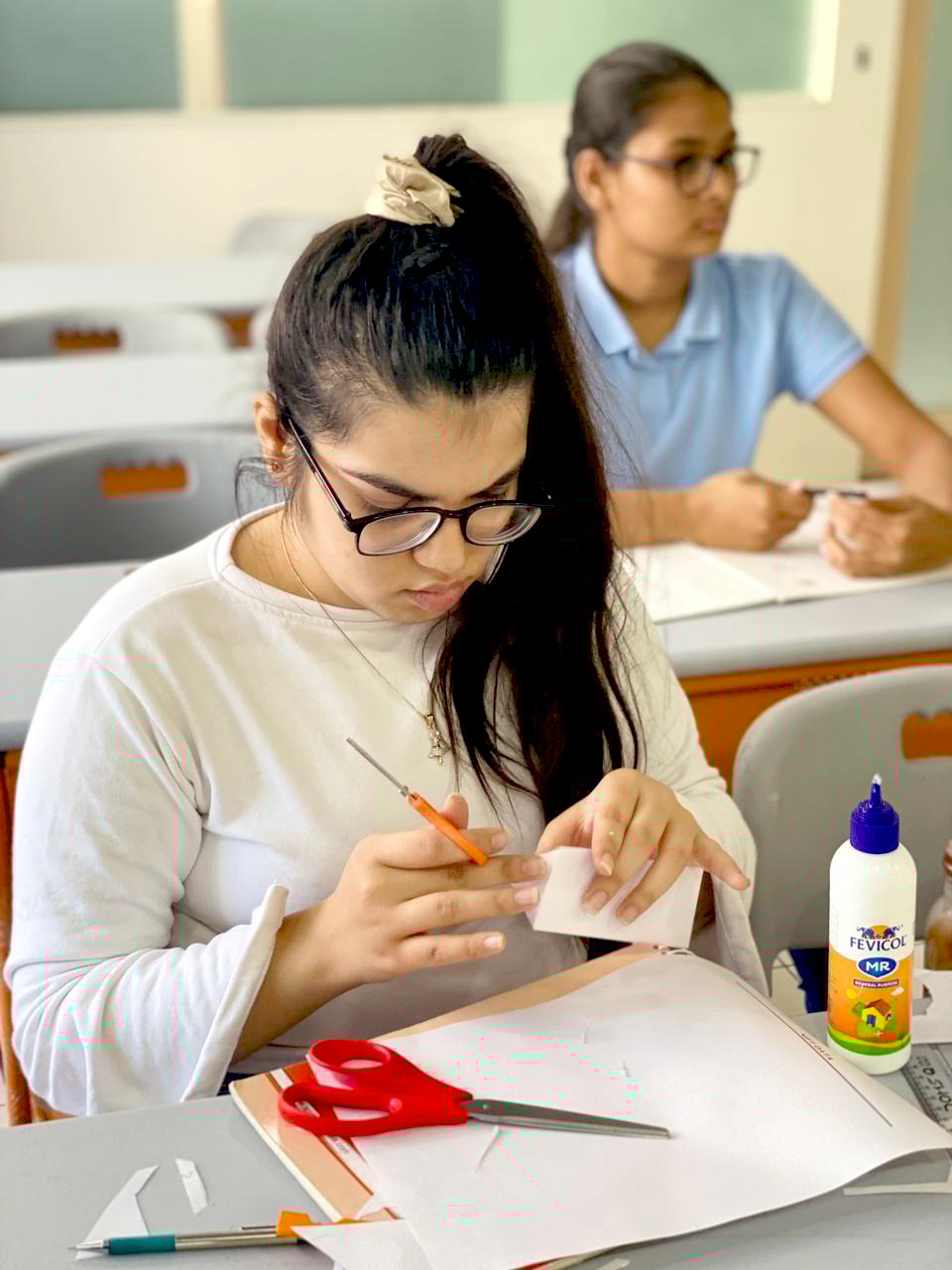
1. Studio Test / Model Making

Candidates may receive basic materials like:

  • paper
  • cardboard
  • wire
  • straws
  • foam sheets
  • clay
  • sticks
  • adhesives

Task examples:

  • Build a desk organizer
  • Create a wearable accessory
  • Design a bridge structure
  • Make a toy concept

The focus is on idea generation, execution, and innovation.

2. Observation-Based Exercises

These tasks evaluate visual awareness.

Examples:

  • Object drawing from observation
  • Memory sketching
  • Visual interpretation
  • Shape analysis

This tests your ability to notice details accurately.

3. Sketching & Concept Visualisation

Students may be asked to:

  • create perspective drawings
  • develop concept sketches
  • design storyboard sequences
  • communicate product ideas visually

The emphasis is on clarity of thought, not artistic perfection.

4. Concept Explanation / Interaction

Candidates may need to explain:

  • design concept
  • target user
  • functionality
  • reasoning behind design decisions

Strong communication can make a major difference.

Skills Evaluated in NID B.Des Sensitivity Test

The selection panel typically assesses:

Creativity

Can you think differently?

Innovation

Can you generate practical yet original ideas?

Problem Solving

How do you approach design challenges?

Material Handling

Can you create workable prototypes?

Time Management

Can you execute under exam pressure?

Communication

Can you explain your design confidently?

Empathy

Do you think from the user’s perspective?

Sample NID Sensitivity Test Questions

Here are some realistic examples:

  • Design a school bag for primary students.
  • Create packaging using newspaper only.
  • Build a low-cost toy for visually impaired children.
  • Redesign a water bottle for cyclists.
  • Create a desk accessory from limited materials.
  • Design a foldable furniture concept.

Practicing such exercises improves performance significantly.

How to Prepare for NID B.Des In-Person Sensitivity Test 2026

Practice Model Making Daily

Work with:

  • paper
  • cardboard
  • clay
  • straws
  • wire

Improve speed and creativity.

Improve Observation Skills

Practice:

  • object sketching
  • perspective drawing
  • visual memory exercises

Solve Design Challenges

Attempt one practical design brief every day.

Example:
“Design a lunchbox for school children.”

Learn User-Centered Design Thinking

Always ask:

  • Who is the user?
  • What problem am I solving?
  • Is the solution practical?
  • Can it be improved?

Practice Explaining Concepts

Even strong ideas fail if poorly presented.

Practice speaking about:

  • your concept
  • user need
  • functionality
  • innovation

Common Mistakes Students Make

Avoid these mistakes:

  • focusing only on neatness
  • ignoring usability
  • weak time management
  • copying generic ideas
  • poor model finishing
  • not explaining the design logic
  • forgetting the target user

Is NID Sensitivity Test Difficult?

Yes, because competition is intense.

However, students with consistent practical preparation perform well.

This round is less about perfect artwork and more about:

  • smart thinking
  • originality
  • practical creativity
  • user empathy

Final Thoughts

The NID B.Des In-Person Sensitivity Test 2026 is one of the most important stages of the admission process for design aspirants.

If you want to crack NID, focus not only on drawing but also on practical creativity, observation, design thinking, and communication.

With structured preparation and regular practice, this stage becomes highly manageable.


Summer break often feels like a well-earned pause—but what if it could also become the turning point for your future? Instead of letting these months slip away, you can use this time to unlock your creative potential and take your first step toward a successful design career. At Pahal Design, summer isn’t just a break—it’s an opportunity.

Why Summer is the Best Time to Start Your Design Journey

Most students spend their summer relaxing, traveling, or catching up on hobbies. While that’s important, this period also offers uninterrupted time to explore new skills, build discipline, and get ahead academically.

For students of Class 10th, 11th, and 12th, this is the perfect moment to:

  • Discover your creative strengths
  • Learn foundational design concepts
  • Begin preparation for competitive design entrance exams

Starting early gives you a clear advantage when it comes to building a strong portfolio and understanding the design field.

Turn Creativity into a Career

Design is no longer just an artistic pursuit—it’s a thriving career path with global opportunities. Fields like fashion design, interior design, product design, and visual communication are growing rapidly.

At Pahal Design, students are guided to:

  • Transform raw creativity into structured skills
  • Understand real-world design applications
  • Build confidence through hands-on learning

This early exposure helps you make informed career decisions and stand out in competitive environments.

What You’ll Gain from a Summer Design Program

Joining a structured summer course can significantly boost your learning curve. At Pahal Design, the focus is on building both skills and clarity.

Key Benefits:

  • Creative Thinking & Visualization Skills
    Learn how to think like a designer and visualize ideas effectively.
  • Sketching & Design Fundamentals
    Master the basics that form the backbone of all design disciplines.
  • Portfolio Building
    Start creating a strong portfolio for top colleges in India and abroad.
  • Career Clarity
    Gain insights into various design fields and choose your path wisely.

Prepare for Top Design Entrance Exams

If your goal is to get into prestigious design institutes, early preparation is crucial. Pahal Design’s summer programs are aligned with major entrance exams such as:

With expert guidance, structured practice, and exam-focused strategies, you’ll be better prepared to achieve top results.

Start Early. Stay Ahead.

Success in design doesn’t happen overnight—it requires consistent effort, guidance, and the right environment. Starting during summer gives you:

  • A head start over other aspirants
  • Time to experiment and improve without pressure
  • The ability to build confidence before exams approach

Limited Seats – High Demand

Summer batches at Pahal Design are highly sought after due to their quality training and proven results. With limited seats available, early enrollment ensures you don’t miss out on this valuable opportunity.

Final Thoughts

Your summer break can either be a pause—or a powerful step forward. By choosing to invest in your creativity today, you’re shaping a future filled with possibilities.

Don’t waste your summer break. Build your future with Pahal Design.

Enroll now and take the first step toward your dream design career.
Visit: www.pahaldesign.com
Call: 8800-22-6864


Introduction

Growth is a reflection of progress, and at Pahal Design, we believe in constantly evolving to provide the best for our students. With this vision, we are excited to announce that our Jaipur center has moved to a prime location in Vaishali Nagar—bringing you closer to excellence with improved infrastructure, accessibility, and learning experience.

Why the Shift? A Step Towards Excellence

Over the years, Pahal Design has built a reputation for delivering outstanding results in entrance exams like NID, NIFT, NATA, UCEED, and BFA. As our student community grew, so did the need for a more advanced and accessible space.

This relocation is not just about a new address—it’s about creating an environment that nurtures creativity, innovation, and success.

What’s New at Our Vaishali Nagar Centre?

1. Prime Location Advantage

Our new center is strategically located in Vidyut Nagar, Vaishali Nagar, one of Jaipur’s most well-connected and student-friendly areas.

  • Easy access from all parts of Jaipur
  • Well-connected via public and private transport
  • Safe and vibrant surroundings

2. Enhanced Infrastructure

We’ve upgraded every aspect of our facilities to ensure a better learning experience:

  • Spacious, well-lit classrooms
  • Modern studio setup for design practice
  • Dedicated spaces for sketching and creativity
  • Comfortable learning environment

3. Better Accessibility & Convenience

Whether you’re a school student or a drop-year aspirant, reaching us is now easier than ever.

  • Reduced travel time for most students
  • Nearby amenities like cafes, stationery shops, and libraries
  • Improved commuting convenience for daily classes

4. Same Trusted Results, Even Better Experience

While the location and infrastructure have improved, one thing remains unchanged—our commitment to delivering top results.

  • Expert faculty with years of experience
  • Proven track record in design entrance exams
  • Personalized mentoring and guidance
  • Result-oriented teaching approach

Courses Offered

At our new Jaipur center, we continue to offer preparation for:

Admissions Open – Apply Now!

With upgraded facilities and a prime location, this is the perfect time to begin your design journey with Pahal Design.

Seats are limited to maintain quality teaching standards—so don’t wait!

Visit Us at Our New Address

C51, 1st Floor, Vidyut Nagar, Vaishali Nagar, Chitrakoot, Jaipur – 302021
🌐 www.pahaldesign.com
📞 9821-651-399

Start Your Design Career Today

Join Pahal Design Jaipur and take the first step toward your dream college.

Book a Free Demo Class
Talk to Our Counselors
Apply Now


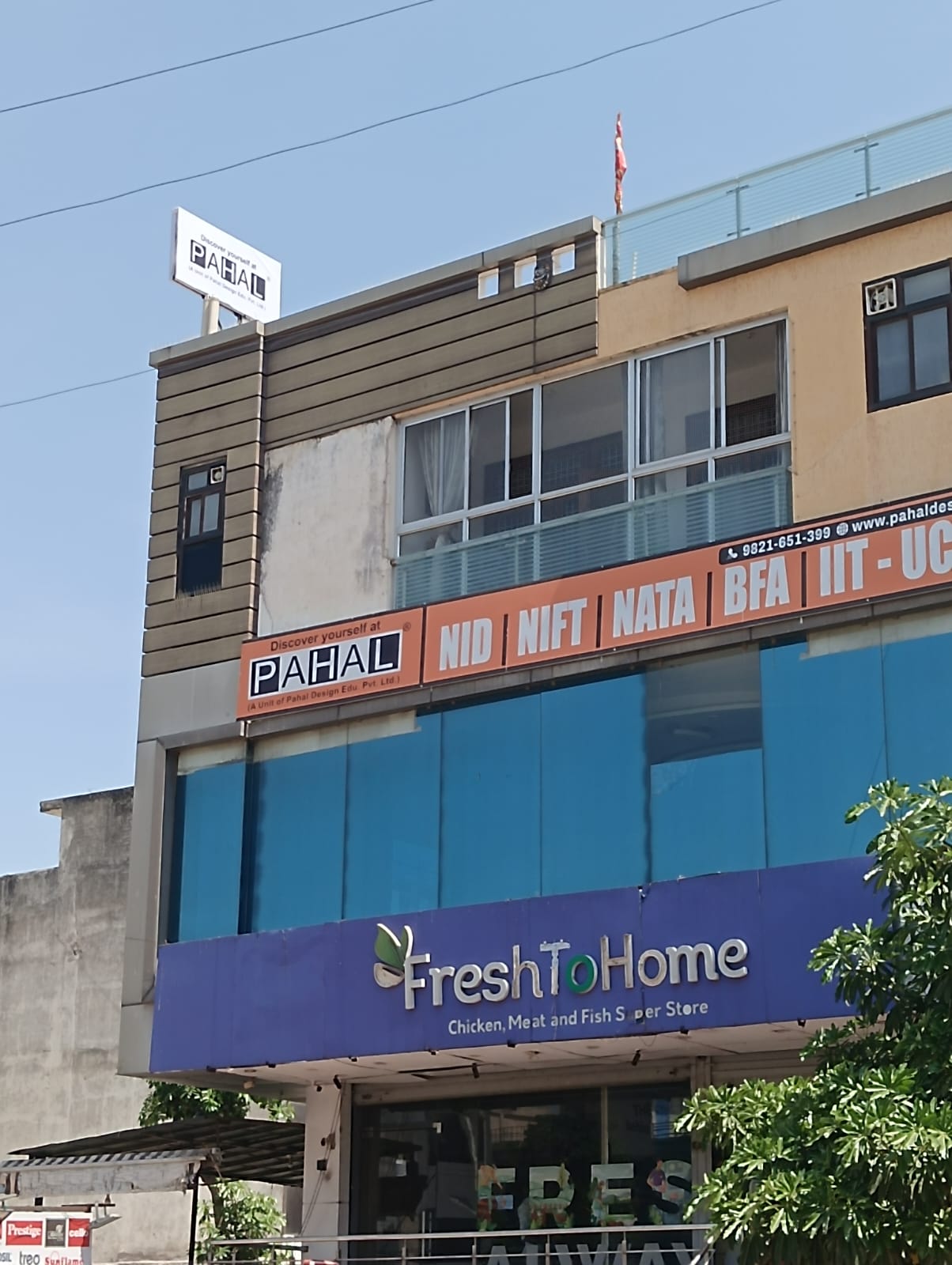
Schedule a free counselling session WhatsApp WhatsApp