NIFT Admissions 2027 registration is open. The National Institute of Fashion Technology has announced that online applications began on 16 October 2026. The regular application deadline for undergraduate and postgraduate programmes is 16 November 2026, and the NIFT Entrance Examination is scheduled for Sunday, 10 January 2027. 

If you are planning to apply, start by checking your course eligibility and preparing your documents. This guide brings together the registration schedule, application fees and practical steps to help you complete your form and organise your preparation.

NIFT Admissions 2027 Important Dates

Admission activity Scheduled date
Registration opens 16 October 2026
Regular application deadline 16 November 2026
Application deadline with late fee 21 November 2026
Application correction window 22–25 November 2026
Advance city intimation slip 21 December 2026
Admit card download 4 January 2027
UG and PG entrance examination 10 January 2027

The late application fee is ₹5,000 in addition to the applicable application fee. These dates follow the official notices dated 16 October 2026; check the NIFT and NTA portals for subsequent changes.

Which Programmes Can You Apply For

NIFT offers B.Des. and B.F.Tech. at undergraduate level, and M.Des., M.F.M. and M.F.Tech. at postgraduate level. The announcement also covers the opening of Ph.D. registration. The UG and PG deadline above should not be assumed to apply to every admission category.

Choose your intended programme before filling the application. Read its educational qualification, age and subject requirements, along with the category rules that apply to you. Use the current prospectus and information bulletin linked on the official admissions page.

NIFT 2027 Application Fees

Category One programme Two programmes*
Open / Open-EWS / OBC-NCL ₹2,000 ₹3,000
SC / ST / PwD / PwBD ₹500 ₹750

*The listed two-programme combinations are B.F.Tech. with B.Des., or M.F.M. with M.Des. Payment gateway charges may apply. These are application fees, separate from course tuition. Other admission categories should check their applicable fee in the bulletin.

How to Fill the NIFT Application Form 2027

Apply through the official NTA NIFTEE portal. The application process is online. [2]

  1. Read the 2027 instructions and check eligibility for your selected programme.
  2. Register on the portal and complete the personal and academic details requested.
  3. Select the applicable programme or permitted programme combination.
  4. Upload your photograph, signature and required supporting documents in the prescribed formats.
  5. Review the form, pay the applicable fee and save the confirmation page. [3]

Before you submit, compare the entries with your records. Check the spelling of your name, date of birth, category and programme choice. Keep your application reference and payment acknowledgement together so that they are easy to find later.

Application Mistakes to Avoid

Do not leave document preparation until the final evening. A blurred scan, missing certificate or unsuccessful payment can take time to resolve. Set yourself a personal submission target several days before the regular deadline.

Use an email address and mobile number that you can access throughout the admission cycle. Review each screen before moving ahead, especially when choosing programmes or entering academic details. After payment, return to the application dashboard and check the submission status.

The correction window is an opportunity to fix permitted details. Submit an accurate form at the first attempt and follow the correction instructions if a change becomes necessary.

How to Prepare Alongside Your Application

Once you have organised your registration, build a study routine around the requirements of your chosen course. Begin with a practice paper to identify the topics and skills that need the most attention.

For creative preparation, use everyday objects as prompts. Sketch an object from different viewpoints, suggest a practical improvement, and explain the idea clearly. If your programme includes a Creative Ability Test, practise developing an original response within a time limit.

For aptitude practice, keep an error notebook. Record the question type, the reason for the mistake and the method you should use next time. Revisit these notes before each mock test instead of repeatedly attempting only familiar questions.

Set aside time each week to review completed work. Ask whether your response answers the brief, whether the main idea is clear and where you lost time. Small, consistent corrections make your next practice session more useful.

Use Pahal Design’s NIFT previous year question papers for practice and read our NIFT 2027 exam pattern and preparation guide alongside the current official bulletin.

Prepare for NIFT 2027 with Pahal Design

At Pahal Design, students can explore classroom coaching, live online classes, study materials and mock tests. Speak with our team about a preparation plan that fits your current level, school or college schedule, and preferred learning mode. [5]

Book a free counselling session to discuss NIFT 2027 preparation and available batches.

Call 8800-226864 | www.pahaldesign.com

Frequently Asked Questions About NIFT Admissions 2027

Is the NIFT application form 2027 available

Yes. Online registration opened on 16 October 2026 through the official NTA NIFTEE portal. [1]

What is the last date to apply for NIFT 2027

The regular UG and PG deadline is 16 November 2026. The late-fee deadline is 21 November 2026. [1, 2]

When is the NIFT entrance exam 2027

The UG and PG examination is scheduled for Sunday, 10 January 2027. [1]

Can I edit my NIFT application after submission

The scheduled correction window is 22–25 November 2026. Follow the portal’s instructions on which details can be changed. [2]

Does every applicant take the same entrance tests

No. Test components and later selection stages depend on the programme and admission category. Check the programme-specific scheme before planning your preparation. [2]

How can Pahal Design help me prepare

Explore classroom or live online learning, study materials and mock tests. A counselling conversation can help you choose a suitable preparation plan. [5]

Official Sources and Useful Links

NIFT Notification 01 dated 16 October 2026

NTA public notice for NIFTEE 2027 dated 16 October 2026

NIFTEE 2027 Information Bulletin

NIFT admissions and programme information

Pahal Design courses and counselling

UCEED 2027 is scheduled for Sunday, 17 January 2027, from 9:00 am to 12:00 noon. Registration is open, with the regular-fee deadline on 31 October 2026. Students planning to study design after Class 12 should check their eligibility, complete the application and prepare for both parts of the examination.

This Pahal Design guide covers the UCEED 2027 exam date, application fees, eligibility, syllabus, marking scheme and BDes admission process, followed by answers to common student questions.

Source: Official UCEED 2027 website

What is UCEED

UCEED stands for Undergraduate Common Entrance Examination for Design. IIT Bombay conducts the examination for admission to Bachelor of Design programmes at seven participating institutions. It assesses how you observe, reason, visualise and communicate design ideas. Passing the examination is one stage of admission; eligible candidates must also complete the separate BDes application.

Source: UCEED 2027 Information Brochure | Joint BDes application process

UCEED 2027 important dates

MilestoneDate
Registration begins1 October 2026
Regular-fee deadline31 October 2026
Late-fee deadline6 November 2026 at 5:00 pm
Admit cards available1 January 2027 at 1:00 pm
Admit card correction deadline8 January 2027 at 5:00 pm
UCEED examination17 January 2027 from 9:00 am to noon
Provisional Part A answer key19 January 2027
Comments on provisional key close21 January 2027 at 5:00 pm
Final Part A answer key26 January 2027 at 5:00 pm
Part A shortlist announced4 February 2027
Results announced6 March 2027
Scorecard download window10 March to 31 July 2027

All times are Indian Standard Time. Check the official dates page for updates before making application or travel plans.

Source: Official UCEED 2027 dates

UCEED 2027 eligibility

Meet all three eligibility conditions together.

RequirementRule
Age for OPEN EWS and OBC-NCLBorn on or after 1 October 2002
Age for SC ST and PwDBorn on or after 1 October 1997
AttemptsA maximum of two attempts in consecutive years
Class 12 or equivalentFirst appearance in 2026 or 2027
School streamScience, Commerce, and Arts or Humanities

First appearing in Class 12 in 2025 or earlier normally makes you ineligible. An exception applies to boards declaring 2024–25 results on or after 30 September 2025. An individually withheld result does not create this exception.

Source: UCEED examination eligibility

UCEED colleges and subject requirements

Your school subjects affect which participating colleges you can apply to after qualifying UCEED. The official admission table gives the following requirements.

Participating institutionClass 12 subject requirement
IIT Bombay, IIT Delhi, IIT Hyderabad and IIT IndoreAll streams
IIT Guwahati and IIT RoorkeePhysics, Chemistry and Mathematics
IIITDM JabalpurPhysics and Chemistry with Mathematics or Biology

Commerce and Arts students can therefore consider IIT Bombay, IIT Delhi, IIT Hyderabad and IIT Indore, subject to all other admission conditions. PCM students meet the subject requirement for all seven institutions.

Source: BDes admission eligibility

The brochure displays a previous-year seat matrix for 2026–27. Use the final 2027–28 matrix when applying; the older figures should not be treated as the confirmed current intake.

Source: UCEED 2027 Information Brochure

UCEED 2027 application fees and registration

Indian applicant categoryRegular examination fee
Female candidates in any category₹2,000
SC ST or PwD candidates₹2,000
All other Indian candidates₹4,000

Indian applicants registering during the late window pay an additional ₹500. Bank or payment-processing charges are extra. The examination registration fee is non-refundable and non-transferable. Foreign and OCI/PIO applicants should consult the category-specific fee rules.

How to apply for UCEED 2027

  1. Open the official UCEED candidate portal linked below.
  2. Complete the registration details and check your eligibility.
  3. Enter accurate personal, academic and category information.
  4. Upload the required documents and submit your city preferences.
  5. Pay the applicable fee and retain the completed registration record.

Keep a recent photograph, signature, age proof and Class 12 certificate ready. Candidates appearing in 2027 need the prescribed school or board certificate. Category, disability and name-change documents are required where applicable. Follow the official upload formats.

Source: Registration fees and documents

Apply for UCEED 2027

UCEED 2027 exam pattern and marking scheme

The 300-mark English paper has two compulsory parts. Part A is a two-hour computer test worth 200 marks. Part B allows one hour for booklet responses worth 100 marks.

Part A question typeNumberCorrectIncorrect
Numerical Answer Type14+40
Multiple Select Questions15Up to +4−1
Multiple Choice Questions28+3−0.71

Unanswered questions score zero. MSQs award +4 for exactly the correct set; partial correct selections can earn +1 to +3 under specified conditions. Other attempted combinations score −1. Read the linked marking rules before practising.

Part B contains one sketching question and one design-aptitude question, worth 50 marks each.

Source: Official question paper structure

UCEED 2027 syllabus

Part A preparation areas

Prepare to interpret shapes in two and three dimensions, understand how everyday objects work, notice visual details and reason from information. The syllabus also covers design in its environmental and social context, English comprehension, and creative interpretation of symbols and analogies.

Part B preparation areas

Drawing preparation should develop proportion, perspective, composition, line control and shading when representing objects, people and scenes. Design aptitude requires practical, imaginative responses to problems that take the user’s needs into account.

Use the official syllabus as a checklist, then connect each topic with exercises and previous papers. Keep practice examples varied so you can apply a skill to an unfamiliar question.

Source: Official UCEED syllabus

UCEED 2027 shortlisting and qualifying cutoffs

Only candidates shortlisted through Part A have Part B evaluated. The score-based shortlisting rule includes a 6,400-candidate mechanism with category and tie provisions. Candidates must also meet the Part B cutoff.

CategoryMinimum Part B score out of 100
OPEN15
OBC-NCL or EWS13.5
SC ST or PwD7.5

These thresholds determine examination qualification. College closing ranks depend on seat allocation. See Section 17 for the full evaluation rules.

Source: UCEED 2027 Information Brochure

UCEED 2027 exam centres and exam day

UCEED is scheduled in 30 Indian cities, including Delhi, Noida, Patna, Jaipur, Lucknow, Bhopal, Jabalpur, Kolkata, Bengaluru and Mumbai. Choose three cities in preference order during registration. City changes are not accepted after registration, and the organising committee may alter allocations for operational reasons.

Source: Official examination city list

Reporting begins at 7:00 am. Carry a printed admit card and an original valid photo identity document. Bring permitted pencils in a transparent packet; coloured drawing materials and electronic devices are prohibited. Check the latest instructions on the official website and your admit card before leaving for the centre.

Source: Official examination day instructions

UCEED results and BDes admission process

The rank list uses the combined Part A and Part B marks of qualifying candidates. UCEED 2027 scores apply to admissions for the 2027–28 academic year. Keep your login details and download your scorecard within the published window.

Source: Results and ranking rules | UCEED examination eligibility

The joint BDes application opens on 15 March 2027. Qualified, eligible candidates submit the common application, arrange their institute preferences and provide the required documents. Seat allocation considers rank, category, preferences and available seats. Receiving a UCEED rank does not guarantee admission.

The first allocation round is tentatively scheduled for 21 April 2027. Follow the admission schedule for acceptance payments and subsequent rounds. Other institutions accepting UCEED scores may run separate admission processes; check each institution’s current requirements.

Source: Joint BDes application process | BDes admission schedule

How to prepare for UCEED 2027

Start with a timed practice paper to identify where you lose marks. Separate conceptual mistakes from observation errors and questions left unfinished. This makes your next week of preparation more focused than simply completing another paper.

Build observation into daily practice

Study an everyday object such as a bottle, chair or bag. Sketch it from different views, estimate its proportions and explain how its parts work together. Then identify one difficulty a user might face and propose a practical improvement. This creates a useful connection between drawing and design thinking.

Practise drawing with a clear purpose

Work on a specific weakness in each session, such as perspective or the scale of people within a scene. Before adding detail, check whether the composition communicates the required action. Review your work against the question and revise it after feedback.

Use previous papers and review mistakes

Solve past papers to understand how questions are framed. When you review an answer, write down why your approach worked or failed. Return to difficult questions a few days later and solve them without looking at the explanation. Use the current marking scheme when scoring practice attempts.

UCEED previous year question papers

Make mock tests part of your weekly plan

Keep a weekly schedule that fits around schoolwork: regular drawing sessions, targeted aptitude practice and a timed mock followed by review. Track accuracy and completion alongside your score. Spend the next practice cycle on the areas the mock exposed, and make time for both parts throughout your preparation.

Prepare for UCEED with Pahal Design

At Pahal Design, we offer classroom programmes, live online classes, study materials and practice resources for design entrance preparation. If you are looking for UCEED coaching, speak with our counsellors about a study plan that suits your current skills and the time available before the examination.

Bring your recent sketches or a mock-test attempt to the discussion. Identifying where you need guidance can help you choose a suitable preparation programme.

Book a free counselling session

Call or WhatsApp 8800-226864    Website www.pahaldesign.com

Source: Pahal Design | Book a free counselling session

Frequently asked questions about UCEED 2027

When is the UCEED 2027 exam

It is scheduled for Sunday, 17 January 2027, from 9:00 am to 12:00 noon IST.

Source: Official UCEED 2027 website

What is the last date to apply for UCEED 2027

Regular-fee registration closes on 31 October 2026. The late-fee deadline is 6 November 2026 at 5:00 pm.

Source: Official UCEED 2027 dates

Can Commerce and Arts students appear for UCEED

Yes, provided they meet the age, attempt and qualifying-examination conditions.

Source: UCEED examination eligibility

Is Mathematics compulsory for every UCEED college

No. IIT Bombay, IIT Delhi, IIT Hyderabad and IIT Indore accept all streams. Other participating institutions have the subject requirements listed above.

Source: BDes admission eligibility

Can a student taking a gap year apply

A candidate whose first Class 12 appearance was in 2026 can apply if the remaining eligibility conditions are satisfied.

Source: UCEED examination eligibility

How many times can I attempt UCEED

The limit is two attempts in consecutive years, subject to the other eligibility requirements.

Source: UCEED examination eligibility

Does UCEED have negative marking

Yes. Incorrect MCQs receive −0.71; MSQs follow partial-marking rules with a −1 penalty for specified incorrect responses. NAT questions have no negative marking.

Source: Official question paper structure

Is drawing compulsory in UCEED 2027

Yes. Part B includes a compulsory sketching question, alongside design aptitude.

Source: Official question paper structure

Is Part B checked for every candidate

No. Part B is evaluated only for candidates shortlisted through Part A.

Source: UCEED 2027 Information Brochure

Do I need to apply separately for BDes admission

Yes. Examination registration and the joint BDes admission application are separate. Eligible qualified candidates must complete the admission application.

Source: Joint BDes application process

Does qualifying UCEED guarantee an IIT seat

No. Admission depends on rank, category, institute preferences, seat availability and fulfilment of admission requirements.

Source: Joint BDes application process

Can I prepare for UCEED online with Pahal Design

Pahal Design offers live online classes. Contact our team to discuss the available UCEED preparation options and a suitable study schedule.

Source: Pahal Design

Start your UCEED 2027 preparation

Check your college eligibility, complete the official application and set a weekly preparation plan. For guidance on UCEED preparation, book a free counselling session with Pahal Design.

Book a free counselling session | WhatsApp 8800 226864

Updated on 14 October 2026. Examination and admission details follow IIT Bombay’s published UCEED 2027 information. Refer to the official website for subsequent changes.

UCEED 2027 Information Brochure | Apply for UCEED 2027



CEED 2027 Exam Date Eligibility Syllabus Preparation and FAQs

CEED 2027 (Common Entrance Exam for Design), organised by IIT Bombay, is scheduled for 17 January 2027, from 9 am to noon. It is an entrance examination for postgraduate design study, including M.Des and selected Ph.D. programmes.

If you are planning your next step in design, start by checking eligibility and the application calendar. Then build a preparation routine that gives you regular practice in both visual reasoning and communicating ideas on paper. This guide brings the essential exam information together with practical study advice from Pahal Design.

Source: Official CEED 2027 poster

CEED 2027 important dates

Milestone Date
Regular registration 1–31 October 2026
Late registration closes 6 November 2026 at 5 pm
Admit cards released 1 January 2027 at 1 pm
Examination 17 January 2027, 9 am–noon
Draft Part A answer key 19 January 2027
Answer key comments close 21 January 2027 at 5 pm
Final Part A answer key 26 January 2027 at 5 pm
Part A cutoff announced 4 February 2027
Results 3 March 2027
Scorecard download window 10 March–31 July 2027

Source: CEED 2027 official schedule

Add the application deadline to your calendar now. Completing registration early leaves time to check your details and resolve any payment or upload difficulties. Recheck the official website before acting on a deadline.

CEED 2027 eligibility

Applicants need a completed degree or diploma programme of at least three years after Class 12, including the graduate or postgraduate routes specified in the brochure. Candidates taking the qualifying final examination by July 2027 can also apply. Another accepted route is the five-year Government Diploma in Art after Class 10, passed by July 2027.

Source: Eligibility in the official poster

Check the admission rules of each course you want to pursue before choosing where to apply. Use a shortlist with columns for the qualifying degree, application deadline, selection stages and documents required. This makes it easier to manage several applications alongside exam preparation.

CEED 2027 application fees and registration

Applicant group Regular fee
Women and SC/ST/PwD candidates ₹2,000
All other candidates ₹4,000

Late registration adds ₹500. Fees exclude applicable transaction charges and are non-refundable and non-transferable.

Source: CEED 2027 registration fees

Apply through the official CEED registration portal. New applicants create an account with a valid email address and complete email verification; registered applicants can log in. Read the brochure and portal instructions for eligibility, documents and payment requirements before completing the form.

Open the official CEED registration portal

Keep a dedicated folder for your application records and save the confirmation after submission. Use an email account you check regularly so that you can follow any further instructions promptly.

CEED 2027 exam pattern and marking

Component Duration Questions Maximum marks
Part A on computer 1 hour 44 150
Part B in answer booklet 2 hours 5 100

Part A type Questions Correct answer Wrong answer Total
Numerical answer 8 +4 0 32
Multiple select 10 Up to +4 −1* 40
Single correct option 26 +3 −0.5 78

*Multiple-select questions allow conditional partial credit; other incorrect selections attract −1. Unanswered Part A questions receive zero.

Part B assigns 20 marks each to sketching, creativity, form sensitivity, visual sensitivity and problem identification. Both parts are compulsory. Part B is evaluated only for candidates shortlisted through Part A.

Source: Question paper structure in the CEED 2027 brochure

Final score = (0.25 × Part A marks) + (0.75 × Part B marks).

Source: Official CEED scoring formula

Use this structure when planning mocks. Practise completing the objective section within its time limit, then move into a sustained drawing and design session. Review where you lost time as well as where you lost marks.

CEED 2027 syllabus at a glance

Part A covers spatial visualisation, everyday science, observation, design and society, reasoning, English comprehension, creative associations, art and design awareness, and materials, production and ergonomics.

Part B covers drawing, creative ideas, visual and written communication, and identifying user problems.

Source: Syllabus in the CEED 2027 brochure

Turn these broad areas into small practice tasks. For example, sketch a bottle from different viewpoints, explain how a stapler works, or identify why a public sign is confusing. A specific task is easier to review than a vague target such as “study design”.

Institutes accepting CEED 2027

Participating institutes include IISc Bengaluru; IIT Bombay, Delhi, Gandhinagar, Guwahati, Hyderabad, Jodhpur, Kanpur and Roorkee; and IIITDM Jabalpur and Kancheepuram.

Source: Participating institutes in the official poster

Qualifying CEED does not guarantee admission. Institutes have separate applications, eligibility requirements and selection processes, which may include tests or interviews.

Source: Official programme and admission information

Compare programmes by their curriculum and the kind of work you want to develop. Look at student projects, studio facilities and research areas. Keep your own design interests visible in this decision instead of relying only on an institute name.

How to prepare for CEED 2027

Start with a diagnostic paper

Attempt a previous paper under timed conditions before setting your weekly targets. Record whether each difficulty came from a knowledge gap, a misunderstood instruction, slow execution or an unfinished idea. Choose the next week’s exercises from this record.

Explore CEED previous year question papers at Pahal Design

Make sketching a daily habit

Spend a manageable period each day drawing objects, people and spaces around you. Start with proportion and perspective, then practise line quality and shading. Revisit the same subject after a few days so you can compare your work and identify progress.

Practise explaining your decisions

For every design exercise, identify the user, the difficulty they face and the situation in which it occurs. Generate several ideas before choosing one. Use a clear sketch and short annotations to explain how your solution works, why it helps and what its limitations are.

Review mocks before attempting another

Set aside time after each mock to redo weak answers. For drawing tasks, check whether someone unfamiliar with your idea can understand it from the page. For objective tasks, explain the reasoning behind the answer. Keep a brief error log and revisit recurring problems.

Build a routine you can sustain

If you are balancing college or work, choose study slots you can maintain consistently. Alternate reasoning practice with drawing and design exercises. Reserve a longer weekly session for a mock or a complete design problem, followed by review. Adjust the balance according to your diagnostic results.

Prepare with Pahal Design

At Pahal Design, we offer classroom and live online preparation for design entrance examinations, including CEED. Our online learning includes interactive classes, revision recordings, mock tests, mentoring and doubt support. Our postgraduate design preparation also includes sketching, design aptitude, portfolio guidance and interview training.

Explore live online coaching | Explore classroom coaching | View postgraduate design courses

Speak to our team about a CEED 2027 preparation plan that fits your starting level, college or work schedule, and preferred learning format. Ask about current batch timings and the support included in your chosen course.

Call or WhatsApp: 8800-226864

Website: www.pahaldesign.com

CEED 2027 frequently asked questions

What is the CEED 2027 exam date

The examination is on 17 January 2027, from 9 am to noon. Official reference

What is the last date to apply for CEED 2027

Regular registration closes on 31 October 2026. With the additional ₹500 late fee, the deadline is 6 November 2026 at 5 pm. Official reference

Can final year students apply for CEED 2027

Yes, if their qualifying final examination is by July 2027 and they satisfy the prescribed education requirements. Official reference

Is there an age or attempt limit

CEED has neither an age limit nor an attempt limit. Official reference

How long is a CEED 2027 score valid

The score remains valid for one year from the result declaration date. Official reference

Does qualifying CEED guarantee an MDes seat

No. You must meet the chosen institute’s admission conditions and complete its selection process. Official reference

How should beginners start CEED preparation

Begin with a diagnostic paper and a small daily sketching routine. Focus on understanding objects, observing users and explaining ideas clearly. Review your first attempts before adding more study material.

Can I prepare for CEED while working

Plan short, regular weekday sessions and a longer weekly practice session. Use an error log to select high-priority tasks. The amount of preparation you need depends on your current skills and available study time.

How can I improve my Part B answers

Practise turning a problem into a clear visual explanation. Show the user and context, compare possible solutions, and label the important details. Ask for feedback on clarity, practicality and how well the answer meets the brief.

Should I practise drawing digitally or on paper

Make paper-based practice central to your exam preparation. Use digital tools for reference and review if helpful, but build confidence in planning, sketching and annotating an answer with your own drawing materials.

Does Pahal Design offer online CEED preparation

Yes. Pahal Design offers live online design entrance coaching covering CEED, with interactive learning and preparation support. Contact the team for the current batch schedule. Course details

How do I choose a CEED coaching course

Compare the teaching format, timetable, feedback on drawing assignments, mock review process and access to doubt support. Ask what is included in the specific batch you are considering and how the course will address your weaker areas.

NIFT 2027 Exam Date Announced: Registration, Eligibility, Syllabus, Exam Pattern and Preparation Guide

The NIFT 2027 exam date is out. The National Testing Agency examination calendar schedules the NIFT Entrance Examination Stage 1 for Sunday, 10 January 2027. This is an important development for students seeking admission to B.Des, B.FTech, M.Des, MFM and M.FTech programmes for the 2027–28 academic session.

The date in the examination calendar is tentative and may be revised for administrative, academic, statutory or logistical reasons. The detailed NIFT 2027 Information Bulletin—covering registration dates, final eligibility rules, fees, test timings, centres and admission-stage weightages—is still awaited. Aspirants should therefore treat 10 January as their working examination date while checking the official NTA and NIFT websites regularly.

This Pahal Design guide brings together the latest information on the .NIFT entrance exam 2027, including expected registration dates, course-wise eligibility, CAT and GAT, the syllabus, selection stages and a practical preparation plan

Is the NIFT 2027 exam date final?

No. 10 January 2027 is the currently scheduled Stage 1 date, but the NTA calendar describes examination dates as tentative. Students should plan their preparation around this date and avoid waiting for the detailed notification to begin serious practice.

The January schedule also means the preparation window is shorter than many aspirants may have expected. A disciplined plan for CAT, GAT, previous-year papers and full-length mock tests should start immediately.

NIFT 2027 important dates

Only the Stage 1 date has been announced at this stage. The remaining dates below are expected windows based on current reports and the recent admission cycle; they are not final until NTA or NIFT publishes the 2027 bulletin.

Student alert: As of 19 September 2026, use 10 January 2027 as the working NIFT Stage 1 date and verify every subsequent update on the official portals.

What is the NIFT Entrance Examination?

The NIFT Entrance Examination is a national-level admission test for undergraduate and postgraduate programmes in design, fashion technology and fashion management. The selection process changes according to the programme selected.

The main programmes are:

  • B.Des: Bachelor of Design
  • B.FTech: Bachelor of Fashion Technology
  • M.Des: Master of Design
  • MFM: Master of Fashion Management
  • M.FTech: Master of Fashion Technology

NIFT currently has 20 campuses across India. Candidates compete for a programme, category and campus through the entrance examination, later-stage assessments and centralised counselling.

NIFT 2027 eligibility criteria

The official NIFT 2027 eligibility criteria will be confirmed in the Information Bulletin. Based on the recent criteria and current exam coverage, aspirants should use the following as a planning guide.

B.Des eligibility

  • The candidate should have passed, or be appearing in, Class 12 from a recognised board or hold an accepted equivalent qualification.
  • Students from any academic stream may apply.
  • The candidate should be below the prescribed UG age limit. Current reports indicate less than 24 years of age as of 1 August 2027.
  • A five-year upper-age relaxation is generally available to SC, ST and PwD candidates.

B.FTech eligibility

  • The candidate should have passed, or be appearing in, Class 12 from a recognised board.
  • Physics and Mathematics are expected to be compulsory subjects for B.FTech eligibility.
  • The UG age condition and applicable relaxation are expected to be the same as for B.Des.

PG programme eligibility

  • M.Des and MFM: A recognised undergraduate degree in any discipline, or another qualification accepted in the official prospectus, is generally required.
  • M.FTech: A relevant technology or engineering qualification is generally required.
  • There is ordinarily no upper age limit for NIFT postgraduate programmes.

Candidates must check the final programme-wise qualification, age cut-off and equivalence rules before submitting the NIFT 2027 application form. Meeting the entrance-test cut-off does not compensate for an eligibility shortfall.

NIFT 2027 application form: how to register

The NIFT 2027 registration date has not yet been officially announced. Current reports expect the application window to open in November or December 2026. Once the portal opens, the usual process is expected to include:

  1. Visit the official NIFT examination portal.
  2. Create an account using an active email address and mobile number.
  3. Select the correct programme or programme combination.
  4. Enter personal, academic and category details exactly as shown on official documents.
  5. Choose the permitted examination-city preferences.
  6. Upload the photograph, signature and applicable certificates in the prescribed format.
  7. Pay the applicable examination fee.
  8. Review every entry before final submission.
  9. Download the confirmation page and retain payment proof.

The final 2027 fee, late-fee rules and document specifications should be taken only from the official bulletin. Avoid copying a previous-year fee into the new form without checking the current notice.

Common application mistakes to avoid

  • Selecting B.Des instead of B.FTech, or the wrong programme combination
  • Entering a name or date of birth that does not match official documents
  • Uploading an unclear photograph, signature or category certificate
  • Choosing examination cities without checking travel feasibility
  • Waiting until the final day to pay the fee
  • Forgetting to download the confirmation page

NIFT 2027 exam pattern: CAT, GAT and Stage 2

The NIFT 2027 exam pattern depends on the programme. Stage 1 may include the General Ability Test, the Creative Ability Test, or both.

General Ability Test (GAT)

GAT is expected to be conducted as a computer-based test. It evaluates areas such as:

  • Communication ability
  • English comprehension
  • Quantitative ability
  • Analytical and logical ability
  • General knowledge and current affairs
  • Case-study interpretation, where applicable

Recent NIFT patterns have included negative marking in GAT. Candidates should wait for the 2027 bulletin for the final marking rule and section-wise question distribution.

Creative Ability Test (CAT)

CAT is expected to remain a paper-based creative examination for B.Des and M.Des aspirants. It evaluates how effectively a candidate can observe, imagine, interpret and communicate an idea visually.

Preparation should cover:

  • Observation and visualisation
  • Composition and proportion
  • Perspective and spatial understanding
  • Human figures and object drawing
  • Colour application and colour relationships
  • Storytelling and sequential representation
  • Product and problem-based ideation
  • Originality, clarity and presentation

CAT is not simply a drawing test. A technically neat response can still remain average if its idea is predictable, while a strong concept can lose marks if it is poorly organised or unfinished. Aspirants need both ideation and execution.

Programme-wise selection components

Programme Stage 1 Later assessment
B.Des GAT + CAT Situation Test for shortlisted candidates
B.FTech GAT Selection process as notified by NIFT
M.Des GAT + CAT Personal Interview for shortlisted candidates
MFM GAT Personal Interview for shortlisted candidates
M.FTech GAT Personal Interview for shortlisted candidates

The final weightage and assessment sequence must be checked against the NIFT 2027 prospectus when released.

NIFT 2027 syllabus

GAT syllabus

The NIFT 2027 GAT syllabus is expected to include:

  • Quantitative Ability: percentages, ratios, averages, profit and loss, simple and compound interest, time and work, speed and distance, basic algebra and data interpretation
  • Communication Ability: vocabulary, correct usage, synonyms, antonyms, idioms and sentence construction
  • English Comprehension: reading passages, inference, tone, central idea and contextual meaning
  • Analytical and Logical Ability: series, patterns, arrangements, coding, deductions, visual logic and reasoning
  • General Knowledge and Current Affairs: national and international events, art, culture, design, fashion, textiles, brands, awards and important organisations
  • Case Study: interpretation of a business, design, production or real-world situation, depending on the programme

CAT syllabus and skill areas

The NIFT 2027 CAT syllabus is best understood as a set of creative abilities rather than a fixed list of chapters:

  • Design sensitivity and problem-solving
  • Creative use of colour
  • Visual memory and observation
  • Concept development
  • Illustration and communication
  • Composition, layout and storytelling
  • Material, product and user awareness
  • Ability to generate multiple original ideas under time pressure

A focused 16-week NIFT 2027 preparation plan

With the Stage 1 examination scheduled for 10 January, aspirants should work backwards from the test date.

Phase 1: Build foundations

  • Draw everyday objects, people and spaces daily.
  • Revise arithmetic, vocabulary and logical reasoning fundamentals.
  • Start a visual diary for ideas, colours, forms and current design references.
  • Study one major current-affairs theme each day.
  • Analyse previous NIFT CAT and GAT papers before attempting them.

Phase 2: Develop speed and application

  • Solve section-wise GAT tests under time limits.
  • Complete two to three CAT prompts every week.
  • Practise perspective, proportion, human figures and colour rendering.
  • Review every answer for idea quality, relevance, layout and completion.
  • Maintain an error log for recurring GAT mistakes.

Phase 3: Attempt full-length mock tests

  • Take complete CAT and GAT mock tests in exam-like conditions.
  • Use the actual time limit and restrict materials to the permitted set.
  • Analyse accuracy, attempted questions and time lost after every mock.
  • Redraw weak CAT answers using mentor feedback without copying a model solution.
  • Revise fashion, design and general-current-affairs notes weekly.

Phase 4: Final revisionhttps://pahaldesign.com/nift-situation-test/

  • Consolidate formulas, vocabulary, current affairs and common reasoning patterns.
  • Practise high-quality CAT responses within strict time limits.
  • Avoid learning entirely new drawing styles in the final days.
  • Prepare documents and monitor the official portal for the city slip and admit card.
  • Protect sleep, health and concentration during the last week.

How to prepare for NIFT CAT effectively

  1. Begin with idea generation. Spend a few minutes listing different approaches before drawing.
  2. Answer the brief exactly. Creativity that ignores the question does not earn its full value.
  3. Plan the page. Decide the focal point, visual hierarchy and text placement before rendering.
  4. Show function and user context. For product or problem-solving questions, make the solution easy to understand.
  5. Practise people in action. Human figures often help communicate scale, emotion and usage.
  6. Use colour intentionally. Build harmony, contrast and emphasis instead of filling every empty space.
  7. Finish on time. A complete, clearly presented answer is stronger than an overworked but unfinished sheet.
  8. Seek specific feedback. Ask whether the idea is original, relevant, legible and well executed—not merely whether the drawing looks good.

How to improve your NIFT GAT score

  • Strengthen concepts before chasing speed.
  • Use timed topic tests to identify slow sections.
  • Read editorials and design or fashion news to improve comprehension and awareness together.
  • Learn mental calculation techniques, but write intermediate steps when accuracy matters.
  • Apply an attempt strategy that accounts for negative marking if the 2027 bulletin retains it.
  • Analyse every mock by error type: conceptual gap, misreading, calculation, guesswork or time pressure.
  • Reattempt incorrect questions after a gap instead of only reading solutions.

Why previous-year papers and mock tests matter

NIFT previous-year question papers show how the examination translates broad abilities into actual tasks. They help candidates understand the expected speed, variety and level of originality. However, repeating old answers is not enough because CAT prompts reward fresh thinking.

A good NIFT mock test 2027 programme should provide:

  • Questions aligned with the latest available pattern
  • Separate section tests and full-length papers
  • Realistic CAT and GAT time limits
  • Detailed solutions and performance analysis
  • Personalised CAT feedback
  • A clear improvement plan between tests

NIFT 2027 preparation with Pahal Design

Pahal Design has guided design aspirants since 1999. Its NIFT coaching 2027 support is available through classroom, live online and hybrid learning modes.

The preparation programme can support students with:

  • Updated CAT and GAT preparation
  • Solved NIFT previous-year papers
  • Topic-wise practice and full-length mock tests
  • Drawing, visualisation and creative problem-solving
  • Current affairs, fashion awareness and aptitude development
  • Faculty review and individual performance feedback
  • Situation Test and Personal Interview guidance for shortlisted candidates

Admissions are open for NIFT 2027 preparation.
Call or WhatsApp: 880022-6864
Website: www.pahaldesign.com

Frequently asked questions about NIFT 2027


What is the NIFT 2027 exam date?

NIFT Stage 1 is currently scheduled for Sunday, 10 January 2027. The calendar date is provisional and candidates should monitor official notices for any revision.


When will NIFT 2027 registration begin?

The official registration date is awaited. Current reports expect the NIFT 2027 application form to open in November or December 2026.


Is NIFT 2027 online or offline?

The current expected pattern is hybrid: GAT in computer-based mode and CAT in paper-based mode. Later assessments such as the Situation Test and Personal Interview are normally conducted separately. The official bulletin will confirm the 2027 mode.


Who can apply for NIFT B.Des 2027?

Students who have passed or are appearing in Class 12 from a recognised board or hold an accepted equivalent qualification may apply, subject to the official age and other eligibility conditions.


Is Mathematics compulsory for NIFT B.Des?

No specific Class 12 stream is generally required for B.Des. However, quantitative ability is part of GAT, so all applicants should prepare basic mathematics.


Is Mathematics required for NIFT B.FTech?

B.FTech applicants are expected to have studied Physics and Mathematics in Class 12. Candidates must verify the exact subject requirement in the 2027 prospectus.


What tests are required for NIFT B.Des?

B.Des candidates take CAT and GAT in Stage 1. Those shortlisted are called for the Situation Test.


How should I start NIFT 2027 preparation?

Begin with a diagnostic CAT task and GAT test, analyse previous-year papers, build a daily drawing and aptitude routine, and schedule regular mock tests with feedback.


Where should candidates check official NIFT 2027 updates?

Check the National Testing Agency website, the NIFT examination portal and the official NIFT website. Social posts and coaching updates can alert you, but the official notice should remain the final reference.

NID Admissions 2027-28: Application Dates, Eligibility, Fees and Entrance Exam Guide

NID Admissions 2027-28 applications are open. Students planning to pursue design after Class 12 can submit their online application until 30 November 2026 at 11:59 pm IST. The NID DAT Prelims examination will be held on Sunday, 20 December 2026, for admission to the 2027-28 academic session. Applications must be submitted through the official NID admissions website.

For aspiring designers, the first step is understanding the programme options and admission requirements. The 2027-28 handbook covers Bachelor of Design (B.Des) and the 5.5-year Master of Design Integrated Pathway, with offerings depending on the institute.

At Pahal Design, we help students build their creative skills and approach design entrance preparation with a clear plan. This guide explains the NID admission process, important dates, eligibility, application fees, examination stages and preparation priorities.

NID Admissions 2027-28: Important Dates

Keep these dates in your calendar to stay on track with your application and preparation.


Admission activityDate and time
Online applications open10 September 2026
Last date to submit the application30 November 2026, 11:59 pm
Application correction window1 December 2026, 4:00 pm to 3 December 2026, 11:59 pm
DAT Prelims admit card downloadFrom 10 December 2026, 4:00 pm
NID DAT Prelims examinationSunday, 20 December 2026
One-time category-certificate correction window16 February 2027, 4:00 pm to 28 February 2027, 11:59 pm
DAT Prelims result16 March 2027, 4:00 pm
DAT Prelims marks retotalling window16 March 2027, 4:00 pm to 17 March 2027, 11:59 pm
DAT Mains admit card and examinationsTo be announced
DAT Mains resultsTo be announced
Separate online application for admissionTo be announced
Counselling, fee payment and document verificationTo be announced


All times are in IST. NID may revise the schedule, so check the official portal regularly. The published timetable does not list a late-fee application window. Source: NID Admissions Handbook, Section 3.

NID B.Des and Integrated M.Des: Understanding Your Options

Students searching for NID B.Des admission 2027 should carefully review the programme structure described in the current handbook.

NID Ahmedabad, Gandhinagar and Bengaluru

The handbook lists a 5.5-year Professional Education Master of Design programme — Integrated Pathway at NID Ahmedabad and its extension campuses in Gandhinagar and Bengaluru.

The programme comprises 11 semesters, with 15 disciplines across five design streams. It is covered by the admission route for students applying after Class 12 or an equivalent qualification.

NID Andhra Pradesh, Assam, Haryana and Madhya Pradesh

These institutes are listed under B.Des / 5.5-year Integrated M.Des in the handbook. Applicants must consult the respective institute’s website for its specific programmes, disciplines and category-wise seat availability.


InstituteOfficial website
NID Andhra PradeshVisit NID Andhra Pradesh
NID AssamVisit NID Assam
NID HaryanaVisit NID Haryana
NID Madhya PradeshVisit NID Madhya Pradesh


Before applying, confirm the degree title, programme duration and campus you are considering.

The independent 2.5-year specialised M.Des follows a separate admission route. The handbook states that candidates cannot apply for both that route and the B.Des/Integrated Pathway route because the examinations are scheduled simultaneously. Source: NID Admissions Handbook, Sections 2 and 4.

NID Eligibility 2027: Who Can Apply?

Applicants must meet both the educational qualification and age requirements.

Educational Qualification

Students who have passed Class 12 or will appear for their qualifying examination in the 2026-27 academic year can apply, subject to the handbook’s conditions.

Eligible school streams include:

  • Science
  • Commerce
  • Arts
  • Humanities

A particular school stream is not compulsory. Applicants with equivalent qualifications, diplomas or qualifications from outside India should check the recognised qualification requirements and whether an equivalence certificate is needed.

Age Limit for NID Admissions 2027-28


Applicant categoryMust be born on or after
Indian nationals: General and General-EWS1 July 2006
Indian nationals: OBC-NCL, SC and ST1 July 2003
Indian nationals: PwD1 July 2001
Foreign nationals: Overseas category1 July 2006


Check eligibility using your exact date of birth.

Requirements for Class 12 Appearing Students

Section 5.3 requires students appearing in Class 12 during 2026-27 to:

  • Appear for the qualifying examination before physical document verification.
  • Pass the qualifying examination in the first attempt.
  • Submit the qualifying marksheet on or before 15 July 2027.
  • Submit the prescribed undertaking where admission is provisional because results are pending.

The handbook specifies cancellation and fee-forfeiture consequences for uncleared results, backlogs, compartments, supplementary status or failure to fulfil the qualifying-result requirements. Source: NID Admissions Handbook, Section 5.

NID Application Fees 2027-28

The application fee depends on the applicant’s category and applicable concession.


Applicant groupApplication fee
General, General-EWS and OBC-NCL Indian applicants, subject to concessions below₹3,000
Female candidates, except SC, ST and PwD₹2,000
SC and ST candidates₹1,500
PwD candidates₹500
Third Gender applicants₹500
Overseas applicantsUS$125 equivalent, as specified by NID


Application fees are non-refundable and non-transferable. Bank transaction or convenience charges are additional.

For Overseas applicants, the handbook specifies conversion into rupees, rounded up to the next ₹100 at the time admissions are announced. Source: NID Admissions Handbook, application fee table.

The application fee is separate from tuition and other institutional charges. Check your preferred institute’s applicable fee notification for programme, hostel, mess and other expenses.

How to Apply for NID Admissions 2027-28

Complete your NID application through the official admissions portal.

  1. Read the admissions handbook. Check your programme, eligibility, category and required documents.
  2. Register online. Use an active email address and mobile number for OTP validation and future communication.
  3. Complete the application form. Enter the requested personal, educational and examination-related details.
  4. Upload your documents. Add your photograph, signature and applicable certificates in the prescribed formats.
  5. Review your details. Check your name, date of birth, category and examination-city preference.
  6. Pay the application fee. The handbook lists debit card, credit card and net banking as payment methods.
  7. Download the completed application. Save the auto-generated form after successful payment.

The application is considered complete when the auto-generated form can be viewed, downloaded or printed following successful payment.

Your name, date of birth, programme applied for, registered email address and registered mobile number cannot be changed. Keep the registered contact details active until 31 August 2027. Source: NID Admissions Handbook, Section 7.

Documents Required for NID Admission

Prepare your documents early so that the application process does not interrupt your examination preparation.

For the Initial Application

Depending on your category, the required uploads include:

  • Recent colour photograph.
  • Scanned signature.
  • EWS or OBC-NCL certificate.
  • SC or ST certificate.
  • Disability certificate or UDID card.
  • Applicable Third Gender identity documentation.
  • Valid foreign passport for Overseas applicants.

EWS and OBC-NCL certificates must follow the prescribed Central Government format, be issued in the candidate’s name on or after 1 April 2026, and use the applicable 2025-26 financial-year income. OBC-NCL applicants must also check the Central OBC list.

For Counselling and Verification

Keep your Class 10 and Class 12 marksheets, identity proof, date-of-birth proof and applicable certificates ready. Appearing students may also need the prescribed undertaking and first-attempt certificate.

Follow the latest instructions for originals, copies, translations and equivalence certificates. Source: NID Admissions Handbook, Sections 6, 7 and 9.7.

NID DAT 2027 Exam Pattern and Selection Process

The selection process consists of DAT Prelims and DAT Mains.

Stage 1: DAT Prelims

DAT Prelims is a paper-and-pencil/pen examination. Questions may involve text and visuals, and the question paper is in English only.

The examination duration will be stated in the admit card.

DAT Prelims marks are used only to shortlist candidates for DAT Mains. They do not contribute to the final merit calculation.

The handbook states that candidates equal to 2.5 times the available seats in each category will be shortlisted, subject to the tie-break policy.

Stage 2: DAT Mains

DAT Mains comprises:

  • Studio Sensitivity Test
  • In-Person Sensitivity Test

Candidates must appear for both components to be eligible for the merit list. Final merit is based on DAT Mains, with the component weightages to be announced later.

The detailed Mains format and dates are also awaiting announcement. Use the current instructions when released to guide your preparation. Source: NID Admissions Handbook, Section 8.

A Separate Admission Application Is Required After Mains

After DAT Mains results, eligible candidates must submit an online application for admission within the announced window.

This step is mandatory for participation in seat allotment. Completing the initial DAT application and examinations does not complete the later admission application.

Seat allotment depends on merit, category-wise availability and the preferences submitted. Source: NID Admissions Handbook, Section 9.6.

NID Integrated Pathway: Design Streams and Seats

The handbook lists 15 disciplines with nine seats each for the Integrated Pathway at NID Ahmedabad and its extension campuses. This gives a calculated total of 135 seats, excluding the separately listed Overseas seats.


Design streamDisciplines
Industrial DesignCeramic & Glass Design; Transportation & Automobile Design; Product Design
Communication DesignAnimation Film Design; Film & Video Communication; Graphic Design
Spatial Experience DesignExhibition Design; Furniture & Interior Design; Design for Retail Experience
Textile and Apparel DesignTextile Design; Apparel Design; Lifestyle Accessory Design
Digital Design FuturesDigital Game Design; Interaction Design; Information Design


Disciplines are distributed across Ahmedabad, Gandhinagar and Bengaluru. Check the handbook for the campus assigned to each discipline.

The 135-seat figure is not the combined intake of all participating NIDs. Other institutes’ programme and seat details must be checked separately. Source: NID Admissions Handbook, Section 4.

How to Prepare for NID DAT 2027

A useful preparation routine develops your ability to observe, generate ideas, communicate visually and explain design decisions.

The following are preparation suggestions, rather than an official topic-by-topic syllabus.

Build an Observation and Sketching Habit

Sketch everyday objects, people and spaces. Focus on proportion, perspective, composition and how things are used. Make brief notes about problems you notice and possible improvements.

Practise Creative Problem-Solving

Choose a practical problem and develop several solutions. Think about the user, available materials and constraints before selecting your strongest idea.

For example, explore how a student could carry fragile art materials safely on public transport. Explain how your solution addresses the problem.

Explore Materials and Three-Dimensional Forms

Work with paper, cardboard, clay and other accessible materials. Experiment with structure, balance, joining methods and usability.

Practise explaining your material choices and what you would change after testing a model.

Review Your Timed Practice

Complete practice tasks within a set time and review your work for clarity, relevance and completeness. Keep a record of recurring mistakes and revisit them regularly.

Explore Pahal Design’s NID practice-paper resources while checking the applicable year and current examination instructions.

Balance Entrance Preparation with Schoolwork

Class 12 qualification remains part of admission eligibility. Plan creative practice around your school schedule and prepare your application documents well before the deadline.

Prepare for NID 2027 with Pahal Design

At Pahal Design, we have supported aspiring designers since 1999. Our programmes cover design fundamentals, aptitude and creative skills, helping students develop a structured approach to entrance preparation. Learn more about Pahal Design.

Our NID coaching programmes offer practical training, study materials and personalised guidance. Students can explore classroom programmes, live online learning and mock-test resources according to their preparation needs.

Planning to apply for NID Admissions 2027-28? Speak with our counselling team about your goals, preparation level and available batches.

Book a FREE Career Counselling Session
Call or WhatsApp: 880022-6864
Enquire About NID Coaching on WhatsApp
Explore Pahal Design Programmes

Frequently Asked Questions About NID Admissions 2027-28

The answers below follow the NID Admissions Handbook 2027-28.

What is the last date to apply for NID 2027?

The last date to submit the online DAT application is 30 November 2026 at 11:59 pm IST.

When is the NID DAT 2027 entrance exam?

DAT Prelims for the 2027-28 admission session will be held on Sunday, 20 December 2026. DAT Mains dates will be announced later.

Can Commerce and Arts students apply for NID?

Yes. Students from any stream can apply if they meet the educational qualification and age requirements.

Can students appearing for Class 12 in 2027 apply?

Yes, students appearing during the 2026-27 academic year can apply, subject to the handbook’s conditions. They must fulfil the examination requirements and submit the qualifying marksheet by 15 July 2027.

Can I apply for the Integrated M.Des after Class 12?

The 5.5-year Integrated Pathway is covered by the after-10+2 application route. Check the programme offered by your preferred institute before applying.

Do DAT Prelims marks count in the final result?

No. DAT Prelims marks are used for shortlisting. Final merit is based on DAT Mains.

Is a separate application required after DAT Mains?

Yes. Eligible candidates must submit the later online admission application to participate in seat allotment.

Celebrating the Spirit of Freedom Across Pahal Design Centres in India

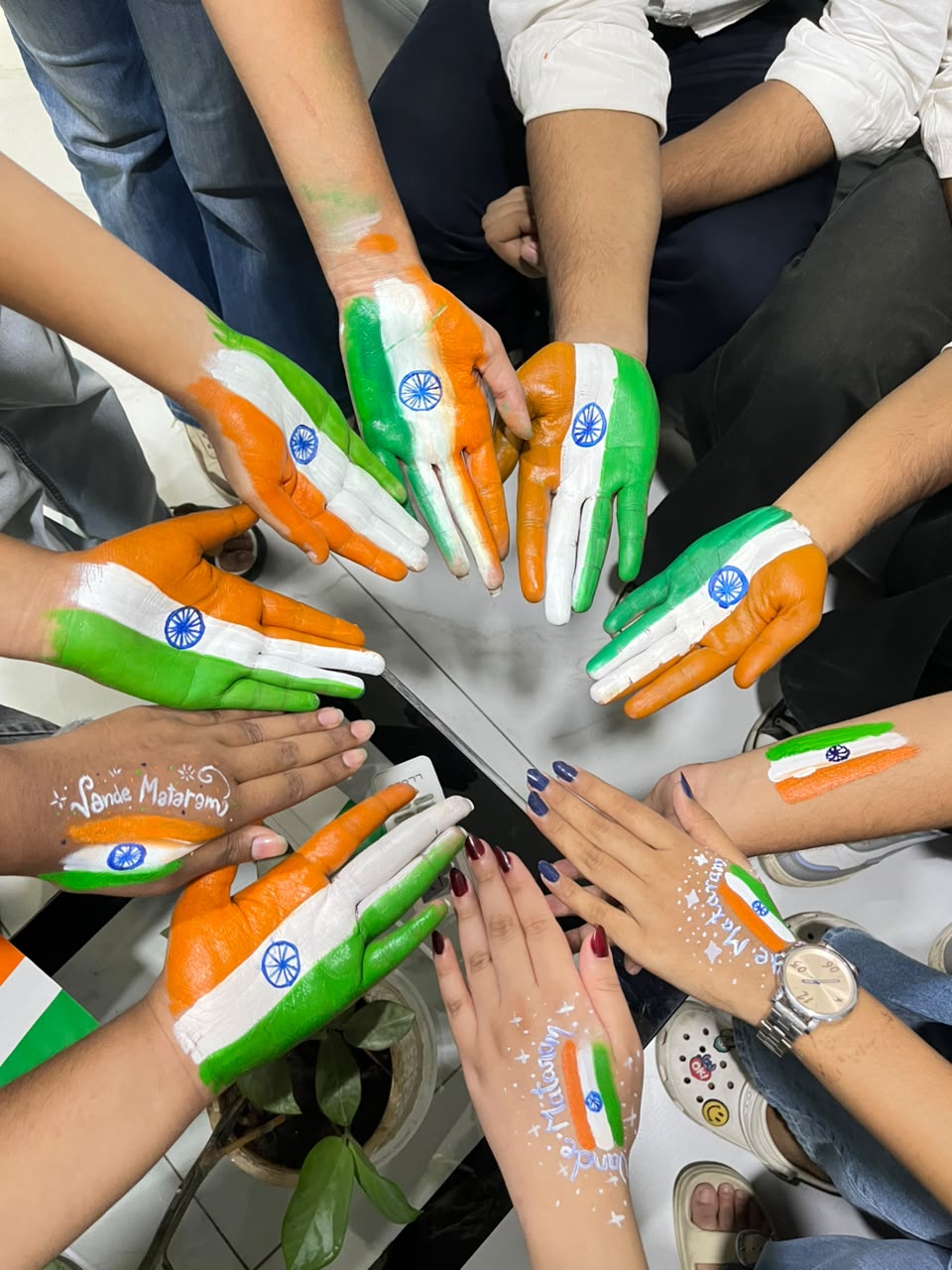
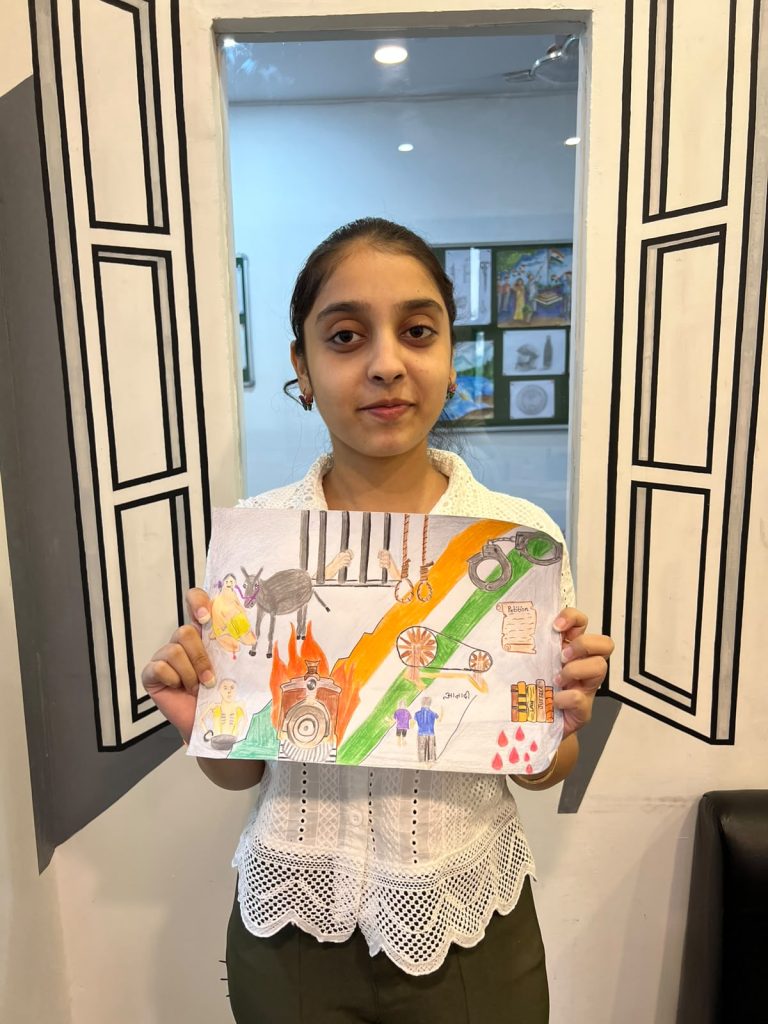
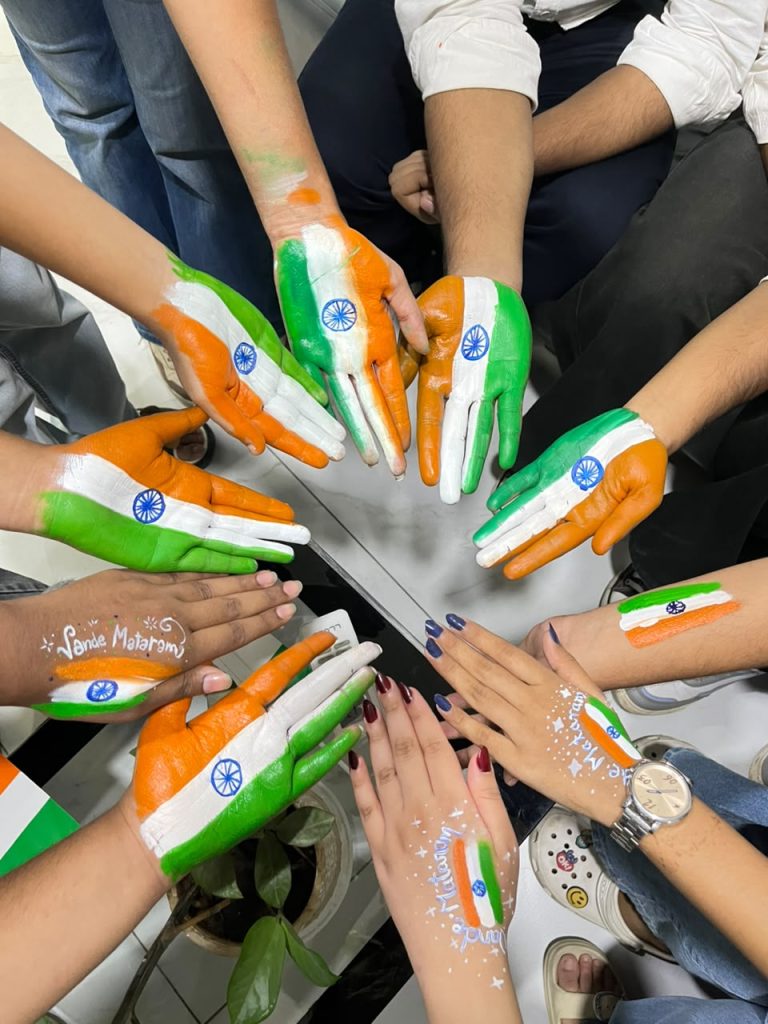
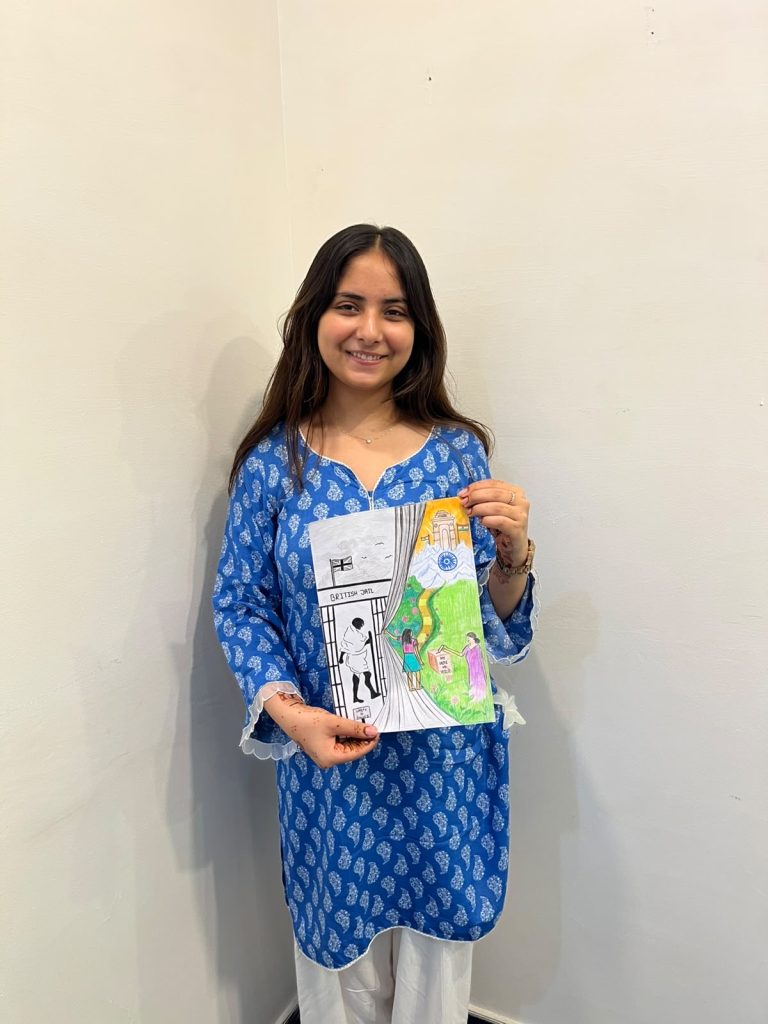
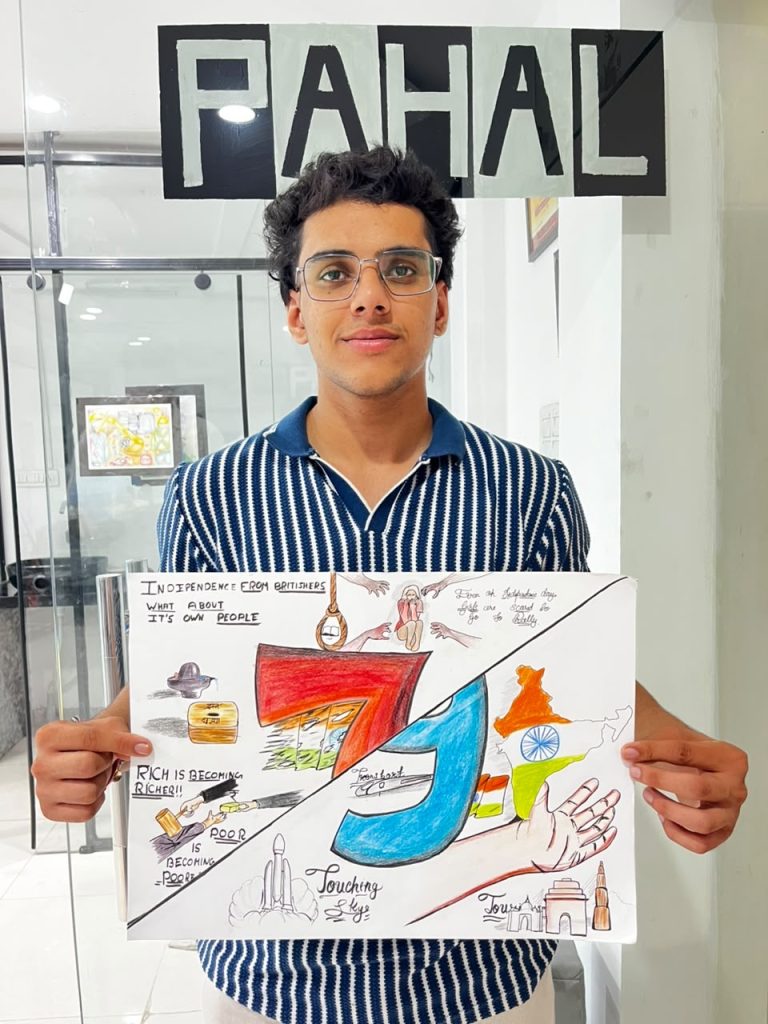
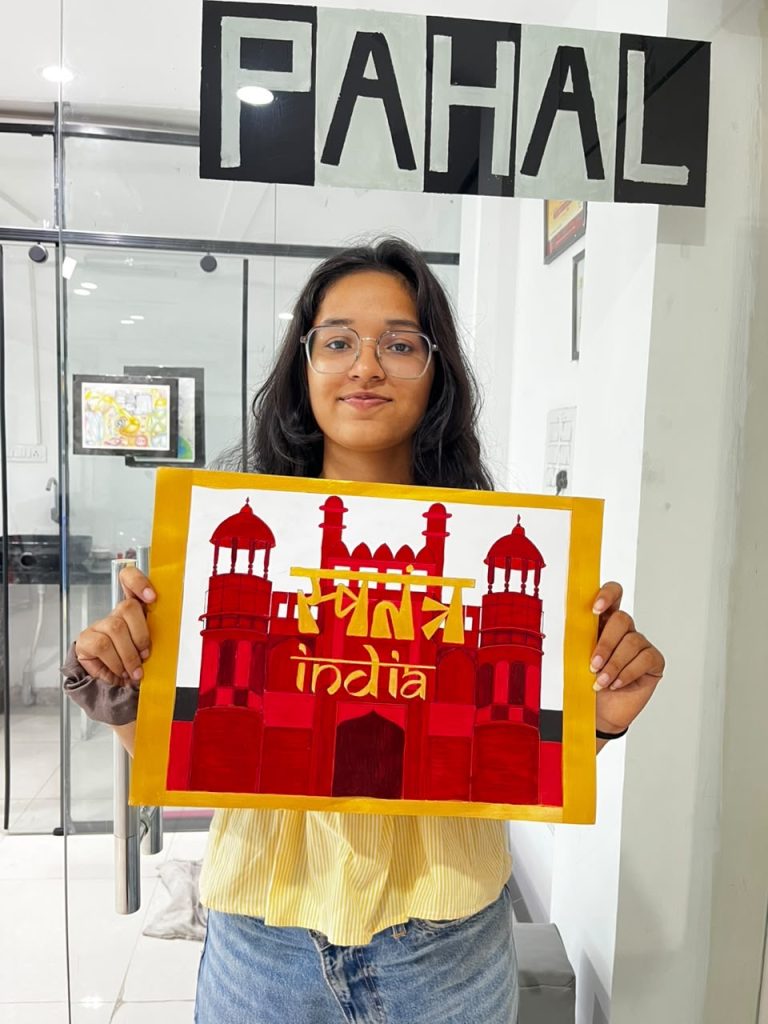
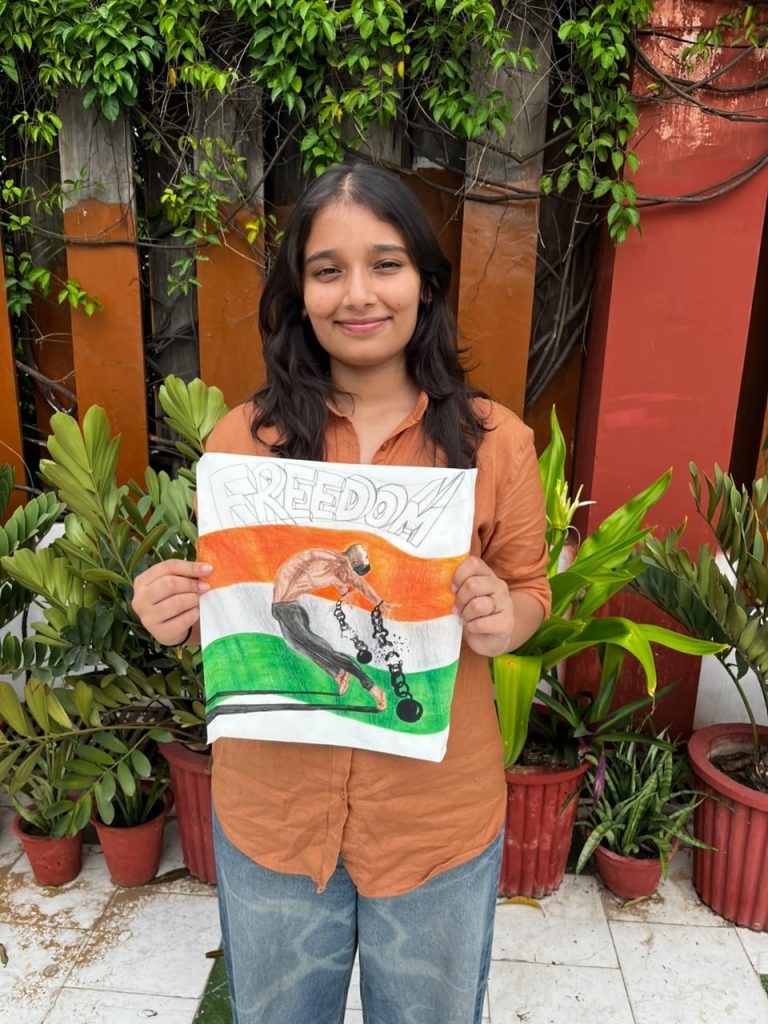
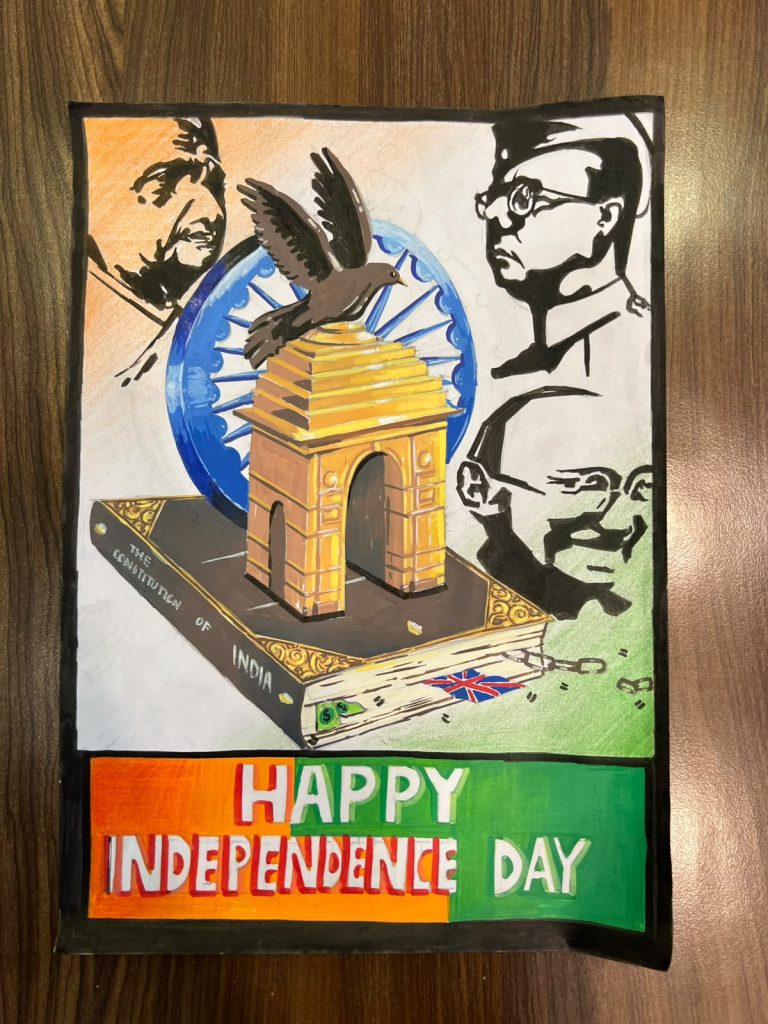
On 15 August 2026, Pahal Design proudly celebrated India’s 80th Independence Day across its centres throughout India, bringing together students, faculty members and teams in a vibrant celebration of freedom, creativity, unity and national pride.

From Delhi NCR to different cities across the country, the celebrations reflected one common spirit—the spirit of being Indian and the freedom to dream, create and build a better future.

For Pahal Design, Independence Day is not simply an occasion to remember India’s historic journey to freedom. It is also an opportunity to inspire the next generation of young designers, artists, architects and creative thinkers to understand the responsibility that comes with freedom.

One Nation. Many Centres. One Celebration.

The Independence Day 2026 celebration at Pahal Design centres across India brought the entire Pahal Design community together.

Every centre celebrated in its own creative way while remaining connected by the colours of the Tricolour and the values of unity, diversity, creativity and progress.

Students and faculty members participated enthusiastically, turning Pahal Design classrooms and creative spaces into celebrations of India’s culture and identity.

The occasion beautifully demonstrated how creativity can connect people across different cities, backgrounds and cultures.

Creativity Meets Patriotism at Pahal Design

As an institute dedicated to nurturing creative minds, Pahal Design believes that every celebration should give students an opportunity to think, imagine and express.

Independence Day 2026 became a canvas for students to communicate what India and freedom mean to them.

Creative activities across the centres encouraged students to explore themes such as:

  • India @ 80
  • Unity in Diversity
  • Freedom and Responsibility
  • Indian Art, Culture and Heritage
  • Viksit Bharat
  • Sustainable India
  • Women Empowerment
  • Innovation and Technology
  • India’s Youth and the Future
  • Remembering India’s Freedom Fighters

Through art, design, posters, illustrations and creative expressions, students celebrated India’s journey while sharing their vision for its future.

Independence Day Poster Making & Creative Activities

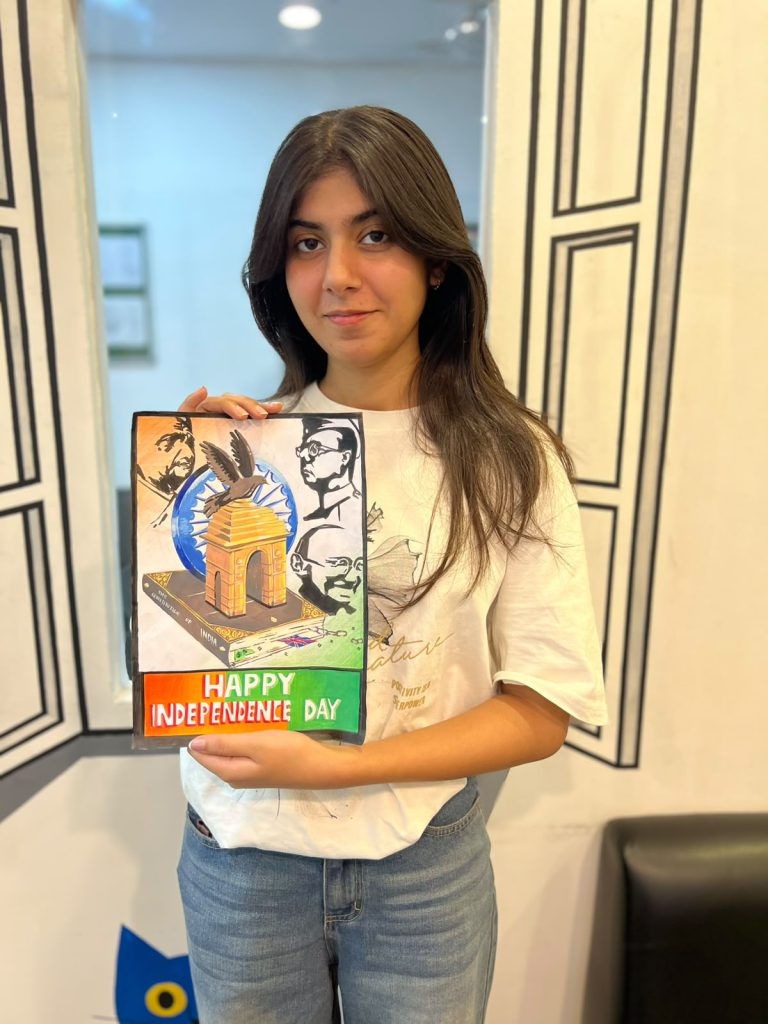
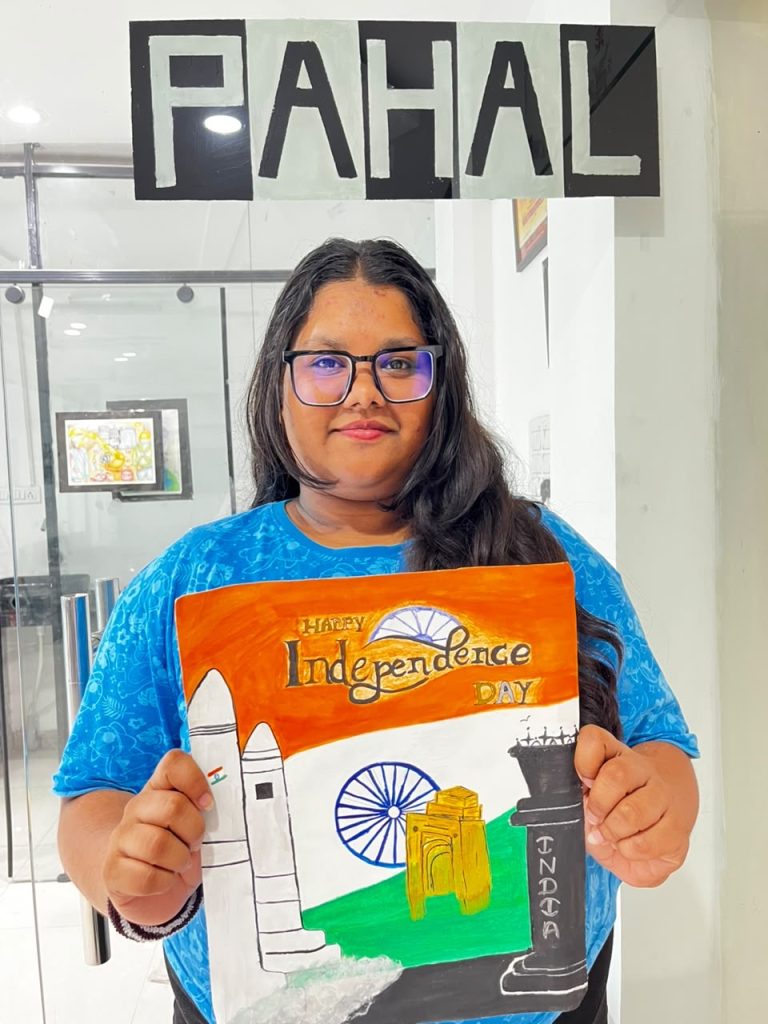
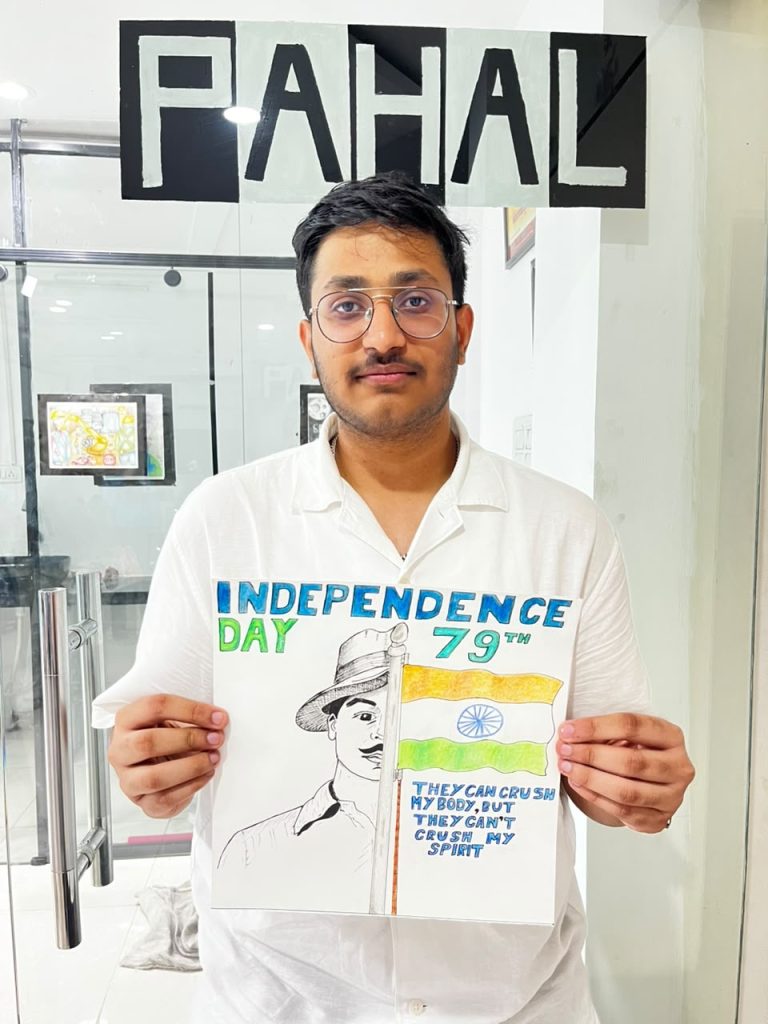
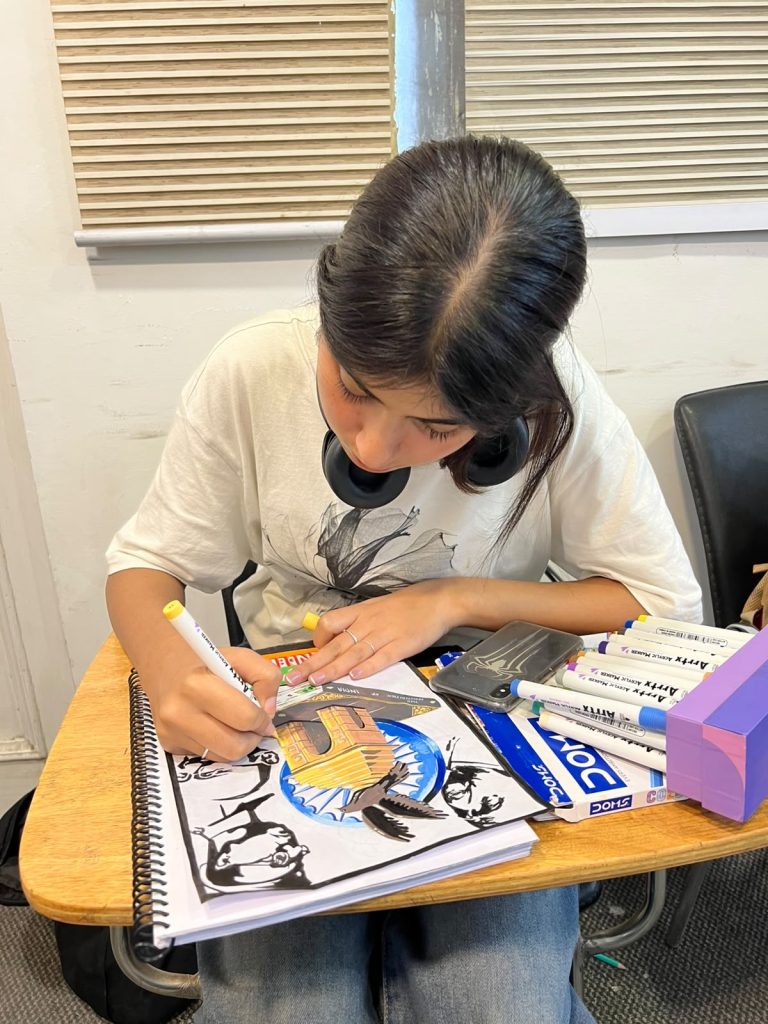
One of the highlights of the celebration was the opportunity for students to express their patriotic ideas through Independence Day posters and creative artwork.

Poster making is not only an artistic activity—it is an important form of visual communication. Students learn how to transform an idea into an impactful visual using composition, typography, illustration, colours and storytelling.

The Independence Day activities therefore combined celebration with learning, allowing students to develop creative skills while connecting with the values represented by the occasion.

Celebrating India’s 80th Independence Day

The year 2026 marks 80 years since India achieved independence on 15 August 1947.

This milestone is an opportunity to remember the courage, sacrifices and determination of those who contributed to India’s freedom while also looking towards the country’s future.

For today’s young generation, independence represents more than political freedom. It represents the freedom to learn, innovate, question, create, design and dream.

At Pahal Design, we believe these freedoms empower young people to become creators and problem-solvers who can contribute meaningfully to India’s development.

Freedom to Think. Freedom to Create.

Creativity flourishes when young minds have the freedom to explore.

This Independence Day, Pahal Design encouraged students to look beyond conventional ideas and understand how design and creativity can contribute to society.

Designers and artists have the ability to influence how people communicate, live, travel, learn and experience the world. From sustainable products and inclusive spaces to digital innovation and visual communication, creative professionals have an important role in shaping the India of tomorrow.

That is why our Independence Day 2026 message to every student was simple:

Freedom to Think. Freedom to Imagine. Freedom to Create.

Students – The Creative Future of India

India’s greatest strength is its young generation.

Today’s students will become tomorrow’s designers, architects, artists, entrepreneurs, innovators and leaders. Encouraging creativity among young people is therefore an investment in the country’s future.

At Pahal Design, our goal is to help students discover their creative potential and develop the skills and confidence required to transform their ideas into meaningful careers.

The Independence Day celebrations across our centres reinforced this belief and reminded students that creativity also comes with responsibility—the responsibility to create solutions that make society and the country better.

A Celebration Connecting Pahal Design Across India

What made Independence Day 2026 at Pahal Design special was seeing students and teams across different centres celebrate the same occasion together.

Different classrooms.
Different cities.
Different creative expressions.
But one emotion—pride in India.

The celebrations reflected the growing Pahal Design community and our shared commitment to nurturing India’s next generation of creative talent.

Pahal Design – Nurturing Creative Aspirants Since 1999

Since 1999, Pahal Design has been guiding students aspiring to pursue careers in Design, Architecture and Fine Arts.

Students at Pahal Design prepare for leading creative entrance examinations including:

NID | NIFT | UCEED | CEED | NATA | JEE Paper 2 | BFA

Through classroom learning, creative exercises, workshops, competitions, mentoring and student activities, Pahal Design focuses on developing the observation, imagination, problem-solving and visualisation abilities required by aspiring creative professionals.

Our Independence Day celebration is another reflection of this philosophy—learning through creativity and experiences.

Looking Towards a Creative and Progressive India

As India celebrates its 80th Independence Day, Pahal Design proudly joins the nation in celebrating its extraordinary journey.

We salute the people whose sacrifices gave us freedom and celebrate the young minds who will shape India’s next chapter.

May our students continue to dream fearlessly, think independently and use their creativity to contribute towards a stronger, sustainable and innovative India.

One Nation. Infinite Ideas. Limitless Creativity.

Happy 80th Independence Day from the entire Pahal Design family! 🇮🇳

Jai Hind!


About Pahal Design

Pahal Design is a leading Design, Architecture and Fine Arts entrance coaching institute in India, guiding creative aspirants since 1999.

With centres across India and learning options through Classroom, Online and Hybrid programs, Pahal Design helps students prepare for leading entrance examinations including NID, NIFT, UCEED, CEED, NATA, JEE Paper 2 and BFA.

Admissions & Enquiries: 880022-6864
Website: www.pahaldesign.com

FAQs – Independence Day 2026 Celebration at Pahal Design

1. How did Pahal Design celebrate Independence Day 2026?

Pahal Design celebrated Independence Day 2026 across its centres in India with students, faculty members and teams participating in patriotic and creative activities that celebrated India’s freedom, culture and future.

2. What creative activities were organised for Independence Day at Pahal Design?

Students participated in creative expressions including poster making, artwork and design-based activities inspired by patriotism, Indian culture, freedom, unity and the vision of a progressive India.

3. Why does Pahal Design organise creative activities for students?

Creative activities help students develop observation, conceptual thinking, imagination, visual communication and presentation skills while encouraging them to explore ideas beyond the classroom.

4. Which entrance examinations does Pahal Design prepare students for?

Pahal Design provides preparation and mentoring for creative entrance examinations including NID, NIFT, UCEED, CEED, NATA, JEE Paper 2 and BFA.

5. How can I join Pahal Design?

Students interested in Design, Architecture and Fine Arts entrance preparation can contact Pahal Design at 880022-6864or visit www.pahaldesign.com for information about courses, centres and admission options.

NID M.Des Cut Off 2026–27: Last Rank & Score for All Disciplines

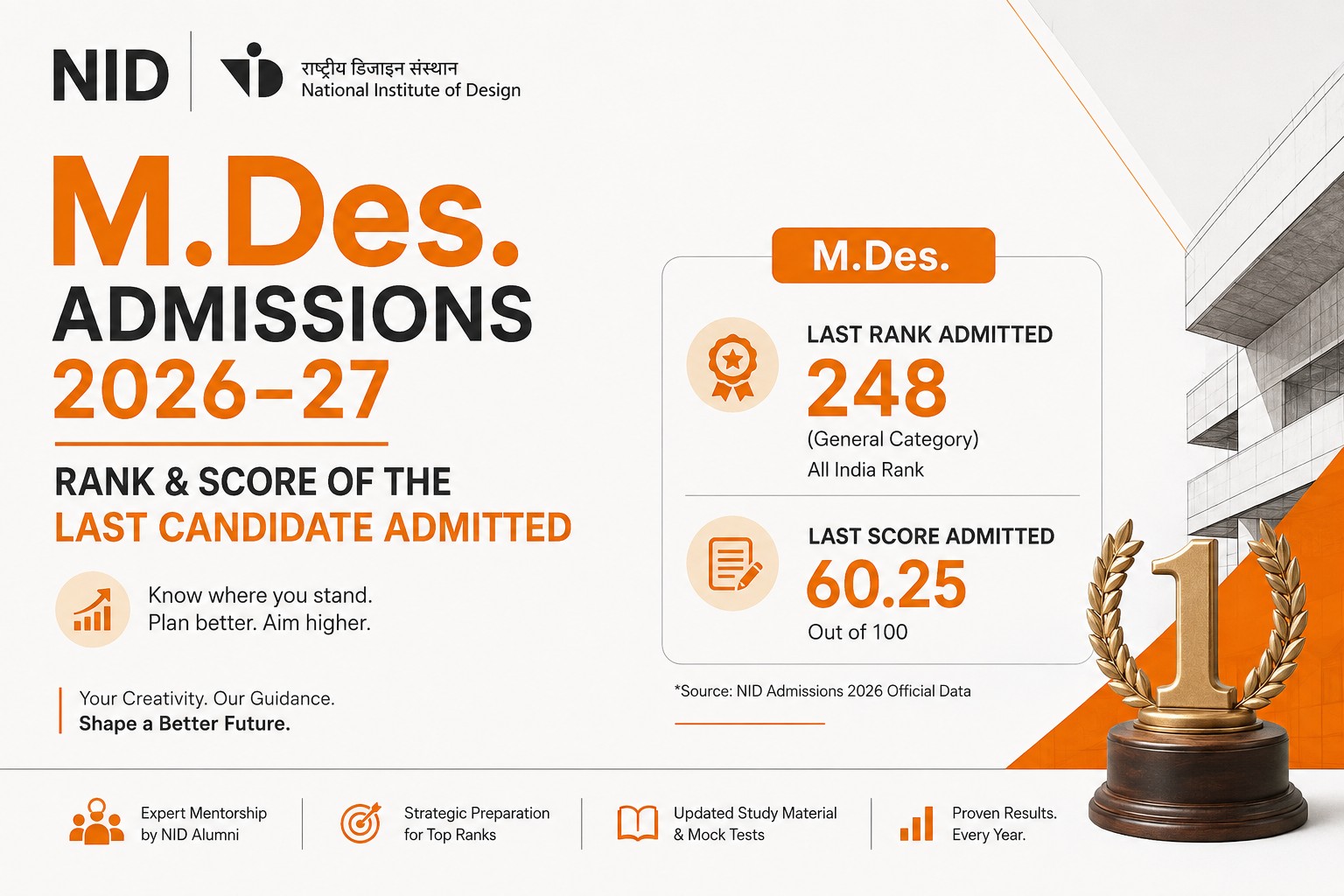
The National Institute of Design (NID) M.Des Admission 2026–27 data provides an important benchmark for aspirants preparing for admission to one of India’s most prestigious design institutes. NID has released the Rank and Score of the Last Candidate Allotted a Seat as on 17 July 2026, covering different M.Des disciplines and reservation categories.

For students planning to appear for NID DAT M.Des 2027, understanding the NID M.Des cut-off, closing rank and last admitted candidate’s score can help them evaluate the level of competition and set realistic preparation targets.

At Pahal Design, aspirants can use this previous admission data as a reference while preparing strategically for NID DAT Prelims, DAT Mains and the complete M.Des admission process.

NID M.Des Cut Off 2026–27: Discipline-Wise Open Category Closing Rank & Score

According to the official NID admission data, the following were the Open Category rank and score of the last candidate allotted a seat:

M.Des Discipline Open Rank Score
Animation Film Design 10 70.83
Ceramic & Glass Design 8 45.68
Furniture & Interior Design 18 48.18
Film & Video Communication 11 60.85
Graphic Design 9 65.10
Product Design 8 57.13
Textile Design 9 70.30
Apparel Design 14 54.70
Lifestyle Accessory Design 9 74.50
New Media Design 13 48.88
Photography Design 15 50.63
Strategic Design Management 8 76.28
Transportation & Automobile Design 12 56.75
Toy & Game Design 5 65.55
Digital Game Design 8 59.53
Design for Retail Experience 10 76.30
Information Design 11 61.88
Interaction Design 11 67.78
Universal Design 19 45.25

The official table shows substantial variation across disciplines. For example, Furniture & Interior Design closed at Open Rank 18 with a score of 48.18, Film & Video Communication at Rank 11 with 60.85, Graphic Design at Rank 9 with 65.10, and Product Design at Rank 8 with 57.13.

Similarly, Lifestyle Accessory Design recorded an Open score of 74.50, while Strategic Design Management recorded 76.28.

Among the disciplines listed in the official document, Design for Retail Experience had an Open score of 76.30, while Interaction Design had an Open score of 67.78.

Category-Wise NID M.Des Cut Off 2026–27

The official NID admission document provides closing rank and score information across:

  • OPEN
  • GEN-EWS
  • OBC-NCL
  • SC
  • ST
  • PwD
  • Overseas

The document also uses NE for “No Eligible Candidate” and NA for “No Applicant.”

This is important because the last allotted rank and score vary significantly depending on both the M.Des discipline and admission category.

NID Graphic Design Cut Off 2026

Graphic Design remains one of the key specialisations considered by NID M.Des aspirants.

For Graphic Design, the last allotted candidates recorded were:

Category Rank Score
Open 9 65.10
GEN-EWS 3 52.55
OBC-NCL 9 41.15
SC 5 53.58
ST 1 60.28
PwD 1 58.03
Overseas 1 62.48

These figures are taken from NID’s 2026–27 admission data.

NID Product Design Cut Off 2026

For Product Design, the Open Category last allotted candidate had:

Open Rank: 8 Score: 57.13

The same official data reports GEN-EWS Rank 2 at 51.85, OBC-NCL Rank 7 at 43.60, SC Rank 5 at 51.10, ST Rank 1 at 44.80 and PwD Rank 2 at 40.95.

Students targeting NID Product Design should remember that previous closing scores are useful benchmarks but should not be treated as guaranteed future cut-offs.

NID Interaction Design Cut Off 2026

For Interaction Design, the Open Category last allotted candidate had:

Open Rank: 11 Score: 67.78

The official document also records GEN-EWS Rank 2 at 49.23, OBC-NCL Rank 8 at 44.13, SC Rank 3 at 58.58 and ST Rank 1 at 53.80.

With the growing importance of UX, digital products and human-computer interaction, Interaction Design is an important discipline for students exploring postgraduate design education.

Which NID M.Des Discipline Had the Highest Open Score?

Based on the published last-allotted-candidate data, Design for Retail Experience recorded the highest Open score at 76.30, closely followed by:

Strategic Design Management – 76.28 Lifestyle Accessory Design – 74.50 Animation Film Design – 70.83 Textile Design – 70.30 Interaction Design – 67.78

The official discipline-wise figures show how widely scores can differ between programmes.

Importantly, a higher closing score should not automatically be interpreted as a programme being “better” or more difficult. Closing figures can be influenced by factors such as applicant performance, category and seat allocation.

What Does NID M.Des Closing Rank Mean?

The closing rank refers to the rank of the last candidate allotted a seat for the relevant discipline and category at the stated point in the admission process.

Therefore, if the Open Rank for a particular discipline is 10, it means the last Open-category candidate allotted a seat in the published data held Open Rank 10.

The NID document specifically states that these figures represent the “Rank and Score of the Last Candidate Allotted a Seat as on 17 July 2026.”

This distinction is important when students analyse previous-year NID cut-offs.

How to Use NID M.Des 2026 Cut-Off Data for 2027 Preparation

Previous admission data should primarily be used as a benchmark rather than a guaranteed target.

An aspirant preparing for the next NID M.Des admission cycle should aim to perform comfortably above previous closing-score levels rather than preparing only to match them.

Your preparation should focus on developing:

  • Strong design aptitude and visual thinking
  • Observation and analytical abilities
  • Creative problem-solving
  • Concept development
  • Visual communication and presentation
  • Discipline-specific understanding
  • Portfolio and project presentation skills where relevant
  • Consistent practice for the different stages of the NID admission process

Why NID M.Des Aspirants Need a Discipline-Specific Preparation Strategy

M.Des applicants generally come with more specialised interests than undergraduate design aspirants. A candidate interested in Graphic Design may require a different portfolio and conceptual orientation from someone targeting Transportation & Automobile Design, Strategic Design Management, Animation Film Design or Interaction Design.

Therefore, simply practising generic design entrance questions may not be sufficient.

Students should understand their preferred discipline, analyse previous NID admission trends and develop their creative thinking and presentation accordingly.

Prepare for NID M.Des with Pahal Design

Pahal Design provides preparation support for students aspiring to enter leading design institutes in India.

For NID M.Des aspirants, effective preparation requires more than attempting previous papers. Students need to build their ability to think creatively, communicate ideas visually, solve unfamiliar design problems and present concepts with clarity.

A structured preparation approach can include:

NID DAT Preparation: Regular practice to improve aptitude, creativity, observation and problem-solving.

Creative & Design Thinking: Developing original concepts rather than relying on repetitive solutions.

Portfolio Guidance: Helping students organise and present their design work effectively where portfolio preparation is relevant.

Mock Tests & Practice: Working under examination conditions to improve speed, decision-making and presentation.

Personalised Feedback: Identifying individual strengths and areas that require improvement.

The objective should not simply be to cross a previous cut-off but to build a strong overall performance for the NID admission process.

FAQs – NID M.Des Cut Off 2026–27

1. What is the NID M.Des cut off for 2026?

There is no single cut-off applicable to every M.Des discipline. The rank and score of the last candidate allotted a seat differ according to discipline and admission category. The official document provides separate figures for OPEN, GEN-EWS, OBC-NCL, SC, ST, PwD and Overseas candidates.

2. What was the NID Graphic Design closing rank in 2026?

For Graphic Design, the last allotted Open-category candidate had Rank 9 with a score of 65.10.

3. What was the NID Product Design closing rank in 2026?

For Product Design, the Open-category last allotted candidate had Rank 8 and a score of 57.13.

4. What was the NID Interaction Design closing rank?

For Interaction Design, the Open-category last allotted candidate had Rank 11 with a score of 67.78.

5. Which NID M.Des discipline had the highest Open closing score in the published 2026–27 data?

Among the disciplines listed, Design for Retail Experience had the highest Open score at 76.30, followed closely by Strategic Design Management at 76.28.

6. What do NE and NA mean in the NID cut-off table?

According to the official document, NE means “No Eligible Candidate” and NA means “No Applicant.”

7. Will the NID M.Des cut off remain the same next year?

No. Previous admission figures should only be treated as reference points. Closing ranks and scores can change from one admission cycle to another.

8. Is NID M.Des difficult to crack?

Admission is competitive because candidates are evaluated on design aptitude and creative abilities, and seats are discipline-specific. Consistent practice and a well-planned preparation strategy can help candidates improve their performance.

9. How should I prepare for NID M.Des 2027?

Start with design aptitude, observation, creative problem-solving, visual communication and regular timed practice. Aspirants should also understand their preferred M.Des discipline and develop relevant design skills and portfolio work where required.

10. Where can I prepare for NID M.Des entrance examination?

Students looking for structured NID M.Des coaching and design entrance preparation can explore Pahal Design for preparation, mentoring, practice and guidance for design entrance examinations.
Contact Us

NID B.Des Cut Off 2026-27: Campus-Wise Rank & Score of Last Candidate Admitted

The National Institute of Design (NID) has released the B.Des Admissions 2026-27 Rank and Score of the Last Candidate Allotted a Seat, providing an important reference for students preparing for NID admissions.

According to the official NID data, updated as on 12 August 2026, the closing ranks and scores have been provided for NID Ahmedabad, NID Andhra Pradesh, NID Assam, NID Madhya Pradesh and NID Haryana across OPEN, GEN-EWS, OBC-NCL, SC, ST, PwD and Overseas categories.

For students targeting NID B.Des Admission 2027, this information can be particularly useful for understanding the level of competition and setting realistic preparation targets.

NID B.Des Cut Off 2026-27 – Campus-Wise Closing Rank & Score

NID Ahmedabad

NID Ahmedabad recorded the most competitive OPEN category closing position among the campuses listed in the official document.

CategoryLast RankScore
OPEN4767.28
GEN-EWS1658.22
OBC-NCL4357.43
SC2656.82
ST1155.53
PwD754.89
Overseas2254.57

The OPEN category’s last allotted candidate at NID Ahmedabad had Open Rank 47 with a score of 67.28.

NID Andhra Pradesh B.Des Closing Rank 2026

CategoryLast RankScore
OPEN58739.78
GEN-EWS4946.89
OBC-NCL11248.03
SC7938.64
ST3540.32
PwD2839.78
Overseas5443.72

For NID Andhra Pradesh, the last allotted OPEN candidate had Open Rank 587 and a score of 39.78.

NID Assam B.Des Closing Rank 2026

CategoryLast RankScore
OPEN37150.32
GEN-EWS5644.43
OBC-NCL13543.75
SC8234.32
ST3938.72
PwDNANA
OverseasNot Applicable—

At NID Assam, the OPEN closing position was Rank 371 with a score of 50.32.

NID Madhya Pradesh B.Des Closing Rank 2026

CategoryLast RankScore
OPEN20257.39
GEN-EWS2954.39
OBC-NCL10150.03
SC5446.14
ST2845.25
PwD1450.28
Overseas5643.64

The last OPEN candidate allotted a seat at NID Madhya Pradesh had Open Rank 202 and a score of 57.39.

NID Haryana B.Des Closing Rank 2026

CategoryLast RankScore
OPEN24055.78
GEN-EWS4448.68
OBC-NCL10249.75
SC6742.72
ST2944.57
PwD2740.50
Overseas7231.68

For NID Haryana, the OPEN category closed at Open Rank 240 with a score of 55.78.

NID B.Des 2026 OPEN Category Closing Rank Comparison

For students looking specifically at the OPEN category, the campus-wise closing positions were:

NID CampusOPEN Closing RankScore
NID Ahmedabad4767.28
NID Madhya Pradesh20257.39
NID Haryana24055.78
NID Assam37150.32
NID Andhra Pradesh58739.78

These figures show a substantial difference in the last allotted OPEN ranks across NID campuses. NID Ahmedabad had the lowest OPEN closing rank at 47, followed by NID Madhya Pradesh at 202, NID Haryana at 240, NID Assam at 371 and NID Andhra Pradesh at 587.

What Does the NID 2026 Closing Rank Mean for NID 2027 Aspirants?

The previous year’s closing rank is one useful reference point when preparing for the next NID admission cycle. However, students should not treat these ranks or scores as guaranteed cut-offs for NID 2027.

Closing ranks can change depending on factors such as the applicant pool, performance of candidates, category, seat allocation and admission process.

Students preparing for NID DAT 2027 should therefore aim for the strongest possible performance rather than preparing only to match the previous year’s last admitted score.

Targeting NID Ahmedabad?

The 2026 data demonstrates the particularly competitive nature of NID Ahmedabad admissions. The last OPEN candidate allotted a seat had Rank 47 with 67.28 marks.

Aspirants targeting NID Ahmedabad should consequently focus on developing strong fundamentals in observation, creativity, visualisation, problem solving, drawing, design aptitude and original thinking.

How to Prepare for NID B.Des Entrance Exam

A structured NID preparation strategy should combine creativity with consistent practice. Aspirants can focus on:

  1. Observation & Visualisation – Develop the ability to observe everyday situations and communicate ideas visually.
  2. Creative Thinking – Practise generating multiple original solutions instead of relying on predictable answers.
  3. Sketching & Drawing – Improve proportion, perspective, composition and visual communication.
  4. Design Aptitude – Strengthen design awareness, logical thinking and problem-solving skills.
  5. Time Management – Practise completing creative questions within examination conditions.
  6. Mock Tests & Previous Papers – Use regular testing to identify strengths and areas that need improvement.

Prepare for NID 2027 with Pahal Design

For students aspiring to secure admission to NID, systematic preparation and regular practice can make a significant difference.

Pahal Design provides preparation for design entrance examinations including NID, NIFT and UCEED, with a focus on design aptitude, creativity, drawing, visualisation, portfolio development and entrance examination practice.

Students preparing for NID B.Des 2027 can start early, understand the examination requirements and build their creative abilities progressively rather than depending on last-minute preparation.

Frequently Asked Questions – NID B.Des Cut Off 2026

What was the NID Ahmedabad B.Des OPEN closing rank in 2026?

The last OPEN candidate allotted a seat at NID Ahmedabad had Open Rank 47 and a score of 67.28.

What was the NID Madhya Pradesh OPEN closing rank?

NID Madhya Pradesh’s last allotted OPEN candidate had Rank 202 with 57.39 marks.

What was the NID Haryana OPEN closing rank?

For NID Haryana, the OPEN closing position was Rank 240 with a score of 55.78.

What was the NID Assam OPEN closing rank?

The OPEN category at NID Assam closed at Rank 371 with a score of 50.32.

What was the NID Andhra Pradesh OPEN closing rank?

NID Andhra Pradesh’s last allotted OPEN candidate had Rank 587 and a score of 39.78.

Are NID 2026 closing ranks the same as NID 2027 cut-offs?

No. The 2026 closing ranks show the rank and score of the last candidate allotted a seat in that admission cycle. They can be used as a reference, but future closing ranks may change.

Conclusion

The NID B.Des 2026-27 closing rank and score data gives aspiring designers a useful benchmark for understanding admission competition across NID campuses.

Among the campuses listed, NID Ahmedabad had an OPEN closing rank of 47 with 67.28 marks, while the corresponding OPEN closing ranks were 202 for NID Madhya Pradesh, 240 for NID Haryana, 371 for NID Assam and 587 for NID Andhra Pradesh.

For NID 2027 aspirants, the goal should be to build strong design aptitude, creativity and visual communication skills while aiming significantly higher than previous closing benchmarks.


NATA 2026 Exam Pattern: Complete Guide to Question Paper, Marks, Syllabus & Preparation

The NATA 2026 exam pattern is important for every student planning to pursue a Bachelor of Architecture (B.Arch) in India. Conducted by the Council of Architecture (CoA), the National Aptitude Test in Architecture evaluates a candidate’s drawing ability, visualisation, observation, logical reasoning, architectural awareness and overall aptitude for architecture.

For NATA aspirants, understanding the examination structure before beginning serious preparation can make a significant difference. The NATA 2026 question paper carries a total of 200 marks and is divided into two major parts: Drawing & Composition and online aptitude-based questions.

Here is a detailed breakdown of the NATA 2026 exam pattern, question distribution, syllabus and preparation strategy.

NATA 2026 Exam Pattern Overview

According to the announced pattern, NATA 2026 is structured into two parts:

Part A – Drawing & Composition

  • Mode: Offline
  • Duration: 90 minutes
  • Total Marks: 80
  • Total Questions: 3

Part B – MCQs + NCQs

  • Mode: Online Adaptive
  • Duration: 90 minutes
  • Total Marks: 120
  • Total Questions: 50

NATA 2026 Total Exam

  • Total Questions: 53
  • Total Marks: 200
  • Total Duration: 180 minutes

This combination tests both the candidate’s creative abilities and analytical aptitude, making balanced preparation extremely important.

NATA 2026 Part A: Drawing & Composition

Part A is an offline test carrying 80 marks. It consists of three different sections designed to evaluate creativity, drawing ability, visualisation and three-dimensional thinking.

A1 – Composition & Colour

Questions: 1
Marks: 25

Students may be required to create a visual composition and demonstrate an understanding of colour application, balance, proportion and visual aesthetics.

Preparation should focus on:

  • Colour theory
  • Visual composition
  • Balance and harmony
  • Creative arrangement of elements
  • Understanding positive and negative spaces
  • Presentation skills

A2 – Sketching & Composition

Questions: 1
Marks: 25
Medium: Black & White

This section evaluates fundamental drawing abilities, including:

  • Drawing skills
  • Proportion
  • Shading
  • Perspective
  • Observation
  • Composition
  • Visual representation

Regular sketching practice can help students develop the speed and confidence required to complete this section effectively.

A3 – 3D Composition

Questions: 1
Marks: 30

The 3D Composition section carries the highest marks in Part A.

Candidates may be required to create a three-dimensional composition or model using the material or kit provided during the examination.

Students should develop an understanding of:

  • Form and volume
  • Space
  • Scale and proportion
  • Structural balance
  • 3D visualisation
  • Model-making
  • Creative transformation of basic forms

This section is particularly important because architecture requires students to think beyond two-dimensional drawings and understand how forms interact with physical space.

NATA 2026 Part B: Online Adaptive Test

Part B is an online adaptive examination carrying 120 marks.

The paper consists of:

42 MCQs + 8 NCQs = 50 Questions

Part B evaluates the candidate’s aptitude, reasoning, observation, architectural awareness and problem-solving capabilities.

NATA 2026 Part B Syllabus

1. Visual & Spatial Reasoning

Candidates should develop their ability to understand shapes, forms, patterns, directions and spatial relationships.

Practising mental rotation, 2D-to-3D visualisation, figure analysis and spatial puzzles can be useful.

2. Logical Reasoning & Interpretation

This section tests the candidate’s ability to analyse information and reach logical conclusions.

Questions may involve:

  • Patterns
  • Sequences
  • Relationships
  • Analytical reasoning
  • Logical interpretation

3. Architecture Awareness

Architecture awareness is particularly important for NATA aspirants.

Students should develop knowledge about:

  • Famous buildings
  • Architects
  • Architectural history
  • Building materials
  • Architectural styles
  • Important monuments
  • Contemporary architecture

Rather than memorising isolated facts, students should try to understand why important buildings and architectural movements are significant.

4. General Knowledge & Current Affairs

Candidates should stay updated with important national and international developments, particularly topics connected with:

  • Architecture
  • Art
  • Design
  • Culture
  • Environment
  • Technology
  • Major current events

5. Language & Grammar

Communication and comprehension skills are also tested. Students should strengthen vocabulary, grammar and their ability to understand written information accurately.

6. Design Sensitivity & Observation Skills

Architecture demands strong observation.

Students should practise identifying details in everyday environments, objects, buildings and visual compositions.

This section may evaluate a student’s understanding of aesthetics, functionality, relationships between objects and sensitivity towards design.

7. Critical Thinking & Problem-Solving

Rather than relying only on memorisation, students should develop the ability to analyse unfamiliar situations and find logical solutions.

Architecture aspirants should constantly ask:

Why is something designed this way, and how could it be designed better?

This approach can help build genuine design aptitude.

8. Basic Mathematics & Geometry

Students should revise fundamental mathematical and geometrical concepts relevant to aptitude and architecture.

Important areas may include:

  • Geometry
  • Shapes
  • Areas and volumes
  • Proportions
  • Measurements
  • Basic numerical ability

NATA 2026 Marks Distribution

SectionQuestionsMarks
A1 – Composition & Colour125
A2 – Sketching & Composition125
A3 – 3D Composition130
Part B – MCQs + NCQs50120
Total53200

The pattern clearly demonstrates that NATA preparation cannot focus only on drawing. Part B alone contributes 120 out of 200 marks, while Part A requires specialised creative and architectural aptitude.

How to Prepare for NATA 2026

A successful NATA 2026 preparation strategy should combine drawing practice, aptitude preparation and architectural awareness.

Students should regularly practise perspective drawing, composition, colour application and sketching while simultaneously working on logical reasoning, visual aptitude, mathematics and architecture-related general knowledge.

For the 3D composition component, practising with basic forms and model-making materials can help candidates develop spatial understanding.

Timed mock tests are equally important. Since both major parts have defined time limits, students must learn to balance accuracy, creativity and speed.

Why Start NATA 2026 Preparation Early?

NATA is different from a conventional academic examination. Drawing, observation, visualisation and design thinking are skills that improve gradually through consistent practice.

Starting early gives students more time to:

  • Improve sketching and perspective
  • Build drawing speed
  • Understand colour and composition
  • Develop 3D visualisation
  • Strengthen architecture awareness
  • Practise reasoning and aptitude
  • Attempt NATA mock tests
  • Identify and improve weaker areas

Prepare for NATA 2026 with Pahal Design

At Pahal Design, NATA aspirants are trained with a structured approach covering the major areas required for architecture entrance preparation.

The preparation focuses on drawing, sketching, perspective, composition, 3D visualisation, architecture aptitude, reasoning, observation and exam-oriented practice.

Students preparing for NATA and JEE Paper 2 B.Arch can benefit from systematic practice, faculty guidance, mock examinations and targeted preparation based on the latest examination requirements.

The objective is not simply to teach students how to draw, but to help them develop the observation, creativity, visualisation and problem-solving abilities required for architecture entrance examinations.

Final Words

The NATA 2026 exam pattern gives substantial importance to both creative and aptitude-based abilities. With 80 marks for Drawing & Composition and 120 marks for MCQs and NCQs, candidates need a balanced preparation strategy.

Understanding the paper pattern early, practising consistently and developing strong visual and architectural thinking can give aspirants a significant advantage.

For students targeting B.Arch admission through NATA 2026, now is the right time to build a structured preparation plan and practise every component of the examination.

Pahal Design – NATA & Architecture Entrance Exam Preparation

Website: www.pahaldesign.com
Contact: 880022-6864


UCEED 2026–27 Parent Guide: Eligibility, IIT Seats, Cutoffs, Exam Pattern & Top Design Colleges

For students aspiring to study Bachelor of Design (B.Des) at IITs and other leading design institutes in India, UCEED is one of the most important entrance examinations to understand.

The Undergraduate Common Entrance Examination for Design (UCEED) provides a pathway to the joint B.Des admission process at 7 premier participating institutes, including 6 IITs and IIITDM Jabalpur. The UCEED 2026 score is also officially shared with 47 additional institutes that conduct their own admission processes.

At Pahal Design, we recommend that both students and parents understand not only the UCEED exam pattern, but also college eligibility, expected score ranges, specialisations and alternative colleges before planning their preparation.

What is UCEED?

UCEED is a national-level design entrance examination used for admission to undergraduate design programmes.

One of its biggest advantages is that students from Science, Commerce, Arts and Humanities can appear for UCEED. However, eligibility for admission to individual participating institutes can differ depending on the subjects studied in Class XII.

For parents, this distinction is particularly important:

Being eligible to appear for UCEED does not automatically mean a student is eligible for B.Des admission at every participating IIT.

UCEED 2026 Participating Institutes, Seats & Target Scores

For 2026–27, the seven participating institutes together offer 245 joint B.Des seats.

InstituteSeatsClass XII EligibilityFinal OPEN AIR*Planning Score /300
IIT Bombay – IDC School of Design37All streams16215+
IIT Delhi – Department of Design20All streams28210+
IIT Hyderabad – Department of Design30All streams42207+
IIT Guwahati – Department of Design56PCM required78198+
IIT Indore – School of Innovation16All streams84197+
IIT Roorkee – Department of Design20PCM required93195+
IIITDM Jabalpur – Design Discipline66PCM or Biology171185+

*The Final OPEN AIR figures are the 2026 Round-V closing ranks given in the source guide. The score figures are planning targets rather than official college cutoffs.

What UCEED Score Should Students Target?

Parents should avoid treating a particular raw score as a guaranteed IIT admission score. UCEED marks-to-rank relationships can change every year.

For example, observed 2026 marks-to-AIR examples in the guide include:

218.37 → AIR 9 | 212.58 → AIR 15 | 208.16 → AIR 30 | 205.16 → AIR 42 | 195.50 → AIR 75 | 189.58 → AIR 124 | 185.95 → AIR 151.

Therefore, students should focus on achieving the strongest possible AIR rather than preparing only to cross a perceived cutoff.

UCEED 2026 Eligibility Criteria

Who Can Appear for UCEED 2026?

According to the guide, candidates:

  • Should have first attempted Class XII in 2025 or 2026
  • Can belong to Science, Commerce, Arts or Humanities
  • Can attempt UCEED a maximum of two times in consecutive years
  • OPEN/EWS/OBC-NCL candidates should have been born on or after 1 October 2001
  • SC/ST/PwD candidates should have been born on or after 1 October 1996

Eligibility for B.Des Admission at the 7 Participating Institutes

Students must obtain a UCEED 2026 rank and pass all five subjects in their Class XII/equivalent examination in 2025 or 2026.

Subject requirements differ:

IIT Bombay, IIT Delhi, IIT Hyderabad and IIT Indore: All streams
IIT Guwahati and IIT Roorkee: Physics + Chemistry + Mathematics
IIITDM Jabalpur: Physics + Chemistry + Mathematics/Biology

UCEED 2026 Exam Pattern

UCEED is a 3-hour, 300-mark examination consisting of two compulsory parts.

PartModeDurationQuestionsMarks
Part AComputer-Based2 Hours57 – NAT + MSQ + MCQ200
Part BDrawing Sheet1 Hour1 Sketching + 1 Design Aptitude100
Total—3 HoursBoth Parts Compulsory300

This structure makes UCEED preparation different from conventional entrance examinations. Students need to develop both analytical/design aptitude and drawing/visualisation abilities.

UCEED 2026 Part A Shortlisting Cutoff

The 2026 Part-A shortlisting cutoffs listed in the guide are:

OPEN: 83.75/200
OBC-NCL & EWS: 75.37/200
SC/ST/PwD: 41.87/200

An important point for parents is that these are Part-A shortlisting cutoffs, not IIT admission cutoffs.

If a candidate’s Part-A score falls below the applicable cutoff, Part-B is not evaluated. The final rank for shortlisted candidates is based on the combined Part-A and Part-B score.

Design Specialisations and Career Options Through UCEED

UCEED should not be viewed only as an entrance examination for a generic B.Des programme.

Depending on the institute, students can explore areas such as:

Product Design, UX Design, Interaction Design, Visual Communication, Film & Animation, Space Design, Industrial Design, Sustainable Design, Fashion Design, Footwear Design, Branding, AR/VR and technology-led design.

For example, IIT Hyderabad includes Product, Visual, Interaction, UX, Film and Animation focus areas, while IIITDM Jabalpur includes Product, Space and Communication Design. IIT Indore offers areas including Urban System Innovation, Educational Technologies, Healthcare Systems and Sustainable Energy Systems.

Students should nevertheless check whether an area is offered as a formal specialisation, major, pathway, focus area or elective, as this varies between institutions.

UCEED Colleges Beyond the IITs

One of the most valuable aspects of UCEED is that the examination can create opportunities beyond the seven institutes participating in joint B.Des counselling.

The UCEED 2026 guide identifies 47 official result-sharing institutes. These institutions are separate from IIT Bombay’s joint B.Des seat-allocation process, so students need to apply to them individually.

Some notable options include BITS Design School, CEPT University, FDDI, Unitedworld Institute of Design (UID), Nirma University, VIT School of Design, IIIT-Delhi, DTU, NSUT, Srishti Manipal Institute, MIT World Peace University, Anant National University and several other design institutions.

This makes UCEED valuable even for students who may not ultimately secure an IIT B.Des seat.

UCEED Score Strategy for Parents & Students

A practical preparation strategy from the guide is:

Target ScorePlanning Perspective
215+IIT Bombay-level target
205–214IIT Delhi / IIT Hyderabad range can become realistic
195–204IIT Guwahati / IIT Indore / IIT Roorkee range can become realistic
185–194IIITDM Jabalpur + strong result-sharing options
170–184Several result-sharing institutes may remain valuable
Qualified below thisDon’t assume there are no college options

These should be treated as preparation benchmarks, not guaranteed admission cutoffs.

How to Prepare for UCEED 2026

A strong UCEED preparation strategy should balance Part A and Part B rather than treating drawing as an optional skill.

Students should work consistently on observation, visualisation, spatial reasoning, logical reasoning, design aptitude, creativity, sketching, perspective, composition and problem-solving.

Regular timed practice and mock examinations are equally important because students have to manage very different question formats within the same examination.

UCEED 2026 Preparation with Pahal Design

Pahal Design helps students prepare strategically for UCEED and other leading design entrance examinations through structured concept building, aptitude preparation, drawing and visualisation practice, design thinking exercises, mock tests and exam-oriented guidance.

Preparation should go beyond solving questions. Students need to understand how designers observe, analyse, visualise and solve problems creatively.

For parents, the objective should therefore not simply be “How many marks does my child need?” but:

“How can my child build the skills required to achieve the best possible UCEED rank?”

With focused preparation, regular practice and an informed college strategy, UCEED can open multiple pathways into some of India’s leading design institutions.

Important: Admission rules, eligibility requirements, seat matrices and institute-specific selection processes can change. Students and parents should always verify the latest official information before applying.


Schedule a free counselling session WhatsApp WhatsApp