NATA 2026 Exam Pattern: Complete Guide to Question Paper, Marks, Syllabus & Preparation

The NATA 2026 exam pattern is important for every student planning to pursue a Bachelor of Architecture (B.Arch) in India. Conducted by the Council of Architecture (CoA), the National Aptitude Test in Architecture evaluates a candidate’s drawing ability, visualisation, observation, logical reasoning, architectural awareness and overall aptitude for architecture.

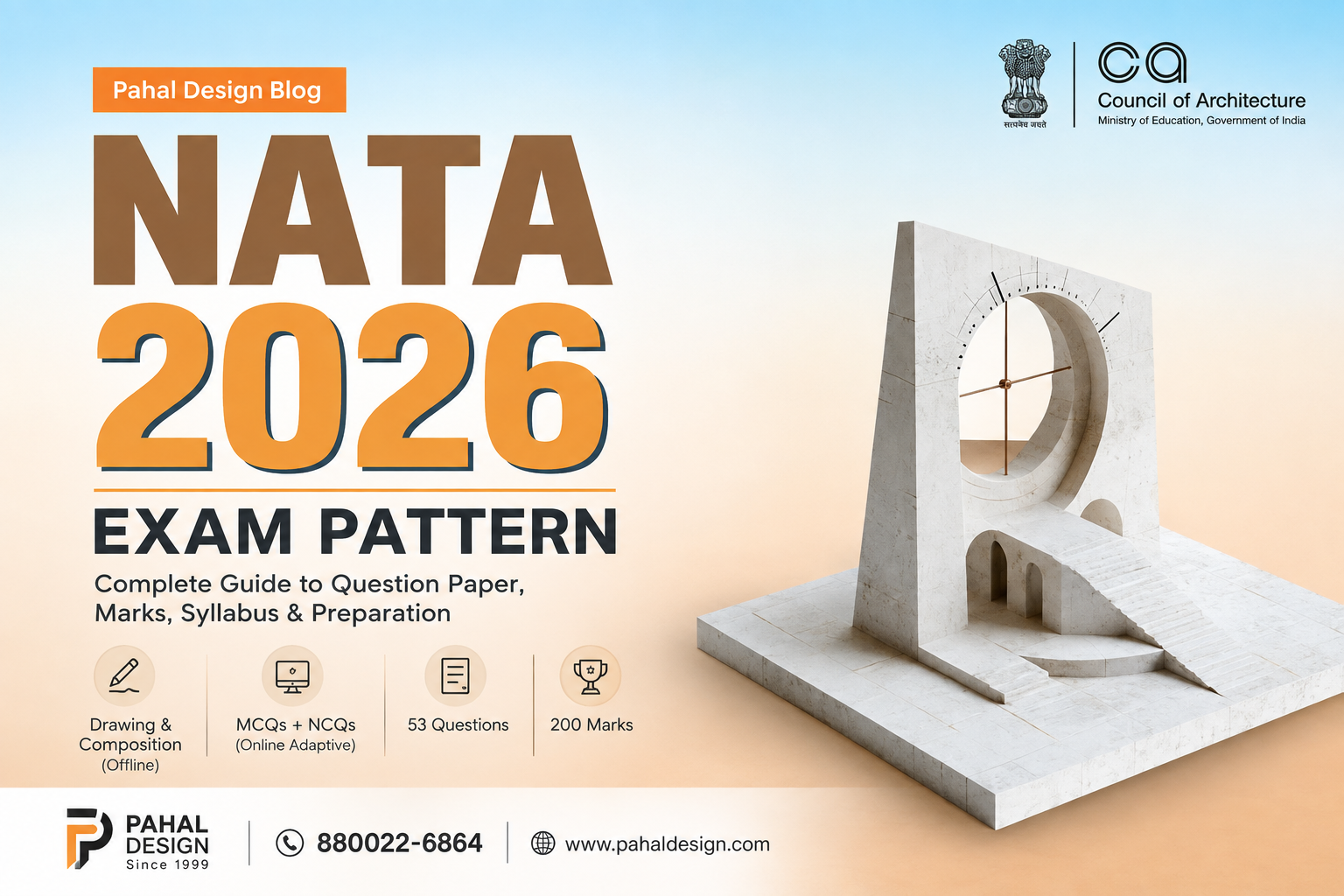
For NATA aspirants, understanding the examination structure before beginning serious preparation can make a significant difference. The NATA 2026 question paper carries a total of 200 marks and is divided into two major parts: Drawing & Composition and online aptitude-based questions.

Here is a detailed breakdown of the NATA 2026 exam pattern, question distribution, syllabus and preparation strategy.

NATA 2026 Exam Pattern Overview

According to the announced pattern, NATA 2026 is structured into two parts:

Part A – Drawing & Composition

  • Mode: Offline
  • Duration: 90 minutes
  • Total Marks: 80
  • Total Questions: 3

Part B – MCQs + NCQs

  • Mode: Online Adaptive
  • Duration: 90 minutes
  • Total Marks: 120
  • Total Questions: 50

NATA 2026 Total Exam

  • Total Questions: 53
  • Total Marks: 200
  • Total Duration: 180 minutes

This combination tests both the candidate’s creative abilities and analytical aptitude, making balanced preparation extremely important.

NATA 2026 Part A: Drawing & Composition

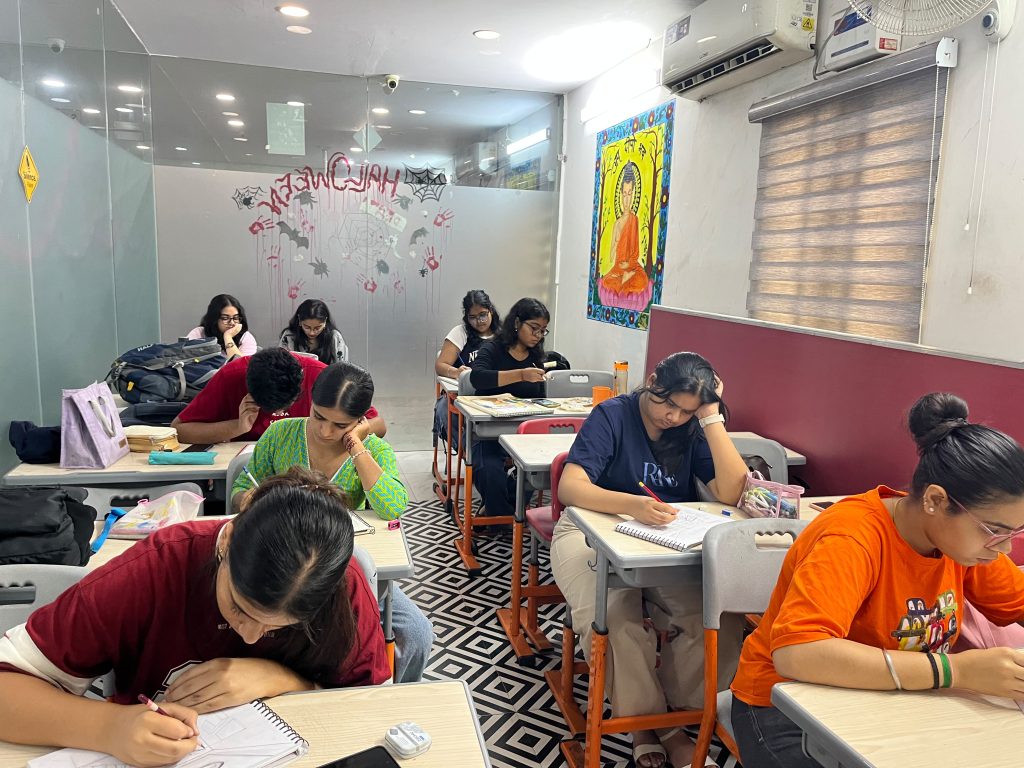
Part A is an offline test carrying 80 marks. It consists of three different sections designed to evaluate creativity, drawing ability, visualisation and three-dimensional thinking.

A1 – Composition & Colour

Questions: 1
Marks: 25

Students may be required to create a visual composition and demonstrate an understanding of colour application, balance, proportion and visual aesthetics.

Preparation should focus on:

  • Colour theory
  • Visual composition
  • Balance and harmony
  • Creative arrangement of elements
  • Understanding positive and negative spaces
  • Presentation skills

A2 – Sketching & Composition

Questions: 1
Marks: 25
Medium: Black & White

This section evaluates fundamental drawing abilities, including:

  • Drawing skills
  • Proportion
  • Shading
  • Perspective
  • Observation
  • Composition
  • Visual representation

Regular sketching practice can help students develop the speed and confidence required to complete this section effectively.

A3 – 3D Composition

Questions: 1
Marks: 30

The 3D Composition section carries the highest marks in Part A.

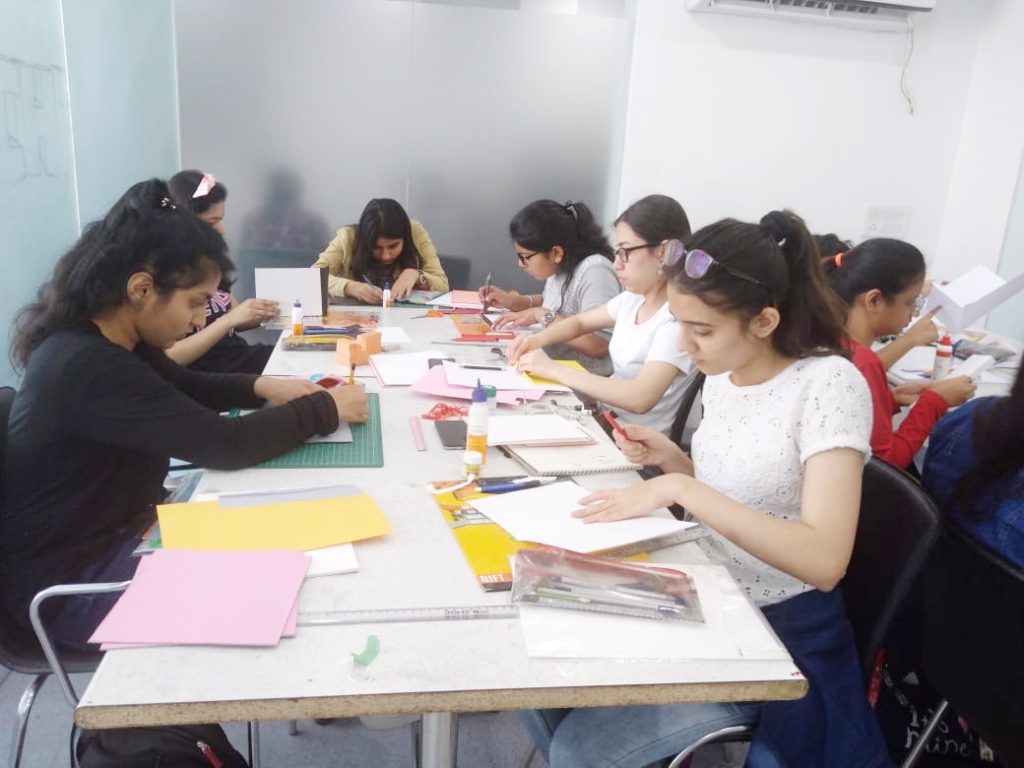
Candidates may be required to create a three-dimensional composition or model using the material or kit provided during the examination.

Students should develop an understanding of:

  • Form and volume
  • Space
  • Scale and proportion
  • Structural balance
  • 3D visualisation
  • Model-making
  • Creative transformation of basic forms

This section is particularly important because architecture requires students to think beyond two-dimensional drawings and understand how forms interact with physical space.

NATA 2026 Part B: Online Adaptive Test

Part B is an online adaptive examination carrying 120 marks.

The paper consists of:

42 MCQs + 8 NCQs = 50 Questions

Part B evaluates the candidate’s aptitude, reasoning, observation, architectural awareness and problem-solving capabilities.

NATA 2026 Part B Syllabus

1. Visual & Spatial Reasoning

Candidates should develop their ability to understand shapes, forms, patterns, directions and spatial relationships.

Practising mental rotation, 2D-to-3D visualisation, figure analysis and spatial puzzles can be useful.

2. Logical Reasoning & Interpretation

This section tests the candidate’s ability to analyse information and reach logical conclusions.

Questions may involve:

  • Patterns
  • Sequences
  • Relationships
  • Analytical reasoning
  • Logical interpretation

3. Architecture Awareness

Architecture awareness is particularly important for NATA aspirants.

Students should develop knowledge about:

  • Famous buildings
  • Architects
  • Architectural history
  • Building materials
  • Architectural styles
  • Important monuments
  • Contemporary architecture

Rather than memorising isolated facts, students should try to understand why important buildings and architectural movements are significant.

4. General Knowledge & Current Affairs

Candidates should stay updated with important national and international developments, particularly topics connected with:

  • Architecture
  • Art
  • Design
  • Culture
  • Environment
  • Technology
  • Major current events

5. Language & Grammar

Communication and comprehension skills are also tested. Students should strengthen vocabulary, grammar and their ability to understand written information accurately.

6. Design Sensitivity & Observation Skills

Architecture demands strong observation.

Students should practise identifying details in everyday environments, objects, buildings and visual compositions.

This section may evaluate a student’s understanding of aesthetics, functionality, relationships between objects and sensitivity towards design.

7. Critical Thinking & Problem-Solving

Rather than relying only on memorisation, students should develop the ability to analyse unfamiliar situations and find logical solutions.

Architecture aspirants should constantly ask:

Why is something designed this way, and how could it be designed better?

This approach can help build genuine design aptitude.

8. Basic Mathematics & Geometry

Students should revise fundamental mathematical and geometrical concepts relevant to aptitude and architecture.

Important areas may include:

  • Geometry
  • Shapes
  • Areas and volumes
  • Proportions
  • Measurements
  • Basic numerical ability

NATA 2026 Marks Distribution

SectionQuestionsMarks
A1 – Composition & Colour125
A2 – Sketching & Composition125
A3 – 3D Composition130
Part B – MCQs + NCQs50120
Total53200

The pattern clearly demonstrates that NATA preparation cannot focus only on drawing. Part B alone contributes 120 out of 200 marks, while Part A requires specialised creative and architectural aptitude.

How to Prepare for NATA 2026

A successful NATA 2026 preparation strategy should combine drawing practice, aptitude preparation and architectural awareness.

Students should regularly practise perspective drawing, composition, colour application and sketching while simultaneously working on logical reasoning, visual aptitude, mathematics and architecture-related general knowledge.

For the 3D composition component, practising with basic forms and model-making materials can help candidates develop spatial understanding.

Timed mock tests are equally important. Since both major parts have defined time limits, students must learn to balance accuracy, creativity and speed.

Why Start NATA 2026 Preparation Early?

NATA is different from a conventional academic examination. Drawing, observation, visualisation and design thinking are skills that improve gradually through consistent practice.

Starting early gives students more time to:

  • Improve sketching and perspective
  • Build drawing speed
  • Understand colour and composition
  • Develop 3D visualisation
  • Strengthen architecture awareness
  • Practise reasoning and aptitude
  • Attempt NATA mock tests
  • Identify and improve weaker areas

Prepare for NATA 2026 with Pahal Design

At Pahal Design, NATA aspirants are trained with a structured approach covering the major areas required for architecture entrance preparation.

The preparation focuses on drawing, sketching, perspective, composition, 3D visualisation, architecture aptitude, reasoning, observation and exam-oriented practice.

Students preparing for NATA and JEE Paper 2 B.Arch can benefit from systematic practice, faculty guidance, mock examinations and targeted preparation based on the latest examination requirements.

The objective is not simply to teach students how to draw, but to help them develop the observation, creativity, visualisation and problem-solving abilities required for architecture entrance examinations.

Final Words

The NATA 2026 exam pattern gives substantial importance to both creative and aptitude-based abilities. With 80 marks for Drawing & Composition and 120 marks for MCQs and NCQs, candidates need a balanced preparation strategy.

Understanding the paper pattern early, practising consistently and developing strong visual and architectural thinking can give aspirants a significant advantage.

For students targeting B.Arch admission through NATA 2026, now is the right time to build a structured preparation plan and practise every component of the examination.

Pahal Design – NATA & Architecture Entrance Exam Preparation

Website: www.pahaldesign.com
Contact: 880022-6864


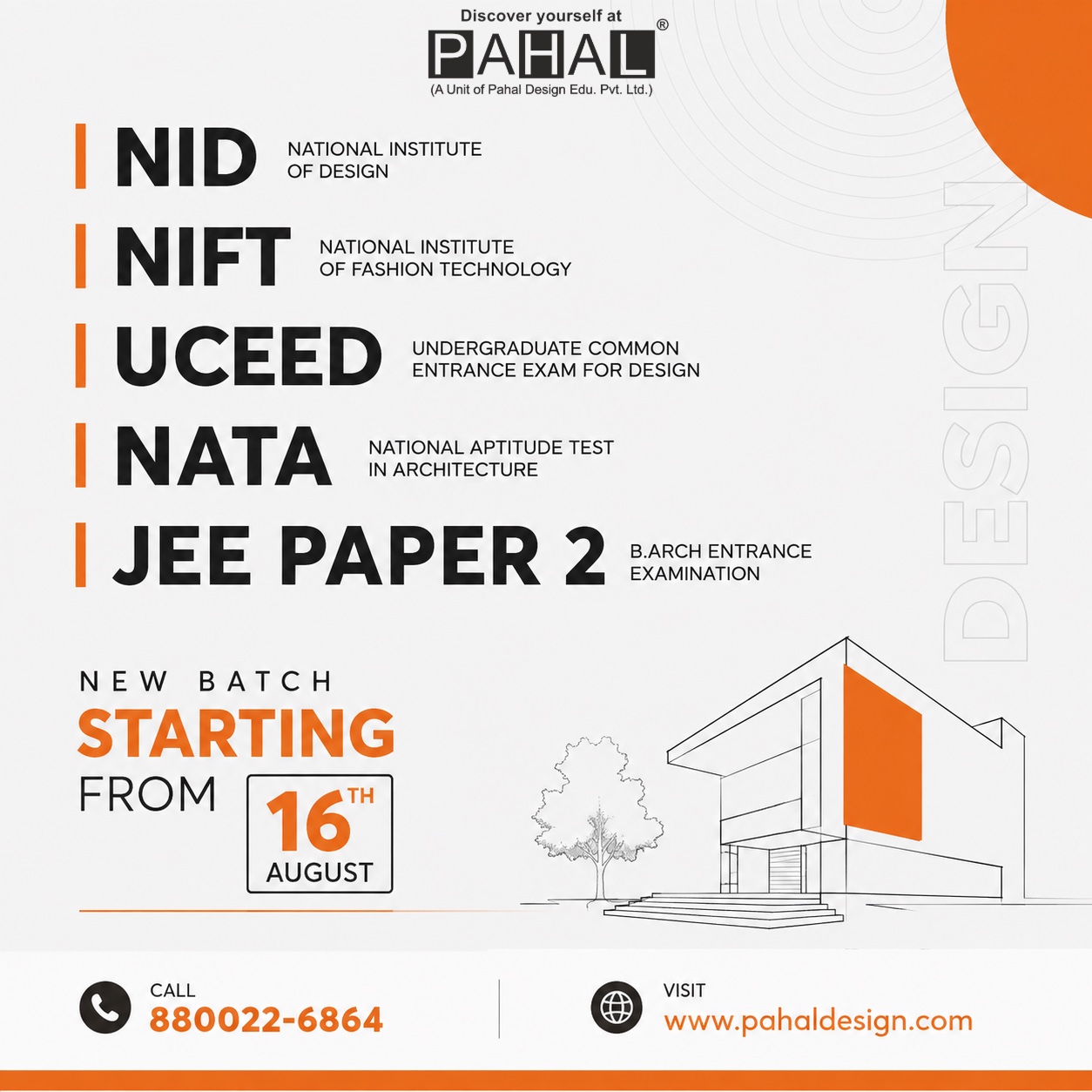
NID, NIFT, UCEED, NATA & JEE Paper 2 Coaching 2026 – New Batch Starting 16th August at Pahal Design

Are you preparing for NID, NIFT, UCEED, NATA or JEE Paper 2 entrance exams and looking for structured preparation, expert guidance and regular practice?

Pahal Design is starting a new batch from 16th August 2026 for students preparing for India’s leading design, fashion and architecture entrance examinations.

Whether your goal is to study Design, Fashion or Architecture, the new batch provides focused preparation to help you understand the entrance exam pattern, strengthen your creative aptitude and improve your overall performance.

New Batch Starting from 16th August 2026

Admissions are now open for preparation for:

  • NID – National Institute of Design
  • NIFT – National Institute of Fashion Technology
  • UCEED – Undergraduate Common Entrance Examination for Design
  • NATA – National Aptitude Test in Architecture
  • JEE Paper 2 – B.Arch Entrance Examination

Students can choose the course according to their target entrance examination and preparation requirements.

NID Entrance Exam Coaching 2026–27

The NID Design Aptitude Test (DAT) evaluates a student’s creativity, observation, visualisation, design aptitude, problem-solving ability and communication skills.

At Pahal Design, NID preparation focuses on developing the skills required for both creative and aptitude-based sections of the entrance examination.

Students receive practice in areas such as drawing and sketching, visualisation, creative thinking, design aptitude, observation, problem solving and mock tests.

NIFT Entrance Exam Coaching 2026–27

Students aspiring to study fashion and design at NIFT can prepare for the different components of the NIFT entrance examination through a structured preparation programme.

The course focuses on areas including Creative Ability, General Ability, drawing and illustration, observation, visualisation, design awareness, communication and time management.

Regular assignments and mock tests help students become familiar with the examination environment.

UCEED Coaching 2026–27

UCEED is an important entrance examination for students aspiring to pursue undergraduate design programmes at participating institutes, including IITs.

Pahal Design’s UCEED preparation programme focuses on developing:

  • Visual and spatial ability
  • Observation and design sensitivity
  • Analytical and logical reasoning
  • Creativity
  • Drawing and visualisation
  • Problem-solving skills
  • Examination strategy and time management

Students are provided with regular practice and mock examinations based on the UCEED pattern.

NATA Coaching 2026–27

Students planning to pursue a Bachelor of Architecture (B.Arch) can prepare for NATA with focused guidance at Pahal Design.

The programme helps students develop skills in architectural aptitude, visual reasoning, observation, spatial understanding, design sensitivity and other areas relevant to the current examination pattern.

Regular practice and performance analysis help students identify areas where they need improvement.

JEE Paper 2 B.Arch Coaching 2026–27

Pahal Design also offers preparation for students targeting JEE Main Paper 2 for B.Arch admission.

The preparation programme is designed around the relevant areas of the examination and includes aptitude, drawing/design-related preparation and exam-oriented practice as applicable to the current pattern.

Students preparing for both NATA and JEE Paper 2 can benefit from an integrated preparation strategy for architecture entrance examinations.

Why Choose Pahal Design?

Preparing for a design or architecture entrance examination requires more than simply learning how to draw. Students need to develop observation, creativity, visual thinking, analytical ability, speed and examination strategy.

Pahal Design provides a structured learning environment with:

  • Experienced faculty and mentors
  • Exam-oriented study material
  • Drawing and sketching practice
  • Creative and design aptitude development
  • Regular assignments and practice exercises
  • Mock tests and performance evaluation
  • Doubt-solving and mentoring
  • Guidance for design and architecture entrance preparation

The objective is to help students build their fundamentals while gradually developing the confidence and speed required for competitive entrance examinations.

Who Should Join the 16th August Batch?

The new batch is suitable for students who are planning to appear for NID, NIFT, UCEED, NATA or JEE Paper 2 and want to begin systematic preparation rather than depending only on last-minute practice.

Students in Classes 11 and 12, recent Class 12 graduates and other eligible aspirants can enquire about the appropriate programme based on their target examination.

Start Your Design & Architecture Entrance Preparation

If your goal is admission to a leading design, fashion or architecture college in India, starting early gives you more time to strengthen concepts, practise regularly and improve through feedback.

New Batch Starts: 16th August 2026

For Admissions & Counselling: 880022-6864

Website: www.pahaldesign.com

Seats may be limited according to batch capacity. Students and parents can contact Pahal Design for information about courses, schedules, centres and admission options.


CEPT University B.Arch Admission 2026–27: Complete Guide | Eligibility, Merit, NATA & Admission Process

Planning to study Architecture at one of India’s most prestigious universities? CEPT University, Ahmedabad has officially announced the admission process for the Bachelor of Architecture (B.Arch) Program 2026–27. Admission is based on a combination of Class 12 marks and the NATA 2026 score, making it essential for students to perform well in both academics and the entrance examination.

This comprehensive guide from Pahal Design explains the complete CEPT B.Arch admission process, eligibility criteria, seat distribution, merit calculation, important dates, fee structure, and preparation tips.

CEPT University B.Arch Admission 2026–27 Overview

ParticularDetails
UniversityCEPT University, Ahmedabad
ProgrammeBachelor of Architecture (B.Arch)
Academic Session2026–27
Total Seats120
All India Category90 Seats
ACPC (Gujarat) Category30 Seats
Entrance ExamNATA 2026
Merit Criteria50% Class 12 Marks + 50% NATA Score
Last Date to Apply14 June 2026
Annual Tuition Fee₹5,08,000

CEPT University B.Arch Seat Distribution

CEPT University offers 120 seats in the Bachelor of Architecture programme.

All India Category – 90 Seats (75%)

  • Admissions are conducted directly by CEPT University.
  • Candidates from across India can apply.
  • Merit is prepared using Class 12 marks and NATA score.

Gujarat ACPC Category – 30 Seats (25%)

  • Admissions are conducted through the Admission Committee for Professional Courses (ACPC), Government of Gujarat.
  • Gujarat domicile candidates seeking admission under this quota must register separately through ACPC.

Important Dates

  • Application Deadline: 14 June 2026
  • Academic Session: 2026–27
  • Candidates are advised not to wait until the last date and should complete the application process well in advance.

Annual Fee Structure

The approved tuition fee for the Academic Year 2026–27 is:

₹5,08,000 per annum (per student)

Students should also consider hostel, living, and other academic expenses while planning their admission.

How is CEPT University Merit Calculated?

Admission to the All India Category is completely merit-based.

The final merit score is calculated using:

  • 50% weightage of Class 12 aggregate marks (all subjects)
  • 50% weightage of valid NATA 2026 score

Merit Formula

Final Merit = (50% of Class 12 Aggregate Marks) + (50% of Valid NATA 2026 Score)

Candidates are ranked according to this combined merit score, and admission offers are released in order of merit.

Admission Process for All India Category

Step 1 – Appear for NATA 2026

Candidates must appear in NATA 2026 and obtain a valid qualifying score.

Step 2 – Complete Class 12

Successfully complete Class 12 with the prescribed eligibility requirements.

Step 3 – Apply Online

Submit the online application through CEPT University’s admission portal before the deadline.

Step 4 – Merit Preparation

CEPT University prepares the merit list using:

  • Class 12 aggregate marks
  • Valid NATA 2026 score

Step 5 – Admission Offer

Selected candidates receive admission offers through their registered email IDs.

Step 6 – Fee Payment

Candidates must confirm admission by paying the prescribed fee within 2–3 working days of receiving the admission offer.

Failure to pay within the stipulated time may result in cancellation of the allotted seat.

Admission Procedure for ACPC (Government of Gujarat) Seats

The remaining 30 seats (25%) are filled through the Admission Committee for Professional Courses (ACPC), Government of Gujarat.

Candidates must:

  • Register separately on the ACPC portal.
  • Fulfil the eligibility criteria prescribed by ACPC and the Council of Architecture.
  • Participate in the counselling and seat allotment process.
  • Follow the schedule announced by ACPC.

Admissions under the ACPC quota are governed entirely by ACPC rules.

Eligibility Criteria

Applicants must fulfil the eligibility norms prescribed by the Council of Architecture (CoA).

Option 1: Class 12 Students

Candidates must have passed Class 12 with:

  • Physics
  • Mathematics
  • One of the following subjects:
    • Chemistry
    • Biology
    • Technical Vocational Subject
    • Computer Science
    • Information Technology
    • Information Practices
    • Engineering Graphics
    • Business Studies

Minimum 45% aggregate marks are required.

Option 2: Diploma Students

Candidates who have completed a 10+3 Diploma with Mathematics as a compulsory subject and secured at least 45% aggregate marks are also eligible.

NATA 2026 Requirement

Every applicant must:

  • Appear in NATA 2026
  • Obtain a valid qualifying score as prescribed by the Council of Architecture.

Without a valid NATA score, admission cannot be granted.

International Applicants

Students who have completed their qualifying examination outside India are eligible if:

  • Their qualification is recognised by the Association of Indian Universities (AIU).
  • They fulfil the eligibility criteria prescribed by the Council of Architecture.

Important Admission Guidelines

Students should keep the following points in mind:

  • Admissions are strictly merit-based.
  • Class 12 marks and NATA score carry equal weightage.
  • All qualifying subjects should be passed from the same recognised board.
  • Admission communication is sent only through the registered email ID.
  • Candidates should regularly check their inbox and spam folder.
  • Fee payment must be completed within the specified timeline to secure the allotted seat.

Why Choose CEPT University for Architecture?

CEPT University is consistently ranked among India’s finest institutions for Architecture and the Built Environment. Its studio-based pedagogy, internationally recognised faculty, research-driven curriculum, and industry exposure make it a dream destination for architecture aspirants.

Students benefit from:

  • World-class Architecture education
  • Studio-based learning methodology
  • Experienced faculty members
  • Excellent campus infrastructure
  • Strong industry interaction
  • Outstanding placement opportunities
  • International collaborations

Prepare for CEPT University with Pahal Design

Admission to CEPT University is highly competitive. A strong NATA score combined with excellent Class 12 performance significantly improves your chances of securing admission.

At Pahal Design, students receive expert guidance through:

  • NATA Classroom Coaching
  • Online NATA Preparation
  • Architecture Drawing Classes
  • Design Aptitude Training
  • Mock Tests & Performance Analysis
  • Portfolio Guidance
  • Personal Counselling & College Selection
  • Admission Assistance

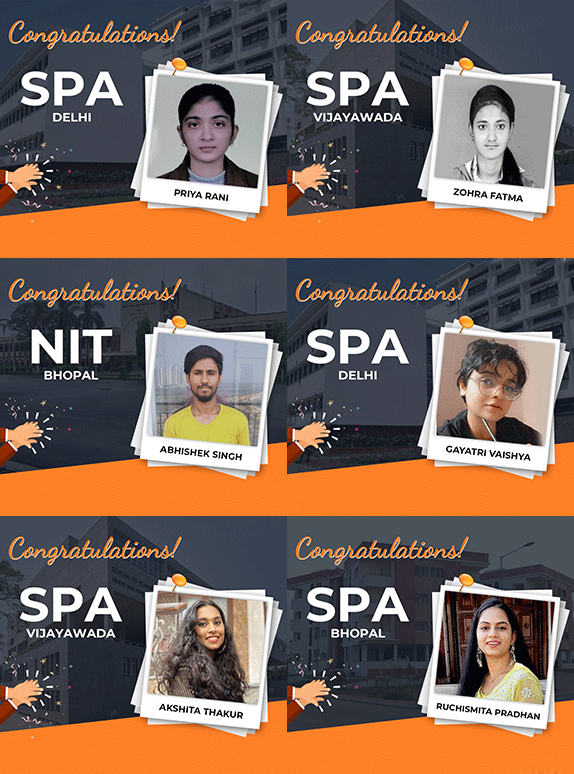
With 26+ years of excellence, 16,000+ successful students, and centres across India, Pahal Design has helped thousands of students secure admissions to leading institutions including CEPT University, IITs, NITs, SPA, NID, NIFT, UCEED, and other premier Architecture and Design colleges.

Final Tips for CEPT B.Arch Aspirants

  • Start preparing early for NATA 2026.
  • Focus equally on Class 12 academics and aptitude preparation.
  • Keep all documents ready before the admission process begins.
  • Apply before the last date to avoid technical issues.
  • Check your registered email regularly for admission updates.
  • Be prepared to complete fee payment within 2–3 working days after receiving an admission offer.

Conclusion

CEPT University follows a transparent and merit-based admission process where 50% weightage is given to Class 12 marks and 50% to the NATA 2026 score. Students aspiring to join one of India’s top architecture institutions should begin preparation early, perform well in academics, and secure a high NATA score.

If your dream is to study Architecture at CEPT University, expert guidance can make a significant difference. Join Pahal Design and prepare with experienced mentors, structured study material, regular mock tests, and personalised counselling to maximise your chances of success.

Join India’s Best Online Design Entrance Coaching for 2026–27 Admissions – Pahal Design

If you are dreaming of getting into NID, NIFT, IIT-UCEED, IIT-CEED, NATA, JEE Paper 2, or top BFA colleges, the right guidance can make all the difference.

At Pahal Design, we bring 26 years of excellence in design entrance coaching, helping thousands of students transform their creativity into successful careers.

Our Online Live Interactive Classes for the 2026–27 batch are specially designed for students who want expert mentorship, structured preparation, flexibility, and proven results—all from the comfort of home.

Why Choose Pahal Design Online Coaching?

1. Live Interactive Learning

Unlike recorded courses, our classes are fully live and interactive, allowing students to:

  • Ask questions in real-time
  • Get immediate faculty feedback
  • Participate in creative discussions
  • Solve doubts instantly
  • Stay motivated through structured mentorship

This creates a classroom-like experience online.

2. Expert Faculty from Top Design Institutes

Learn from experienced mentors with backgrounds from:

  • NID
  • NIFT
  • IIT Design Programs
  • CEPT
  • JJ College of Art
  • Industry Professionals

Our faculty understand exactly what design entrance exams demand.

3. Preparation for Multiple Design Entrance Exams

Our online coaching covers complete preparation for:

NID Coaching

Preparation for:

  • Design Aptitude
  • Creative Thinking
  • Sketching
  • Studio Test Preparation
  • Design Problem Solving

NIFT Coaching

Complete preparation for:

  • CAT
  • GAT
  • Situation Test
  • Portfolio Guidance
  • Interview Preparation

IIT-UCEED Coaching

Comprehensive coaching for:

  • Visualisation & Spatial Ability
  • Observation Skills
  • Analytical & Logical Reasoning
  • Design Thinking
  • Drawing & Sketching

IIT-CEED Coaching

Advanced preparation for:

  • Design Aptitude
  • Analytical Ability
  • Problem Solving
  • Sketching
  • Product Thinking

NATA Coaching

Structured training for:

  • Architecture Aptitude
  • Perspective Drawing
  • Visual Reasoning
  • Mathematics
  • Architectural Awareness

JEE Paper 2 Coaching

Focused preparation for:

  • B.Arch Entrance
  • Drawing Test
  • Aptitude
  • Mathematics
  • Visualization

BFA Entrance Coaching

Preparation for Fine Arts admissions:

  • Creative Drawing
  • Composition
  • Sketching
  • Colour Theory
  • Practical Art Training

Benefits of Pahal Design Online live Classes 2026

Personalized Mentoring

Every student gets:

  • Individual attention
  • Performance tracking
  • Personalized feedback
  • Exam strategy guidance
  • Career counselling

Structured Study Material

Students receive:

  • Design study notes
  • Practice sheets
  • Sketching assignments
  • Mock tests
  • Previous year questions
  • Creative exercises

Proven Results

Pahal Design has consistently delivered excellent results in:

  • NID
  • NIFT
  • UCEED
  • CEED
  • NATA
  • BFA
  • Architecture Admissions

Thousands of successful students have built their careers through our mentorship.

Who Should Join?

This course is ideal for:

✅ Class 11 students
✅ Class 12 students
✅ Gap year students
✅ College students preparing for CEED
✅ Architecture aspirants
✅ Fine Arts aspirants
✅ Working professionals switching to design careers

Why Online Coaching Works Better Today

Online learning provides:

  • Flexibility
  • Time savings
  • Access to top faculty from anywhere in India
  • Recorded revision support
  • Better consistency
  • Personalized doubt-solving

Students from Delhi, Gurgaon, Noida, Jaipur, Lucknow, Chandigarh, Patna, Bengaluru and across India can learn with Pahal Design.

About Pahal Design

Pahal Design is one of India’s most trusted design coaching institutes with 26 years of experience in design education.

We specialize in:

  • NID Coaching
  • NIFT Coaching
  • UCEED Coaching
  • CEED Coaching
  • NATA Coaching
  • JEE B.Arch / Paper 2 Coaching
  • Fine Arts Entrance Preparation

Our mission is simple:
Transform creative students into successful designers.

Admissions Open for 2026–27 Batch

Seats are limited for our Online Live Interactive Classes.

If you are serious about cracking India’s top design entrance exams, this is the right time to begin.

📞 Call Now: 8800-22-6864

🌐 Website: www.pahaldesign.com

FAQs

Which is the best online coaching for NID preparation?

Pahal Design offers comprehensive online coaching for NID with live classes, expert faculty, studio preparation, and mentorship.

Does Pahal Design provide coaching for IIT-UCEED and IIT-CEED?

Yes, Pahal Design provides structured coaching for both IIT-UCEED and IIT-CEED.

Is NATA coaching available online?

Yes, students can prepare for NATA through live online interactive classes at Pahal Design.

Does Pahal Design offer JEE Paper 2 coaching?

Yes, we provide complete preparation for JEE Paper 2 (B.Arch).

Can BFA aspirants join?

Absolutely. Dedicated Fine Arts entrance coaching is available.

The announcement of the JEE Arch 2026 result is one of the most awaited moments for architecture aspirants across India. Thousands of students who appeared for the architecture entrance examination are now eagerly waiting to check their scores, percentile, rank, and counselling eligibility.

At Pahal Design, we understand the excitement and nervousness that come with result season. Whether you are aiming for admission into top architecture colleges like SPA Delhi, NITs, CEPT University, or leading private institutes, this guide will help you understand everything about the JEE Arch 2026 result process.

What is JEE Arch?

JEE Arch refers to the architecture entrance examination conducted under the Joint Entrance Examination (JEE) framework for admission into Bachelor of Architecture (B.Arch) programs across India. Candidates are evaluated on mathematics, aptitude, and drawing/design abilities.

The examination serves as a gateway to:

  • Schools of Planning and Architecture (SPAs)
  • National Institutes of Technology (NITs)
  • Centrally Funded Technical Institutions (CFTIs)
  • Various state and private architecture colleges

A good score in JEE Arch 2026 can open doors to some of the best architecture colleges in the country.

JEE Arch 2026 Result Date

The official JEE Arch 2026 result date will be announced by the National Testing Agency (NTA) on the official website. Candidates are advised to regularly check updates and notifications.

Typically, the result is declared a few days after the examination. The scorecard includes:

  • Candidate’s percentile score
  • All India Rank (AIR)
  • Category rank
  • Subject-wise scores
  • Qualification status

Students should download and save multiple copies of their scorecards for future admission and counselling procedures.

How to Check JEE Arch 2026 Result

Candidates can follow these simple steps to check their results online:

Step-by-Step Process

  1. Visit the official JEE examination website.
  2. Click on the “JEE Arch 2026 Result” link.
  3. Enter your application number and date of birth/password.
  4. Submit the details.
  5. Your scorecard will appear on the screen.
  6. Download and print the result for future reference.

It is advisable to keep login credentials ready to avoid delays during heavy traffic periods.

Details Mentioned on JEE Arch 2026 Scorecard

After downloading the result, candidates should carefully verify all details mentioned on the scorecard.

Important Information Included

  • Candidate name
  • Roll number
  • Application number
  • Category
  • Gender
  • Parent’s name
  • Subject-wise marks
  • Total percentile score
  • All India Rank
  • Qualification status

If any discrepancy is found, students should immediately contact the examination authorities.

Expected Cut-Off for JEE Arch 2026

The cut-off for JEE Arch changes every year depending on:

  • Number of applicants
  • Difficulty level of the paper
  • Overall student performance
  • Seat availability

Expected Qualifying Percentile

CategoryExpected Percentile
General88–92
OBC-NCL72–78
EWS70–75
SC45–55
ST35–45
 

Please note that these are expected figures and may vary after the official announcement.

What Happens After JEE Arch 2026 Result?

Once the result is declared, students move to the counselling and admission stage.

Counselling Process

Qualified candidates must register for JoSAA counselling or respective institutional counselling procedures.

Documents Required

Students generally need:

  • JEE Arch scorecard
  • Class 10 and 12 mark sheets
  • Category certificate (if applicable)
  • Passport-size photographs
  • ID proof
  • Migration certificate

Candidates are advised to keep both digital and physical copies ready.

Top Colleges Accepting JEE Arch Scores

A strong score in JEE Arch 2026 can help students secure admission to reputed architecture institutions.

Leading Architecture Colleges in India

  • SPA Delhi
  • SPA Bhopal
  • SPA Vijayawada
  • NIT Trichy
  • NIT Calicut
  • NIT Hamirpur
  • CEPT University
  • Jamia Millia Islamia
  • Chandigarh College of Architecture

Admission cut-offs vary depending on category and seat availability.

Importance of Architecture Coaching for Future Aspirants

Every year, successful students emphasize the role of structured preparation, mock tests, drawing practice, and expert mentorship.

At Pahal Design, students receive:

  • Expert faculty guidance
  • Comprehensive study material
  • Drawing and aptitude training
  • Online and offline classes
  • Mock tests based on latest patterns
  • Portfolio and interview guidance

Our proven methodology has helped thousands of architecture aspirants secure top ranks in competitive exams.

Tips for Students After Result Declaration

1. Stay Calm and Positive

Results are important, but they are only one part of your journey. Keep a balanced perspective.

2. Analyze College Options Carefully

Research colleges based on:

  • Faculty
  • Infrastructure
  • Placement opportunities
  • Fees
  • Location
  • Design exposure

3. Participate in Counselling Actively

Do not miss deadlines related to registration, choice filling, or document verification.

4. Explore Backup Options

Students can also consider:

  • NATA participating colleges
  • Private architecture institutes
  • State-level counselling opportunities

Why Choose Pahal Design?

Pahal Design is one of India’s leading coaching institutes for architecture entrance preparation. With years of experience and a student-focused approach, we help aspirants build strong conceptual understanding and creative confidence.

Our Key Highlights

  • Experienced architecture mentors
  • Personalized guidance
  • Hybrid learning options
  • National-level test series
  • High success ratio
  • Career counselling support

We believe architecture is not just about cracking an exam—it is about shaping creative thinkers and future designers.

Frequently Asked Questions (FAQs)

Is the JEE Arch 2026 result available online only?

Yes, candidates can access the result only through the official online portal.

What is a good score in JEE Arch?

A score above the 95 percentile is generally considered highly competitive for top colleges.

Can I get admission through JEE Arch without NATA?

Yes, many premier institutes accept JEE Arch scores directly for B.Arch admissions.

What should I do after qualifying?

Students should participate in counselling, shortlist colleges, and complete admission formalities.

Does Pahal Design provide counselling support?

Yes, Pahal Design offers complete admission guidance and counselling assistance for architecture aspirants.

Final Thoughts

The JEE Arch 2026 result is a significant milestone for every architecture aspirant. Whether you achieve your dream score or plan your next attempt, remember that consistency, creativity, and dedication are the true foundations of a successful architecture career.

Stay updated with official notifications, prepare your counselling documents in advance, and make informed decisions about your college preferences.

For expert guidance, preparation support, and career counselling, connect with Pahal Design and take the next step toward your architecture dream.

About Pahal Design

Pahal Design is a premier institute for architecture entrance coaching in India, helping students prepare for JEE Arch, NATA, and other design entrance examinations through expert mentoring, creative training, and result-oriented preparation strategies.

Summer break often feels like a well-earned pause—but what if it could also become the turning point for your future? Instead of letting these months slip away, you can use this time to unlock your creative potential and take your first step toward a successful design career. At Pahal Design, summer isn’t just a break—it’s an opportunity.

Why Summer is the Best Time to Start Your Design Journey

Most students spend their summer relaxing, traveling, or catching up on hobbies. While that’s important, this period also offers uninterrupted time to explore new skills, build discipline, and get ahead academically.

For students of Class 10th, 11th, and 12th, this is the perfect moment to:

  • Discover your creative strengths
  • Learn foundational design concepts
  • Begin preparation for competitive design entrance exams

Starting early gives you a clear advantage when it comes to building a strong portfolio and understanding the design field.

Turn Creativity into a Career

Design is no longer just an artistic pursuit—it’s a thriving career path with global opportunities. Fields like fashion design, interior design, product design, and visual communication are growing rapidly.

At Pahal Design, students are guided to:

  • Transform raw creativity into structured skills
  • Understand real-world design applications
  • Build confidence through hands-on learning

This early exposure helps you make informed career decisions and stand out in competitive environments.

What You’ll Gain from a Summer Design Program

Joining a structured summer course can significantly boost your learning curve. At Pahal Design, the focus is on building both skills and clarity.

Key Benefits:

  • Creative Thinking & Visualization Skills
    Learn how to think like a designer and visualize ideas effectively.
  • Sketching & Design Fundamentals
    Master the basics that form the backbone of all design disciplines.
  • Portfolio Building
    Start creating a strong portfolio for top colleges in India and abroad.
  • Career Clarity
    Gain insights into various design fields and choose your path wisely.

Prepare for Top Design Entrance Exams

If your goal is to get into prestigious design institutes, early preparation is crucial. Pahal Design’s summer programs are aligned with major entrance exams such as:

With expert guidance, structured practice, and exam-focused strategies, you’ll be better prepared to achieve top results.

Start Early. Stay Ahead.

Success in design doesn’t happen overnight—it requires consistent effort, guidance, and the right environment. Starting during summer gives you:

  • A head start over other aspirants
  • Time to experiment and improve without pressure
  • The ability to build confidence before exams approach

Limited Seats – High Demand

Summer batches at Pahal Design are highly sought after due to their quality training and proven results. With limited seats available, early enrollment ensures you don’t miss out on this valuable opportunity.

Final Thoughts

Your summer break can either be a pause—or a powerful step forward. By choosing to invest in your creativity today, you’re shaping a future filled with possibilities.

Don’t waste your summer break. Build your future with Pahal Design.

Enroll now and take the first step toward your dream design career.
Visit: www.pahaldesign.com
Call: 8800-22-6864

 

Introduction

Growth is a reflection of progress, and at Pahal Design, we believe in constantly evolving to provide the best for our students. With this vision, we are excited to announce that our Jaipur center has moved to a prime location in Vaishali Nagar—bringing you closer to excellence with improved infrastructure, accessibility, and learning experience.

Why the Shift? A Step Towards Excellence

Over the years, Pahal Design has built a reputation for delivering outstanding results in entrance exams like NID, NIFT, NATA, UCEED, and BFA. As our student community grew, so did the need for a more advanced and accessible space.

This relocation is not just about a new address—it’s about creating an environment that nurtures creativity, innovation, and success.

What’s New at Our Vaishali Nagar Centre?

1. Prime Location Advantage

Our new center is strategically located in Vidyut Nagar, Vaishali Nagar, one of Jaipur’s most well-connected and student-friendly areas.

  • Easy access from all parts of Jaipur
  • Well-connected via public and private transport
  • Safe and vibrant surroundings

2. Enhanced Infrastructure

We’ve upgraded every aspect of our facilities to ensure a better learning experience:

  • Spacious, well-lit classrooms
  • Modern studio setup for design practice
  • Dedicated spaces for sketching and creativity
  • Comfortable learning environment

3. Better Accessibility & Convenience

Whether you’re a school student or a drop-year aspirant, reaching us is now easier than ever.

  • Reduced travel time for most students
  • Nearby amenities like cafes, stationery shops, and libraries
  • Improved commuting convenience for daily classes

4. Same Trusted Results, Even Better Experience

While the location and infrastructure have improved, one thing remains unchanged—our commitment to delivering top results.

  • Expert faculty with years of experience
  • Proven track record in design entrance exams
  • Personalized mentoring and guidance
  • Result-oriented teaching approach

Courses Offered

At our new Jaipur center, we continue to offer preparation for:

Admissions Open – Apply Now!

With upgraded facilities and a prime location, this is the perfect time to begin your design journey with Pahal Design.

Seats are limited to maintain quality teaching standards—so don’t wait!

Visit Us at Our New Address

C51, 1st Floor, Vidyut Nagar, Vaishali Nagar, Chitrakoot, Jaipur – 302021
🌐 www.pahaldesign.com
📞 9821-651-399

Start Your Design Career Today

Join Pahal Design Jaipur and take the first step toward your dream college.

Book a Free Demo Class
Talk to Our Counselors
Apply Now


From Confusion to Clarity: Aditya’s Journey to Scoring 185.5 in NATA

NATA TOPPERS

Choosing the right career path is never easy—especially when you’re standing at the crossroads of multiple options. For Aditya, this journey was filled with confusion, experimentation, and ultimately, clarity. Today, as a proud scorer of 185.5 in NATA 2020, his story is not just inspiring but also a guiding light for aspiring architects.

A Chance Discovery That Changed Everything

Aditya recalls how his journey began during Class 12 when he came across Pahal Magazine. Curious and eager, he enrolled for a demo class at Pahal Design—a decision that would shape his future.

“It felt like destiny. I found the right guidance at the right time,” he shares.

This moment marked the beginning of a focused and strategic preparation journey under expert mentorship.

The Phase of Confusion: Finding the Right Path

Like many students, Aditya initially struggled with career choices. In Class 11, he aspired to become an Interior Designer but later shifted towards preparing for B.Tech entrance exams.

“Spending a year preparing for B.Tech was a mistake—but I realized it early,” he admits.

Torn between Civil Engineering and Architecture, he doubted whether architecture was the right fit. However, once he understood the unique blend of creativity, design, and technical knowledge in architecture, everything changed.

Why Architecture Stood Out

Aditya discovered that architecture wasn’t just another technical field—it was a perfect combination of:

  • Creativity and design

  • Engineering concepts

  • Mathematical application

  • Real-world problem-solving

With this clarity, he committed himself fully to NATA preparation and joined Pahal Design, Preet Vihar—a turning point in his journey.

Balancing Boards and NATA Preparation

NATA CRASH COURSE 2026

Managing board exams along with competitive exam preparation can be overwhelming. However, Aditya approached it smartly.

  • Weekdays were dedicated to school and academics

  • Weekends were reserved for NATA preparation

  • Mathematics preparation overlapped and benefited both exams

“Smart preparation is the key. With the right strategy, everything becomes manageable,” he explains.

Mastering the NATA Exam Strategy

Aditya emphasizes that success in NATA is not about studying more, but studying smart.

1. Equal Focus on All Sections

He ensured balanced preparation across:

  • Drawing

  • Aptitude

  • Mathematics

2. Learning from Experience

He attempted NATA once to understand the pattern, which helped him perform exceptionally in the final attempt.

“Practice in the right direction makes all the difference.”

The Game-Changer: Creative Section (121/125)

One of Aditya’s most remarkable achievements was scoring 121 out of 125 in the creative section.

According to him, the secret lies in:

  • Strong observation skills

  • Understanding depth and detailing

  • Learning the right techniques

“Drawing is all about observation and guidance. With proper mentorship, you can excel.”

The Power of Smart Techniques

Aditya shares some highly effective strategies that helped him succeed:

Flashcards for Aptitude

He created flashcards with questions on one side and answers on the other, making revision quick and efficient.

Consistent Drawing Practice

  • Practice 2–3 drawings per week

  • Focus on improvement, not perfection

  • Seek regular feedback from mentors

“Your drawing today should always be better than yesterday.”

Focus Areas for PCM Preparation

Aditya advises students to prioritize:

  • Mathematics – especially calculus and coordinate geometry

  • NCERT for Physics & Chemistry – basics are sufficient

  • Avoid unnecessary pressure on PCM, as it carries limited weight in NATA

“Maths is the most important—it helps in both JEE and NATA.”

The Role of Mentorship at Pahal Design

Aditya credits his success to the constant support and guidance from his mentors at Pahal Design.

“The teachers were always available—even outside class hours. Their guidance made everything easier.”

From personalized teaching approaches to continuous motivation, Pahal played a crucial role in shaping his preparation journey.

Final Advice to Aspirants

Aditya leaves future aspirants with these key takeaways:

  • Don’t ignore the drawing section—it’s the most scoring

  • Focus on consistent practice, not shortcuts

  • Use smart study techniques like flashcards

  • Seek feedback and guidance from mentors

  • Stay patient—improvement takes time

Aditya’s journey is a perfect example of how the right guidance, smart preparation, and consistent effort can turn confusion into success. His story reinforces the idea that with determination and the right mentorship, achieving top scores in NATA is absolutely possible.

At Pahal Design, we take pride in nurturing such success stories and guiding students toward their dream careers in architecture and design.

Are you ready to start your journey? Join Pahal Design and take the first step toward your dream career!

For more updates and information Contact us on : 8800-22-6864

Visit : https://pahaldesign.com/

Frequently Asked Questions

How can I score high in NATA?

Focus on drawing practice, time management, and consistent preparation in maths and aptitude.

Is drawing important for NATA?

Yes, drawing is the most scoring section and can significantly boost your overall score.

What is the best way to prepare for NATA?

Follow a smart strategy, practice regularly, and seek guidance from experienced mentors.

Add Your Heading Text Here

Schedule a free counselling session WhatsApp WhatsApp