UCEED 2027 is scheduled for Sunday, 17 January 2027, from 9:00 am to 12:00 noon. Registration is open, with the regular-fee deadline on 31 October 2026. Students planning to study design after Class 12 should check their eligibility, complete the application and prepare for both parts of the examination.
This Pahal Design guide covers the UCEED 2027 exam date, application fees, eligibility, syllabus, marking scheme and BDes admission process, followed by answers to common student questions.
Source: Official UCEED 2027 website
What is UCEED
UCEED stands for Undergraduate Common Entrance Examination for Design. IIT Bombay conducts the examination for admission to Bachelor of Design programmes at seven participating institutions. It assesses how you observe, reason, visualise and communicate design ideas. Passing the examination is one stage of admission; eligible candidates must also complete the separate BDes application.
Source: UCEED 2027 Information Brochure | Joint BDes application process
UCEED 2027 important dates
| Milestone | Date |
| Registration begins | 1 October 2026 |
| Regular-fee deadline | 31 October 2026 |
| Late-fee deadline | 6 November 2026 at 5:00 pm |
| Admit cards available | 1 January 2027 at 1:00 pm |
| Admit card correction deadline | 8 January 2027 at 5:00 pm |
| UCEED examination | 17 January 2027 from 9:00 am to noon |
| Provisional Part A answer key | 19 January 2027 |
| Comments on provisional key close | 21 January 2027 at 5:00 pm |
| Final Part A answer key | 26 January 2027 at 5:00 pm |
| Part A shortlist announced | 4 February 2027 |
| Results announced | 6 March 2027 |
| Scorecard download window | 10 March to 31 July 2027 |
All times are Indian Standard Time. Check the official dates page for updates before making application or travel plans.
Source: Official UCEED 2027 dates
UCEED 2027 eligibility
Meet all three eligibility conditions together.
| Requirement | Rule |
| Age for OPEN EWS and OBC-NCL | Born on or after 1 October 2002 |
| Age for SC ST and PwD | Born on or after 1 October 1997 |
| Attempts | A maximum of two attempts in consecutive years |
| Class 12 or equivalent | First appearance in 2026 or 2027 |
| School stream | Science, Commerce, and Arts or Humanities |
First appearing in Class 12 in 2025 or earlier normally makes you ineligible. An exception applies to boards declaring 2024–25 results on or after 30 September 2025. An individually withheld result does not create this exception.
Source: UCEED examination eligibility
UCEED colleges and subject requirements
Your school subjects affect which participating colleges you can apply to after qualifying UCEED. The official admission table gives the following requirements.
| Participating institution | Class 12 subject requirement |
| IIT Bombay, IIT Delhi, IIT Hyderabad and IIT Indore | All streams |
| IIT Guwahati and IIT Roorkee | Physics, Chemistry and Mathematics |
| IIITDM Jabalpur | Physics and Chemistry with Mathematics or Biology |
Commerce and Arts students can therefore consider IIT Bombay, IIT Delhi, IIT Hyderabad and IIT Indore, subject to all other admission conditions. PCM students meet the subject requirement for all seven institutions.
Source: BDes admission eligibility
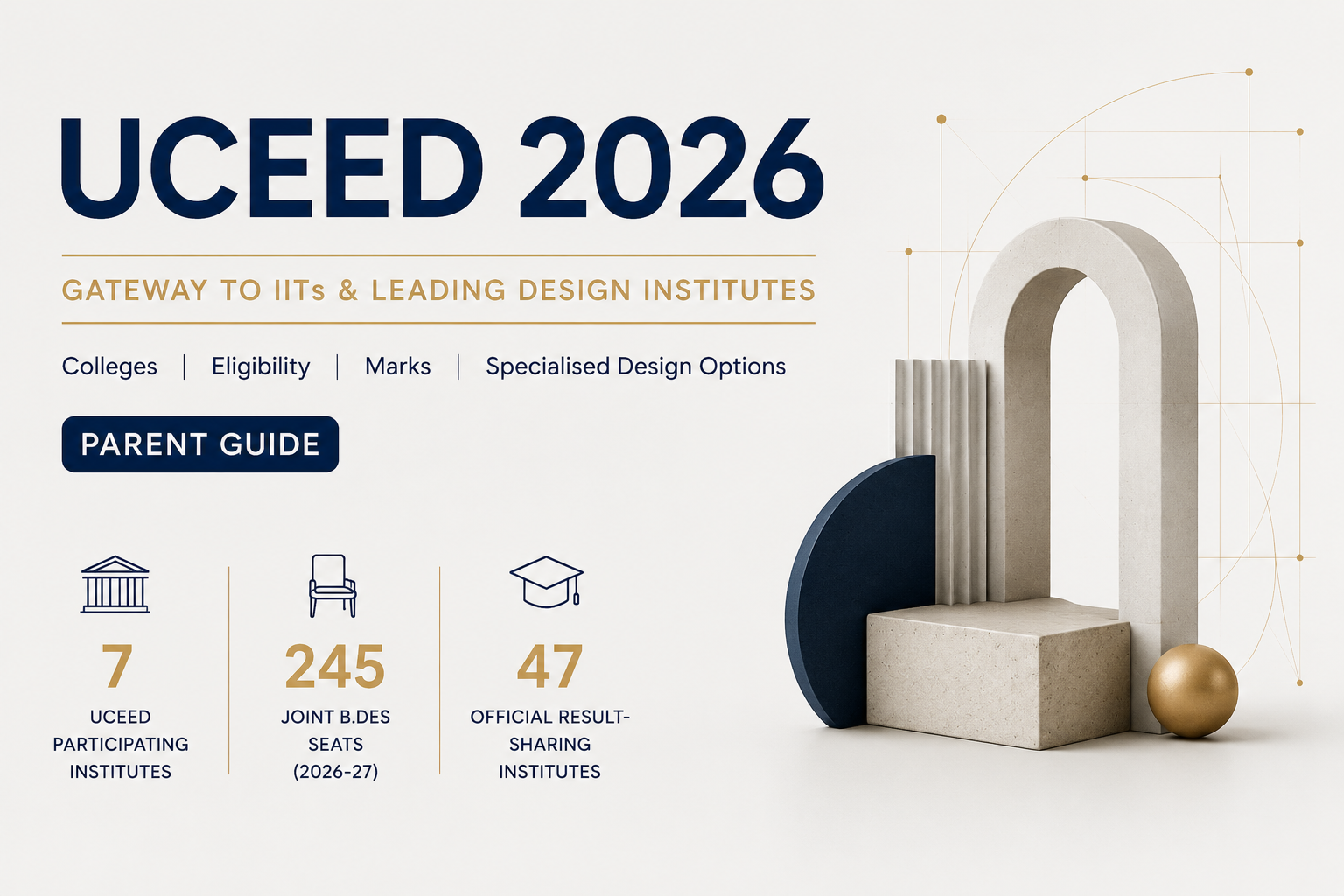
The brochure displays a previous-year seat matrix for 2026–27. Use the final 2027–28 matrix when applying; the older figures should not be treated as the confirmed current intake.
Source: UCEED 2027 Information Brochure
UCEED 2027 application fees and registration
| Indian applicant category | Regular examination fee |
| Female candidates in any category | ₹2,000 |
| SC ST or PwD candidates | ₹2,000 |
| All other Indian candidates | ₹4,000 |
Indian applicants registering during the late window pay an additional ₹500. Bank or payment-processing charges are extra. The examination registration fee is non-refundable and non-transferable. Foreign and OCI/PIO applicants should consult the category-specific fee rules.
How to apply for UCEED 2027
- Open the official UCEED candidate portal linked below.
- Complete the registration details and check your eligibility.
- Enter accurate personal, academic and category information.
- Upload the required documents and submit your city preferences.
- Pay the applicable fee and retain the completed registration record.
Keep a recent photograph, signature, age proof and Class 12 certificate ready. Candidates appearing in 2027 need the prescribed school or board certificate. Category, disability and name-change documents are required where applicable. Follow the official upload formats.
Source: Registration fees and documents
UCEED 2027 exam pattern and marking scheme
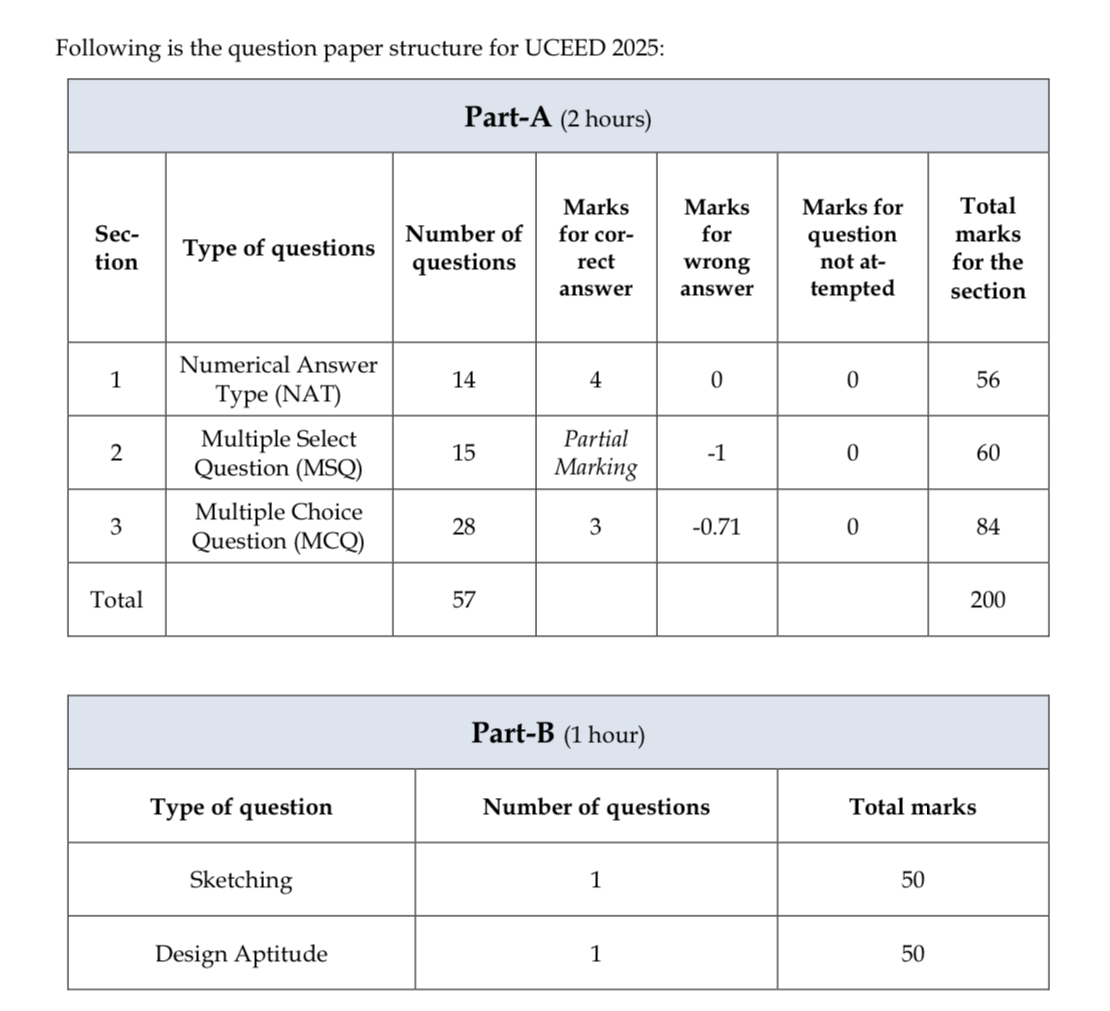
The 300-mark English paper has two compulsory parts. Part A is a two-hour computer test worth 200 marks. Part B allows one hour for booklet responses worth 100 marks.
| Part A question type | Number | Correct | Incorrect |
| Numerical Answer Type | 14 | +4 | 0 |
| Multiple Select Questions | 15 | Up to +4 | −1 |
| Multiple Choice Questions | 28 | +3 | −0.71 |
Unanswered questions score zero. MSQs award +4 for exactly the correct set; partial correct selections can earn +1 to +3 under specified conditions. Other attempted combinations score −1. Read the linked marking rules before practising.
Part B contains one sketching question and one design-aptitude question, worth 50 marks each.
Source: Official question paper structure
UCEED 2027 syllabus
Part A preparation areas
Prepare to interpret shapes in two and three dimensions, understand how everyday objects work, notice visual details and reason from information. The syllabus also covers design in its environmental and social context, English comprehension, and creative interpretation of symbols and analogies.
Part B preparation areas
Drawing preparation should develop proportion, perspective, composition, line control and shading when representing objects, people and scenes. Design aptitude requires practical, imaginative responses to problems that take the user’s needs into account.
Use the official syllabus as a checklist, then connect each topic with exercises and previous papers. Keep practice examples varied so you can apply a skill to an unfamiliar question.
Source: Official UCEED syllabus
UCEED 2027 shortlisting and qualifying cutoffs
Only candidates shortlisted through Part A have Part B evaluated. The score-based shortlisting rule includes a 6,400-candidate mechanism with category and tie provisions. Candidates must also meet the Part B cutoff.
| Category | Minimum Part B score out of 100 |
| OPEN | 15 |
| OBC-NCL or EWS | 13.5 |
| SC ST or PwD | 7.5 |
These thresholds determine examination qualification. College closing ranks depend on seat allocation. See Section 17 for the full evaluation rules.
Source: UCEED 2027 Information Brochure
UCEED 2027 exam centres and exam day
UCEED is scheduled in 30 Indian cities, including Delhi, Noida, Patna, Jaipur, Lucknow, Bhopal, Jabalpur, Kolkata, Bengaluru and Mumbai. Choose three cities in preference order during registration. City changes are not accepted after registration, and the organising committee may alter allocations for operational reasons.
Source: Official examination city list
Reporting begins at 7:00 am. Carry a printed admit card and an original valid photo identity document. Bring permitted pencils in a transparent packet; coloured drawing materials and electronic devices are prohibited. Check the latest instructions on the official website and your admit card before leaving for the centre.
Source: Official examination day instructions
UCEED results and BDes admission process
The rank list uses the combined Part A and Part B marks of qualifying candidates. UCEED 2027 scores apply to admissions for the 2027–28 academic year. Keep your login details and download your scorecard within the published window.
Source: Results and ranking rules | UCEED examination eligibility
The joint BDes application opens on 15 March 2027. Qualified, eligible candidates submit the common application, arrange their institute preferences and provide the required documents. Seat allocation considers rank, category, preferences and available seats. Receiving a UCEED rank does not guarantee admission.
The first allocation round is tentatively scheduled for 21 April 2027. Follow the admission schedule for acceptance payments and subsequent rounds. Other institutions accepting UCEED scores may run separate admission processes; check each institution’s current requirements.
Source: Joint BDes application process | BDes admission schedule
How to prepare for UCEED 2027
Start with a timed practice paper to identify where you lose marks. Separate conceptual mistakes from observation errors and questions left unfinished. This makes your next week of preparation more focused than simply completing another paper.
Build observation into daily practice
Study an everyday object such as a bottle, chair or bag. Sketch it from different views, estimate its proportions and explain how its parts work together. Then identify one difficulty a user might face and propose a practical improvement. This creates a useful connection between drawing and design thinking.
Practise drawing with a clear purpose
Work on a specific weakness in each session, such as perspective or the scale of people within a scene. Before adding detail, check whether the composition communicates the required action. Review your work against the question and revise it after feedback.
Use previous papers and review mistakes
Solve past papers to understand how questions are framed. When you review an answer, write down why your approach worked or failed. Return to difficult questions a few days later and solve them without looking at the explanation. Use the current marking scheme when scoring practice attempts.
UCEED previous year question papers
Make mock tests part of your weekly plan
Keep a weekly schedule that fits around schoolwork: regular drawing sessions, targeted aptitude practice and a timed mock followed by review. Track accuracy and completion alongside your score. Spend the next practice cycle on the areas the mock exposed, and make time for both parts throughout your preparation.
Prepare for UCEED with Pahal Design
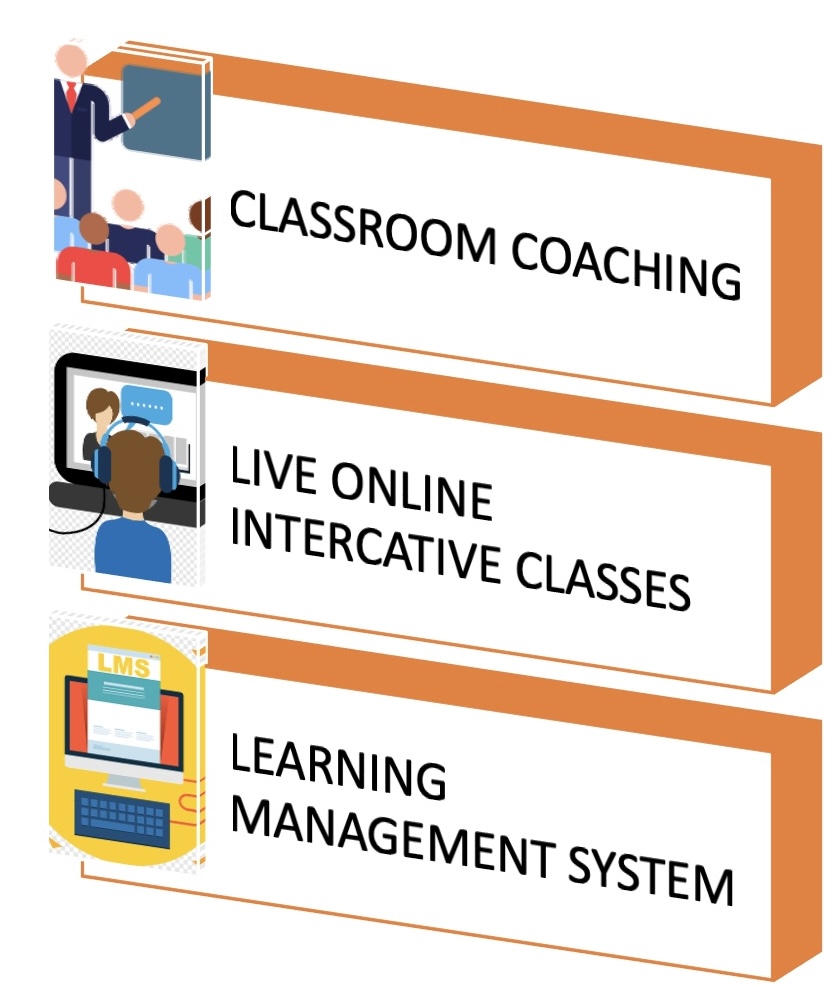
At Pahal Design, we offer classroom programmes, live online classes, study materials and practice resources for design entrance preparation. If you are looking for UCEED coaching, speak with our counsellors about a study plan that suits your current skills and the time available before the examination.
Bring your recent sketches or a mock-test attempt to the discussion. Identifying where you need guidance can help you choose a suitable preparation programme.
Book a free counselling session
Call or WhatsApp 8800-226864 Website www.pahaldesign.com
Source: Pahal Design | Book a free counselling session
Frequently asked questions about UCEED 2027
When is the UCEED 2027 exam
It is scheduled for Sunday, 17 January 2027, from 9:00 am to 12:00 noon IST.
Source: Official UCEED 2027 website
What is the last date to apply for UCEED 2027
Regular-fee registration closes on 31 October 2026. The late-fee deadline is 6 November 2026 at 5:00 pm.
Source: Official UCEED 2027 dates
Can Commerce and Arts students appear for UCEED
Yes, provided they meet the age, attempt and qualifying-examination conditions.
Source: UCEED examination eligibility
Is Mathematics compulsory for every UCEED college
No. IIT Bombay, IIT Delhi, IIT Hyderabad and IIT Indore accept all streams. Other participating institutions have the subject requirements listed above.
Source: BDes admission eligibility
Can a student taking a gap year apply
A candidate whose first Class 12 appearance was in 2026 can apply if the remaining eligibility conditions are satisfied.
Source: UCEED examination eligibility
How many times can I attempt UCEED
The limit is two attempts in consecutive years, subject to the other eligibility requirements.
Source: UCEED examination eligibility
Does UCEED have negative marking
Yes. Incorrect MCQs receive −0.71; MSQs follow partial-marking rules with a −1 penalty for specified incorrect responses. NAT questions have no negative marking.
Source: Official question paper structure
Is drawing compulsory in UCEED 2027
Yes. Part B includes a compulsory sketching question, alongside design aptitude.
Source: Official question paper structure
Is Part B checked for every candidate
No. Part B is evaluated only for candidates shortlisted through Part A.
Source: UCEED 2027 Information Brochure
Do I need to apply separately for BDes admission
Yes. Examination registration and the joint BDes admission application are separate. Eligible qualified candidates must complete the admission application.
Source: Joint BDes application process
Does qualifying UCEED guarantee an IIT seat
No. Admission depends on rank, category, institute preferences, seat availability and fulfilment of admission requirements.
Source: Joint BDes application process
Can I prepare for UCEED online with Pahal Design
Pahal Design offers live online classes. Contact our team to discuss the available UCEED preparation options and a suitable study schedule.
Source: Pahal Design
Start your UCEED 2027 preparation
Check your college eligibility, complete the official application and set a weekly preparation plan. For guidance on UCEED preparation, book a free counselling session with Pahal Design.
Book a free counselling session | WhatsApp 8800 226864
Updated on 14 October 2026. Examination and admission details follow IIT Bombay’s published UCEED 2027 information. Refer to the official website for subsequent changes.
UCEED 2027 Information Brochure | Apply for UCEED 2027
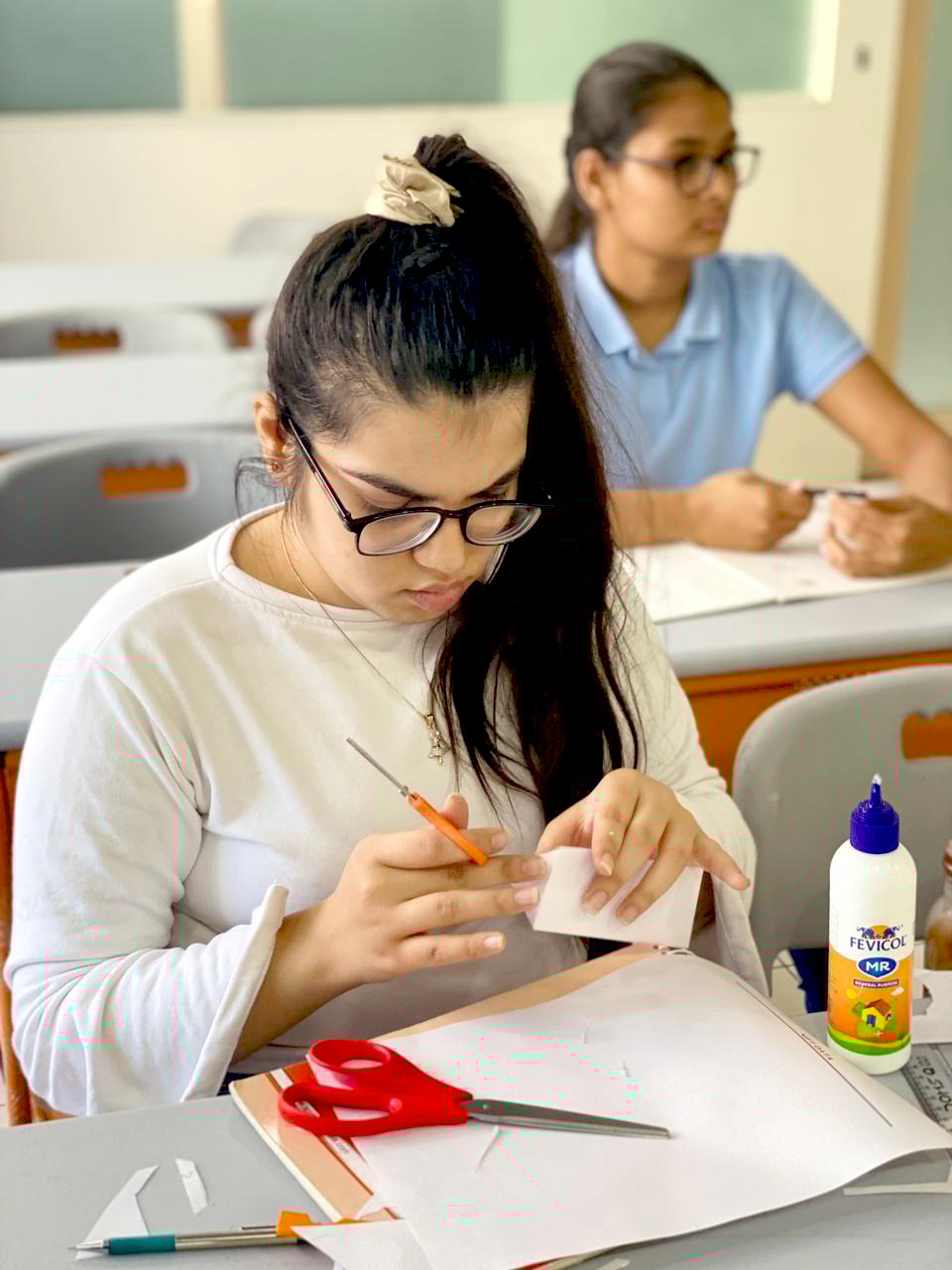
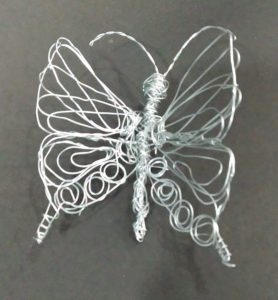
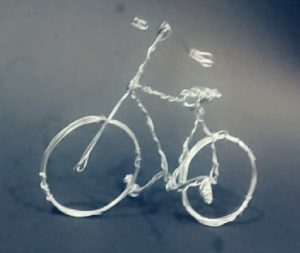
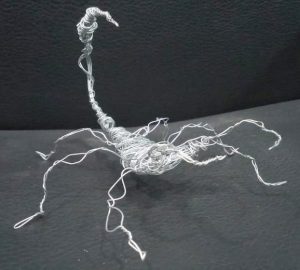
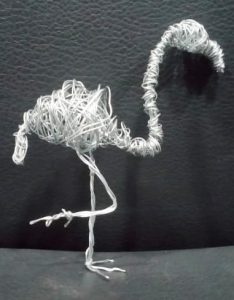
 1. Visualization and Spatial Reasoning
 1. Drawing Skills