
 UCEED 2025 will be conducted by the Indian Institute of Technology Bombay under the guidance of the UCEED-CEED Implementation Committee 2025 (henceforth referred to as the UCI Committee).
UCEED 2025 is open to all nationals (Indian/Foreign). Candidates seeking admission to the Bachelor’s Degree programme in Design (BDes) at Indian Institute of Technology Bombay (IITB), Indian Institute of Technology Delhi (IITD), Indian Institute of Technology Guwahati (IITG), Indian Institute of Technology Hyderabad (IITH), Indian Institute of Technology Roorkee (IITR) and Indian Institute of Information Technology Design and Manufacturing Jabalpur (IIITDMJ), must appear for UCEED 2025. UCEED 2025 score is valid only for admission to the programmes in the academic year 2025-2026.
SCHEDULE OF UCEED 2025
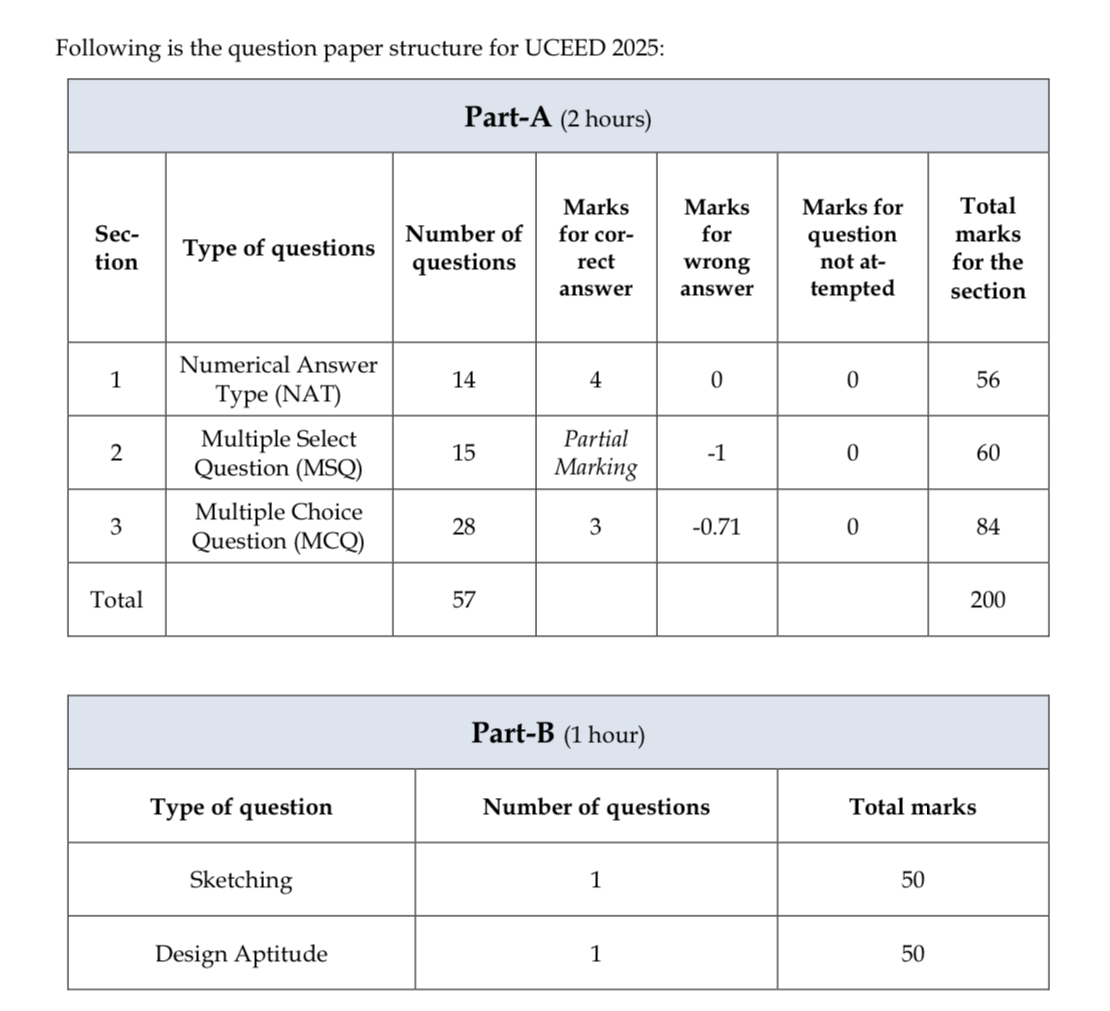
UCEED is a test centre-based examination and has two parts: Part-A is computer-based and Part-B contains questions related to sketching that needs to be attempted on the provided sheet. It is compulsory for the candidates to attempt both the parts in the given time.
The total time for the examination (that includes both Part-A and Part-B) is THREE hours and it will be held as per the following schedule:
|
Date |
January 19, 2025 (Sunday) |
|
Time |
09:00 am to 12:00 noon |
UCEED Brochure 2025
Important Dates
| Activity | Date |
|---|---|
| Start date for Online Registration | October 01, 2024, 01:00 pm |
| Last date for Online Registration with regular fee | October 31, 2024 |
| Last date for Online Registration with late fee | November 18, 2024, 5:00 pm |
| Start date for Admit Card downloading | January 03, 2025, 01:00 pm |
| Last date for rectification of discrepancies in Admit card | January 09, 2025, 05:00 pm |
| UCEED 2025: date and time of exam | January 19, 2025 (Sunday) 09:00 am to 12:00 noon |
| Release of Draft Answer Key and candidates’ response for Part-A | January 21, 2025 |
| Last date for uploading comments (if any) on the Draft Answer Key in the candidate’s portal |
January 23, 2025, 05:00 pm |
| Release of Final Answer Key for Part-A | January 29, 2025, 05:00 pm |
| Announcement of cut-off marks for Part-A | February 06, 2025 |
| Declaration of results | March 07, 2025 |
| Start date for Score Card downloading | March 10, 2025 |
| Application Process for BDes Programme starts | Admission Schedule » |
| Last date for Score Card downloading | June 11, 2025 |
Nearest Metro Station Hauz Khas Gate No-3, Mayfair Garden / RBI Colony
Landmark: Opposite Joups
Contact No: 8800-22-6864
Contact Person: Karishma Gupta
Email: corporate@pahaldesign.com



 Admissions to the Bachelor of Design (BDes) programmes at IIT Bombay, IIT Delhi, IIT Guwahati, IIT Hyderabad, IIT Roorkee and IIITDM Jabalpur are done through the Undergraduate Common Entrance Exam for Design (UCEED). Many institutes also recognize the UCEED Score Card for admissions to their BDes program. Only those students who have passed Class XII (or equivalent) in 2023 in all subjects or are appearing in 2024 in ANY STREAM (Science, Commerce, or Arts & Humanities) for the first time are eligible to appear for the UCEED 2024. UCEED 2024 score is valid only for admission to the programmes in the academic year 2024-2025.
 UCEED is a test centre-based examination and has two parts: Part-A is computer-based and Part-B contains question related to sketching that needs to be attempted on the provided sheet. It is compulsory for the candidates to attempt both the parts in the given time.


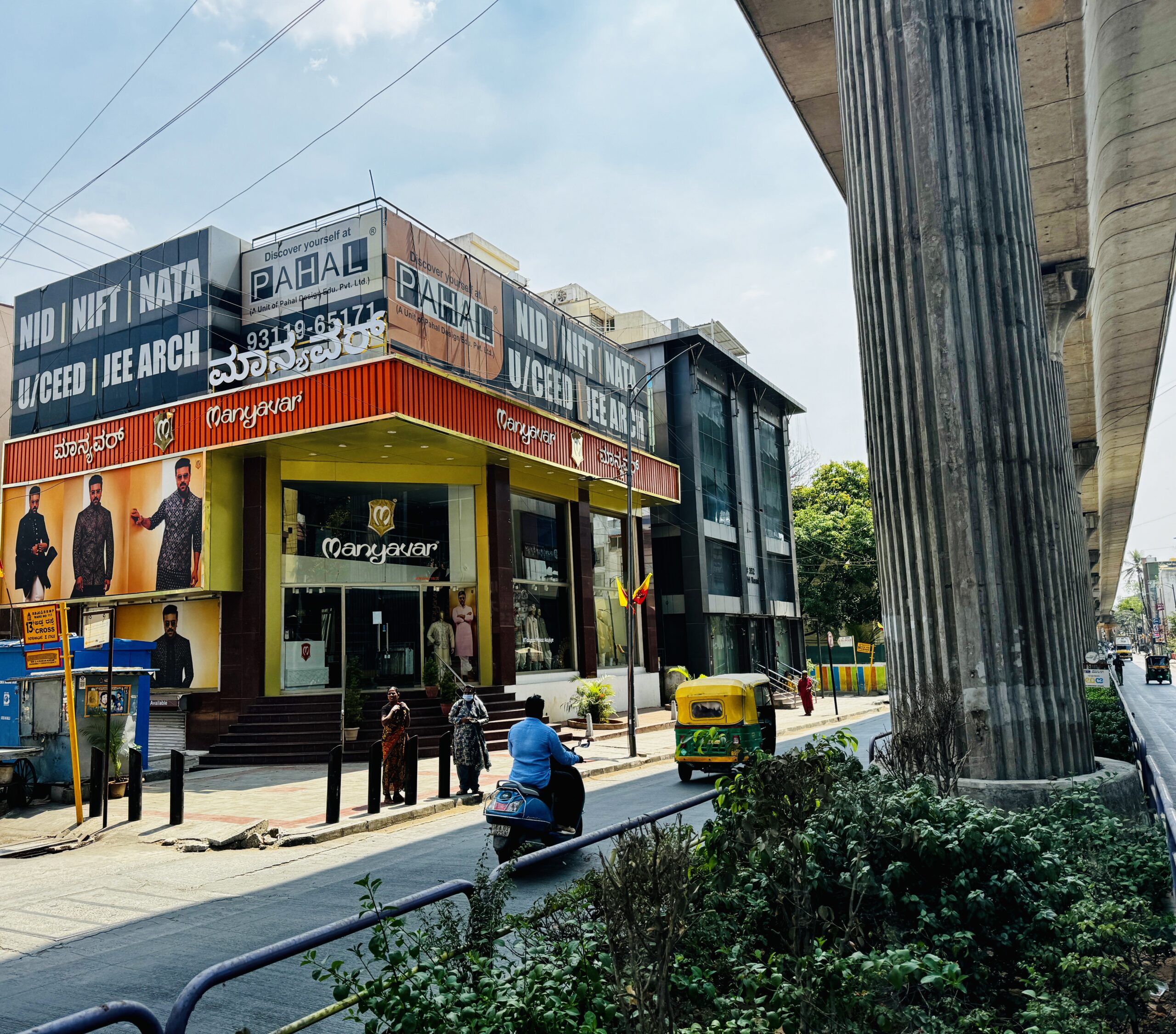
 Pahal Design Bangalore Centre Offers Weekdays and Weekends batch for CEED Students. Weekends Batches are generally suitable for working Professionals or Final year appearing students. CEED Students Bangalore can also Join Classroom Coaching and Online Coaching. Pahal Design Bangalore Centre is at heart of city which is Indira Nagar.