NIFT Situation Test 2026 – Complete Preparation Guide by PAHAL DESIGN

The NIFT Situation Test 2026 is the most crucial stage for students aspiring to secure admission into top design programs at the National Institute of Fashion Technology (NIFT).

After clearing CAT & GAT, this final practical round tests your creativity, material handling skills, problem-solving ability, and design thinking.

At PAHAL DESIGN, we help students master this stage with expert guidance and real exam simulations.

NIFT PAN India Presence 2026

NIFT SEAT MATRIX 2026

What is the NIFT Situation Test?

The Situation Test is a hands-on model-making exam where students must:

✔ Create a 3D model using given materials
✔ Follow a specific theme or problem statement
✔ Finish within limited time (approx. 2 hours)
✔ Write a concept explanation (write-up)

This test evaluates:

  • Creative thinking
  • Spatial awareness
  • Innovation
  • Neatness & finishing
  • Material usage
  • Concept clarity

NIFT Situation Test 2026 – Expected Question Trends

Based on past exam patterns, students can expect questions from the following categories:

  1. Product Design Based Tasks

Students may be asked to design:

  • A trophy for a profession
  • A utility bag
  • A toy for children
  • A wearable accessory
  • A futuristic product

These questions test functional creativity.

  1. Space Design Tasks

You may be asked to create:

  • A kids play area
  • A shop display unit
  • A vendor workspace
  • A themed café or stall
  • A boutique layout

These evaluate space planning & aesthetic sense.

  1. Theme-Based Concept Models

Possible abstract themes include:

  • Harmony in Chaos
  • Movement & Flow
  • Balance in Opposites
  • Future Sustainability
  • Nature Inspired Design

These test imagination and storytelling ability.

  1. Social & Sustainability Themes

Recent NIFT papers show growing focus on:

  • Recycling
  • Inclusive design
  • Eco-conscious living
  • Energy conservation
  • Future environmental solutions

Previous Years’ Situation Test Questions

Here are real-style tasks asked in past NIFT tests:

  • Design a headgear inspired by mythology
  • Create a flower vase inspired by “Storm”
  • Make a toy to teach science to kids
  • Design a park bench for senior citizens
  • Create a badge for “Save Environment – 22nd Century”
  • Design a modern display unit for a perfume store
  • Create a bag for a working mother

Understanding these helps students prepare smartly.

Materials Usually Provided in the Test

Students typically receive:

  • Mount board
  • Thermocol
  • Colored sheets
  • Clay
  • Threads
  • Straws
  • Ice-cream sticks
  • Foil paper

At PAHAL DESIGN, we train students using the same exam-style materials.

How NIFT Evaluates Your Model

Your final score depends on:

✔ Concept originality
✔ Creativity
✔ Material handling
✔ Neat finishing
✔ Structural balance
✔ Relevance to theme
✔ Quality of write-up

Even a simple idea can score high if executed neatly.

How PAHAL DESIGN Prepares Students for Situation Test

Our training includes:

Real Exam Simulations

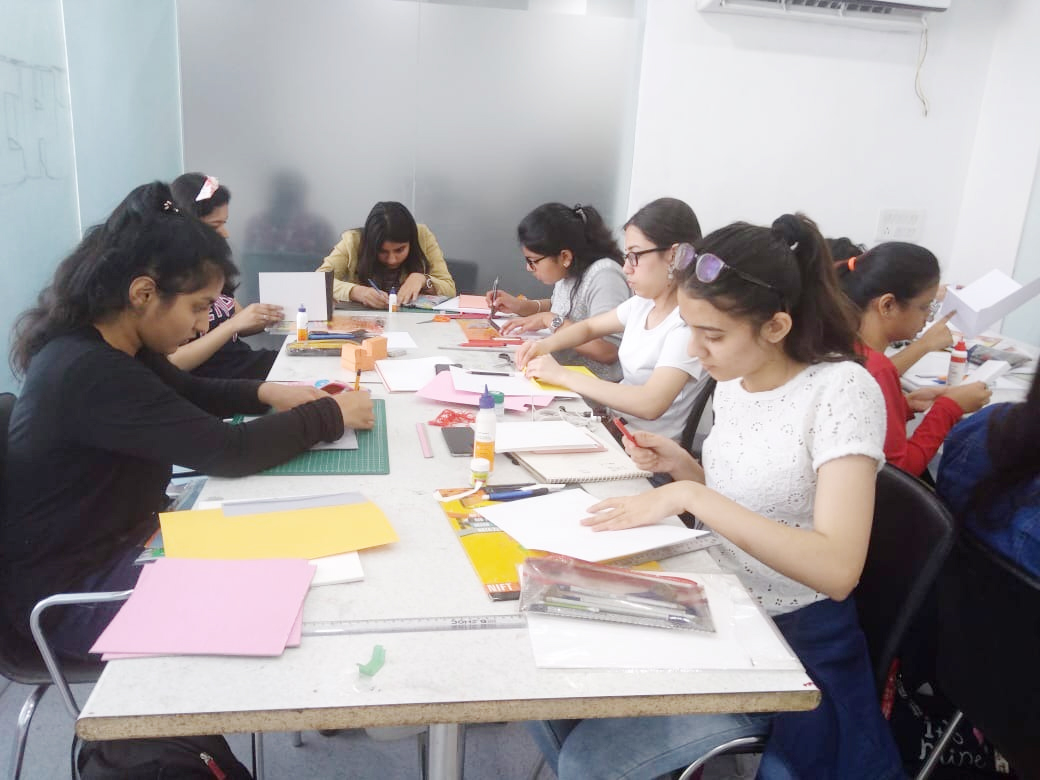
Students practice with time-bound model making.

Material Handling Workshops

Learn how to use simple materials creatively.

Concept Development Training

Convert ideas into strong visual models.

Write-up Practice

Students learn how to explain their concepts effectively.

Expert Mentorship

Guidance from experienced NIFT mentors.

Practice Questions for NIFT 2026

Students preparing with PAHAL DESIGN practice tasks like:

  • Design an eco-friendly fashion display
  • Create a smart student backpack
  • Build a sustainable workspace
  • Design a toy promoting environmental awareness
  • Create a future wearable accessory

Common Mistakes Students Make

❌ Overcomplicated ideas
❌ Poor finishing
❌ Weak structure
❌ Ignoring theme
❌ Poor time management
❌ Weak write-up

Our structured coaching helps avoid these pitfalls.

Why Choose PAHAL DESIGN for NIFT Situation Test Preparation?

23+ Years of Experience
Expert Faculty
Studio-Based Learning
Mock Situation Tests
Personalized Mentoring
Proven Results

We ensure students are fully prepared for the final creative challenge of NIFT admission.

Final Tips to Crack NIFT Situation Test 2026

  • Keep your concept simple
  • Focus on finishing
  • Use materials smartly
  • Manage time well
  • Write a clear concept note

With the right training and guidance from PAHAL DESIGN, success in the Situation Test becomes achievable.

Start Your NIFT 2026 Preparation Today

Join PAHAL DESIGN and build the creative confidence required to ace the NIFT Situation Test.

FAQs – NIFT Situation Test 2026

  1. What is the NIFT Situation Test?

The NIFT Situation Test is a hands-on model-making round conducted after the written entrance exams for B.Des admission at the National Institute of Fashion Technology. It evaluates creativity, material handling, and design thinking skills.

  1. Is the NIFT Situation Test compulsory for 2026?

Yes. All shortlisted B.Des candidates must appear for the Situation Test to qualify for final admission.

  1. What kind of tasks are given in the NIFT Situation Test

Students are asked to create a 3D model based on a theme such as:

  • Product design
  • Space design
  • Sustainability
  • Social awareness
  • Concept-based abstract ideas
  1. What materials are provided during the test?

Usually, candidates receive materials like:

  • Mount board
  • Thermocol
  • Colored sheets
  • Threads
  • Clay
  • Straws
  • Ice-cream sticks

Students must use only the provided materials.

  1. How is the NIFT Situation Test evaluated?

Evaluation is based on:

  • Creativity
  • Innovation
  • Neatness
  • Material usage
  • Structural stability
  • Concept clarity
  • Write-up quality
  1. How important is the write-up in the Situation Test?

The write-up is very important. It explains your concept and helps examiners understand your design thinking.

  1. How can I prepare for the NIFT Situation Test 2026?

You should:

  • Practice model making regularly
  • Work with different materials
  • Improve time management
  • Learn concept explanation writing
  • Attempt mock tests

Institutes like Pahal Design provide structured training for this.

  1. What are common mistakes students make?

Common mistakes include:

  • Overcomplicated designs
  • Poor finishing
  • Weak structure
  • Ignoring the theme
  • Poor time management
  1. Can I bring my own materials?

No. Only materials provided during the test can be used (basic stationery allowed as per guidelines).

  1. Which coaching institute is best for NIFT Situation Test preparation?

Pahal Design is one of India’s leading coaching institutes offering expert guidance, studio-based learning, and mock Situation Tests.


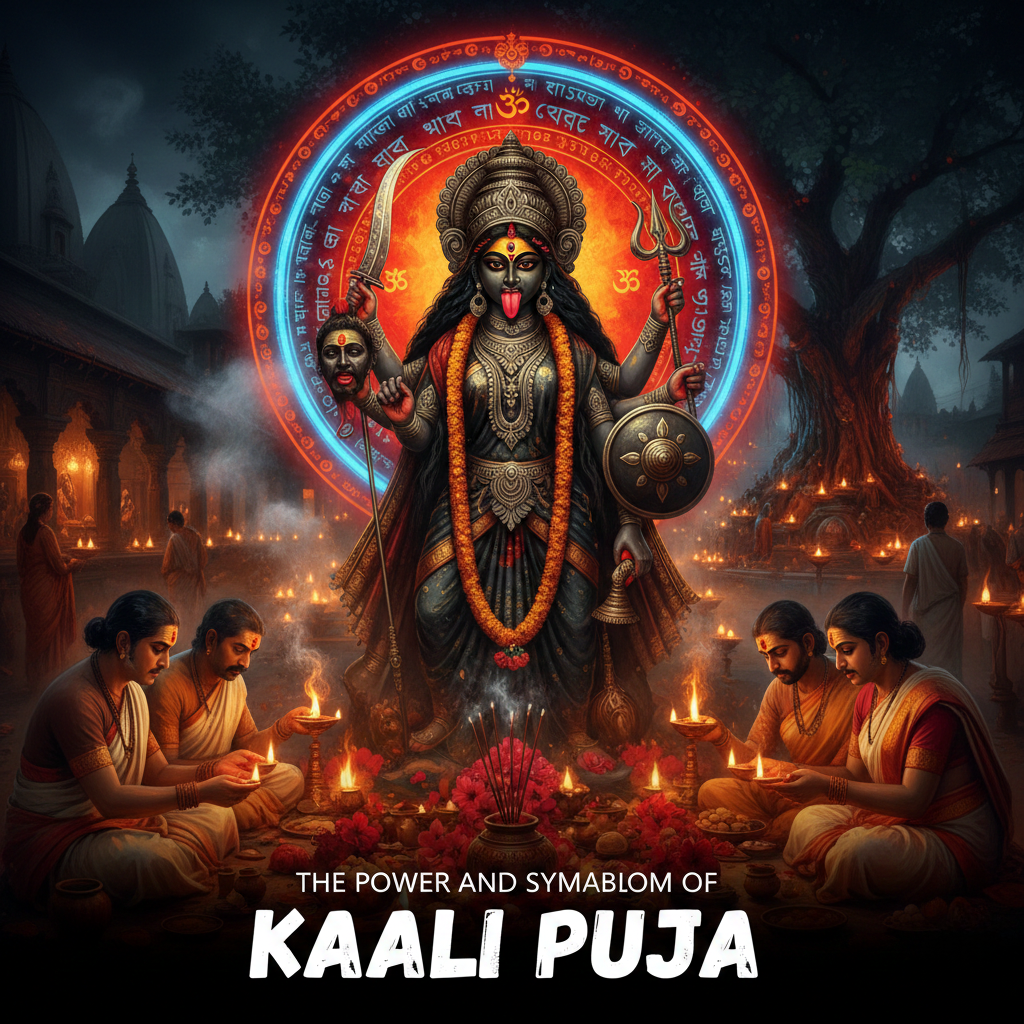
The Power and Symbolism of Kaali Puja: Beyond the Darkness

While much of the world illuminates the night of Diwali to welcome Goddess Lakshmi, the eastern heartlands of India—specifically West Bengal, Odisha, and Assam—prepare for a different kind of intensity. This is the night of Kaali Puja, a celebration of the fierce, the primordial, and the transformative.

In 2026, as we continue to seek balance in an increasingly chaotic world, the symbolism of Maa Kaali feels more relevant than ever. She isn’t just a deity of destruction; she is the ultimate personification of Shakti (divine energy) and the “Dark Mother” who birthed the universe.

The Divine Iconography: A Language of Transformation

To the uninitiated, Maa Kaali’s form—dark-skinned, disheveled hair, and a garland of skulls—can be startling. However, every element of her appearance is a profound philosophical teaching.   

The Dark Complexion: Just as the night sky contains all stars, Kaali’s dark hue represents the infinite void from which all creation emerges and eventually returns.

The Protruding Tongue: Legend says Kaali became so intoxicated by her battle with demons that she threatened to destroy the world. Lord Shiva lay in her path to stop her; upon stepping on her husband, she bit her tongue in a moment of sudden realization and modesty. Symbolically, this represents the taming of the ego and the balance between raw energy (Shakti) and pure consciousness (Shiva).

The Garland of Skulls: These are not symbols of death, but the 50 letters of the Sanskrit alphabet—the "seeds" of knowledge and the various states of the human mind that she liberates.

The Severed Head and Sword: The sword represents Gyan (divine wisdom) that severs the head of the "ego," allowing for true spiritual rebirth.

Why the New Moon?

Kaali Puja is held on Amavasya (the new moon night) of the month of Kartik. The choice of the darkest night is intentional. It signifies that the most profound spiritual work happens in the shadows. By worshipping the “Dark Mother” during the peak of darkness, devotees seek to:

Conquer Inner Shadows: Facing our own anger, greed, and attachments.

Destroy Negativity: Seeking protection from external "evil" and internal "ignorance."

Find Liberation: Breaking the cycle of time (Kala) to achieve Moksha.

Modern Relevance: The Empowerment of the "Wild"

In today’s context, Kaali Puja has evolved into a symbol of Nari Shakti (Feminine Power). She represents a form of the feminine that is unapologetic, fierce, and fiercely protective. For many, she is the guardian of those who feel marginalized or silenced—a reminder that there is power in being “untamed” when it is in the service of truth and justice.

How it is Celebrated

The rituals often take place at Nishita Kaal (midnight), the time when the veil between the physical and spiritual worlds is said to be thinnest.

Offerings: Red hibiscus flowers (symbolizing the heart's blood), sweets, and sometimes symbolic sacrifices like pumpkins or gourds.

The Atmosphere: In cities like Kolkata, the air is thick with the scent of incense, the sound of dhak (traditional drums), and the glow of thousands of oil lamps, creating a surreal blend of fearlessness and devotion.

CONCLUSION :

Kaali Puja reminds us that destruction is often the prerequisite for creation. To build a better version of ourselves or our society, we must first allow the “Dark Mother” to dismantle our illusions and fears. 

For more related info visithttps://www.incredibleindia.gov.in/en/festivals-and-events/kali-puja

Deepavali, or Diwali, is more than just a festival of lights; it’s a profound spiritual journey, a time to cleanse, reflect, and invite the divine light to shine brightly within us. As fireworks illuminate the night sky and diyas flicker in every home, we are reminded of the victory of light over darkness, good over evil, and knowledge over ignorance.

The Symbolism of Light

The most prominent symbol of Deepavali is light. Rows of earthen lamps, or diyas, adorn homes, each tiny flame representing a spark of the divine. This tradition isn’t merely decorative; it’s a powerful metaphor. Just as a single diya can dispel darkness, so too can the inner light of knowledge and wisdom banish the shadows of ignorance and negativity from our lives.

Victory of Good Over Evil

Deepavali celebrates several narratives, all echoing the central theme of triumph. In North India, it commemorates Lord Rama’s return to Ayodhya after fourteen years of exile and his victory over the demon king Ravana. In the south, it marks Lord Krishna’s defeat of the demon Narakasura. These stories serve as powerful reminders that no matter how formidable the challenges, righteousness and truth will ultimately prevail. They encourage us to confront our inner demons – anger, greed, ego – and strive for personal victory.

Prosperity and New Beginnings

For many, Deepavali also marks the beginning of a new financial year, making it an auspicious time for new ventures and seeking blessings for prosperity. Goddess Lakshmi, the deity of wealth and abundance, is worshipped, not just for material riches, but for the wealth of good health, peace, and spiritual growth. The cleaning and decorating of homes before Deepavali symbolize a fresh start, clearing away the old to make way for new positive energies.

The Inner Deepavali

Beyond the external celebrations, the true essence of Deepavali lies in its call to introspection. It’s an opportunity to:

Reflect and Release: Take stock of the past year. What darkness do you need to let go of? What negative patterns or thoughts are holding you back?

Ignite Inner Wisdom: Deepavali encourages us to seek knowledge and understanding. It’s a reminder to nurture our intellect and cultivate compassion.

Spread Joy and Love: The festive spirit is about sharing. Exchange sweets, gifts, and warm wishes. Extend kindness and forgiveness, truly embodying the spirit of unity.

Connect with the Divine: Through prayers, meditation, and lighting diyas, we create a sacred space to connect with the divine energy that resides within and around us.

This Deepavali, as you light each lamp, remember that you are not just illuminating your home, but also kindling the divine light within your own being. Let its glow guide you towards peace, prosperity, and profound spiritual awakening.

 PAHAL DESIGN wishing you a very Happy Deepavali!

Design Your Future: The Ultimate Guide to WUDAT 2026

Every iconic creation—from the smartphone in your hand to the architecture of a skyscraper—started with a single, brave step. If you are ready to turn your creative spark into a professional career, that step is WUDAT 2026.

The World University of Design Aptitude Test (WUDAT) is more than just an entrance exam; it is a gateway to India’s first university dedicated strictly to the creative domains. Here is everything you need to know about embarking on this journey.

What is WUDAT?

WUDAT is the national-level entrance exam for admission into the World University of Design (WUD). Unlike traditional entrance exams that focus on rote memorization, WUDAT is designed to identify “creative DNA.” It tests your aptitude for design, your ability to think laterally, and your visual intelligence.

🗓️ Mark Your Calendar: Key Dates

Timing is everything in design. Ensure you don’t miss these critical milestones for the 2026 academic cycle:

  • Exam Date: 4th January 2026 (Session 1)

  • Next Opportunity: If you missed the January cycle, keep an eye out for the April session (typically mid-April).

  • Mode of Exam: Online (Remote Proctored) – You can take the test from the comfort of your home!

The WUDAT Blueprint: What’s Inside the Exam?

Our Fashion Styling students had the incredible opportunity to assist Nora Fatehi during an editorial shoot for Cosmopolitan, held right here on campus.
At Istituto Marangoni Mumbai, we continuously strive to bridge the gap between academics and industry. This hands-on experience provided our students with real-world exposure to professional styling, creative direction, and the high standards of a leading editorial production.
Go behind the scenes : https://bit.ly/Norafateh
IMStudents #IndustryExperience #CosmopolitanIndia #NoraFatehi #FashionStyling #IstitutoMarangoniMumbai

World University of Design (WUD), Haryana, is India’s premier institution dedicated entirely to creative education, ranked A+ (Diamond Band) by QS I-GAUGE for academic excellence. Spread over 12 acres with specialized labs, hostels, and world-class studios, WUD offers 30+ programs across Design, Architecture, Fashion, Communication, Visual Arts, Performing Arts, and Business. The faculty includes alumni from NID, NIFT, IIT, and top global institutions.

With ₹10 crore worth of scholarships awarded annually and collaborations with 20+ international universities under Cumulus and Erasmus+, WUD empowers students to think, create, and innovate. Its outcome-based education model, industry memberships with CII, FICCI, and ASSOCHAM, and a vibrant, diverse student body from 22 Indian states make it a universe of creative possibilities.

Description: Are you preparing for the NIFT Situation Test and feeling overwhelmed? 

When it comes to the National Institute of Fashion Technology (NIFT) entrance exam, the Situation Test is a key component that can make or break your chances of getting admission. This test evaluates your creative and problem-solving skills through a series of hands-on tasks. To ensure success, it is imperative to approach this test strategically. Here are some expert tips and techniques to help you master the NIFT Situation Test:

1. Time Management: The Situation Test is time-bound, so it’s essential to manage your time effectively. Plan your tasks wisely and allocate time for each task according to its complexity.

2. Read and Understand: Before diving into the tasks, take a few moments to carefully read and understand the instructions provided. Pay attention to details such as materials provided, theme or concept, and any specific requirements.

3. Brainstorm Ideas: Spend some time brainstorming ideas before starting the tasks. Think creatively and come up with innovative solutions that align with the given theme.

4. Focus on Execution: Once you have a clear idea of your approach, focus on executing the tasks with precision. Pay attention to details, craftsmanship, and presentation to create a visually appealing outcome.

5. Practice Regularly: Practice is key to improving your skills for the Situation Test. Try solving sample tasks, engage in hands-on activities, and refine your techniques to build confidence and expertise.

6. Seek Feedback: Don’t hesitate to seek feedback from mentors, teachers, or peers on your work. Constructive feedback can help you identify areas for improvement and fine-tune your skills.

7. Stay Calm and Confident: Lastly, stay calm and confident throughout the test. Believe in your abilities and trust your creative instincts to deliver a standout performance.

By incorporating these tips and techniques into your preparation strategy, you can maximize your chances of excelling in the NIFT Situation Test. Remember, practice, patience, and perseverance are key to mastering this crucial phase of the NIFT entrance exam. Good luck!

The academic strategy of NIFT embraces a global approach. The core activities of the institute have enhanced its international visibility and standing. NIFT has strategic agreements and partnerships with about 19 leading international fashion institutes & organisations that share the same academic direction, integrating NIFT students with the global mainstream of fashion.

International collaborations allow students to experience ‘study abroad’ options through exchange programmes. This initiative provides an excellent opportunity to NIFT students, selected for the exchange programme, to interact with students from various geographies, encouraging them to broaden their vision and understand different cultures. The opportunity can be undertaken by the students across NIFT campuses and all course disciplines. To provide an academic gradient, the institute’s international linkages allow the students to participate in international competitions / seminars / research / exhibitions and other events.

NIFT students at all campuses are encouraged to participate in international events and competitions.The students have participated and won laurels in several prestigious international competitions like Edinburgh Design Competition, Scotland, World of Wearable Arts, New Zealand, Mittelmoda Premio, World of Wearable Art, New Zealand; Arts of Fashion Foundation USA; Triumph Inspirational awards, IAF Designer Awards in Medellin Colombia; Click! Japan Photo Contest Exhibition, Knitting For Juliet Italy; MAX Design Awards; E.A.T-Exporting Art Together.

The institute also attracts international students who come and experience its academic and cultural richness. Through the exchange programmes, students from overseas institutes have developed valuable insight not just into Indian culture, arts & crafts but have also understood the Indian market and its dynamics. The students of Management & Technology have had invaluable exposure to production techniques that cater to high fashion demands of the global marketplace.

The strategic alliances encourage academic enhancement at faculty level as well. Faculty exchange and joint research initiatives ensure that the institute’s teaching methods and facilities are constantly updated & upgraded to be at par with the best institutes in the world. To facilitate exchange of teaching pedagogy, concepts and professional ideas, the faculty at NIFT participates in academic exchange programmes, international fairs, seminars, exhibitions, conferences and trade shows thereby bringing their substantial experience to the classroom thus enriching the knowledge pool at NIFT.

DUAL DEGREE OPPORTUNITY

NIFT had entered into a strategic alliance with Fashion Institute of Technology (FIT), New York, USA. The partnership encompasses a landmark achievement and first of its kind at NIFT. This new international dimension allows select meritorious students from NIFT, the unique opportunity to obtain a Dual Degree from both NIFT and FIT. Students from NIFT undertake two years study at the home institute intercepted by one year of study at FIT. Thereafter, the students resume their studies at NIFT to obtain the Dual Degree from both the institutes. 44 students have been selected by FIT, USA for undertaking the one year AAS programme as part of dual degree from August 2023 to June 2024.

Some of the key international linkages of NIFT:

S no. International Universities Area
1 The Fashion Institute of Technology (FIT)                                                 USA
2 Nuova Accademia di Belle Arti (NABA) Italy
3 Ecole Nationale Superieure des Arts et Industries Textiles (ENSAIT) France
4 Schweizerische Textil fachschule STF Switzerland
5 KEA- Copenhagen School of Design and Technology Denmark
6 EnaMoma France
7 Politecnico di Milano (PDM) Italy
8 Saxion University of Applied Sciences Netherlands
9 Queensland University of Technology (QUT) Australia
10 Royal Melbourne Institute of Technology (RMIT) Australia
11 BGMEA University of Fashion & Technology (BUFT) Bangladesh
12 Namuna College of Fashion Technology (NCFT) Nepal
13 Arts University Bournemouth UK
14 Nordic Centre in India Secretariat at Tampere University Finland
15 University of Boras Sweden
16 Whitecliffe College of Arts and Design New Zealand
17 Massey University New Zealand

NIFT has annual membership of the following organisations:

1 Annual Membership of International Foundation of Fashion Technology Institutes (IFFTI), A global network of International Fashion and Textile Institutes
2 Annual Membership of Cumulus, International Association of Universities and Colleges of Art, Design and Media

The financial strategy of the institute places student development as a key priority. A considerable sum from NIFT Development Fund is effectively put to use in this core area every year. To maximize the potential of its students, the institute’s Means-cum-Merit Financial Assistance scheme allows students from humble backgrounds to avail subsidized tuition fee at every Campus. Determined by the parental income, students can fall into three slabs of monetary assistance. Many students in the past have benefited from this scheme. Further, many leading organisations from the apparel sector have come forward to encourage NIFT students in their academic and creative quest. Pioneers in the related field have instituted awards & scholarships namely ITC, HomeShop 18 etc. to recognize and compliment academic brilliance. This provides motivation to the students, from their first year of study.

Address:- G-13, Ground Floor, Hauz Khas, New Delhi-110016
Nearest Metro Station Hauz Khas Gate No-3, Mayfair Garden / RBI Colony
Landmark:
Opposite Joups
Contact No: 8800-22-6864
Contact Person: Karishma Gupta
Email: corporate@pahaldesign.com

SEAT Matrix 2025

Factors Influencing Cutoffs:

Several elements impact the determination of NIFT cutoffs each year:

Seat Intake: The total number of seats available for a particular program at a campus.

Number of Applicants: Higher competition can lead to higher cutoffs.

Program Popularity: More sought-after courses may have stricter cutoffs.

Difficulty Level of Entrance Exam: Challenging exams might result in lower scores, affecting rank distributions.

Accessing Official Cutoffs:

Candidates are advised to regularly check the official NIFT website for the most accurate and updated cutoff information. The cutoffs are typically released after the declaration of results and are available in the form of opening and closing ranks for each program and campus.

Conclusion:

Aspiring NIFT candidates should aim for high scores to secure favorable ranks, increasing their chances of admission into desired programs and campuses. Staying informed about previous years’ trends and understanding the factors influencing cutoffs can provide valuable insights during preparation.

  1. Cut off Merit Ranks-2024

  2. Cut off Merit Ranks – 2023

  3. Cut off Merit Ranks-2022

  4. Cut off Merit Ranks-2021

  5. Cut off Merit Ranks-2020

Set up in 1986, NIFT is the pioneering institute of fashion education in the country and has been in the vanguard of providing professional human resource to the textile and apparel industry. It was made a statutory institute in 2006 by an Act of the Indian Parliament with the President of India as ‘Visitor’ and has full fledged campuses all across the country. Over the years NIFT has also been working as a knowledge service provider to the Union and State governments in the area of design development and positioning of handlooms and handicrafts.

The Degrees awarded by the Institute are recognised worldwide. The Institute confers Degrees to the graduates in the Convocation Ceremony marking the occasion.

NIFT had entered into a strategic alliance with Fashion Institute of Technology (FIT), New York, USA. The partnership encompasses a landmark achievement and first of its kind at NIFT. This new international dimension allows select meritorious students from NIFT, the unique opportunity to obtain a Dual Degree from both NIFT and FIT. Students from NIFT undertake two years study at the home institute intercepted by one year of study at FIT. Thereafter, the students resume their studies at NIFT to obtain the Dual Degree from both the institutes. 44 students have been selected by FIT, USA for undertaking the one year AAS programme as part of dual degree from August 2023 to June 2024.

Hauz Khas (Corporate Office)
Address:- G-13, Ground Floor, Hauz Khas, New Delhi-110016
Nearest Metro Station Hauz Khas Gate No-3, Mayfair Garden / RBI Colony
Landmark:
Opposite Joups
Contact No: 8800-22-6864
Contact Person: Karishma Gupta
Email: corporate@pahaldesign.com

The National Institute of Fashion Technology (NIFT) is recognized as the premier institute for fashion education that continuously evolves itself to keep abreast to the changing market trends. Set up in 1986, NIFT is the pioneering institute of fashion education in India and has been at the vanguard of providing professional human resources to the textile, apparel, and design industries through its 19 campuses. NIFT was made a statutory institute in 2006 by an Act of the Indian Parliament with the President of India as ‘Visitor’. The emphasis has been to train students to derive from the core strength of art and culture and apply it to the modern and dynamic world of fashion.

At NIFT, we are proud of the dynamic and motivated students who are mentored and supported to take on the challenges and opportunities that await them in the industry. The graduates of NIFT understand the nuances of fashion business spanning art, craft, technology, and strategy and have acquired the skill sets that will make them adapt to the growing needs of the industry.

Graduates of NIFT have been provided cutting-edge understanding through exposure to emerging challenges, developments, techniques, technology, and practices from all over the world. During their programme at NIFT, the students undergo a metamorphosis, unfolding their potential, developing skills, and stimulating intellectual growth. Their latent potential is honed by committed and skilled faculty drawn from academia and industry. We are aware of the fact that the fashion and design industries want professionals with multi-skill sets, and we have trained our students to match the requirements.

The campus placements provide a platform for graduating students from various disciplines of the two-year postgraduate and four-year undergraduate programmes to realize their professional dreams and ambitions and thus request the keen and sustained participation of employer organizations. NIFT graduates carry the energy, creativity, skill, technical know-how, and legacy of their predecessors to merge as valuable assets to the organizations that they are inducted into.

Industry Engagement

The new curriculum of NIFT attempts to give the student a rich repertoire of experience and understanding that will hopefully inculcate a desire and a capability for lifelong learning and will stand him or her in good stead in these disruptive times of change. Industry engagement is envisaged as a learning process that, by providing exposure to the students in a real-life working environment as part of an academic curriculum, helps them to develop and enhance academic, personal, and professional competencies coupled with a deeper understanding of the ethics and values that distinguish a good professional. A significant part of the engagement programme is based on the regulated exposure of the students to the industry environment as part of the course curriculum under the guidance of both academia and industry.

The revised curriculum structure of NIFT, which is arrived at through deliberations, workshops, and interactions involving internal experts, eminent academicians, industrialists, and alumni, is robust with enhanced industry engagement through

Interaction with industry leaders and alumni in the classroom
Sponsored classroom projects
Industry visits and craft sensitization
Exposure to exhibitions and fairs
Internships
Joint research endeavours
Hands-on, practical learning experience in an industry environment to be transacted within the curriculum structure. Critical to this new perspective would be the planning of Industry Engagements and scheduling them in coordination with the industries as per the requirement to transact the new curriculum in the UG & PG Programmes offered by NIFT and its campuses.

Placement Process at NIFT

The National Institute of Fashion Technology has a centralized placement process. Companies can employ students from any campus or course of the institute through two routes which are facilitated by the institute:

Pre-Placement Offers (PPO)
Companies can extend a pre-placement offer to students before the on-campus placement, which is considered as a job offer. These offers may be made on the basis of internships, training, or projects undertaken by the students at the said company. In order to provide a fair opportunity to all students, companies may inform NIFT of such offers by filling up the details in the CMS with the link provided to the industry mentor by NIFT. This would help us ensure students offered PPO are not allowed to participate in the further placement process.

On-Campus Placement (Phase 1)
Companies can register for campus placements, the schedule of which is given for 2024. Upon being given a confirmed time and date, they may come to the campus for the placement procedure.

Off Campus Placement (Phase 2)
After the completion of on-campus placement, NIFT would facilitate off-campus placement in an online mode for those registered companies that could not be taken on board for the On-Campus Placement.

Eligibility Criteria for Firms for Campus Placements

A company registered under the Companies Act of 1956/2013 or a multinational company or global firm having or not having its operations in India, conducting business in the fashion, or allied sector dealing in the design, manufacturing, or distribution.

The phase 2 (online) of NIFT Delhi placement process will be held from May 15 to May 18, 2024. Meanwhile, NIFT placements do take place every year. NIFT Delhi placements brochure 2024 is available on the official website. According to students’ reviews, the placement rate recorded during BDes placements 2024 and in recent past was 99%. Further, the highest, average and lowest package offered during NIFT Delhi BDes placements 2024 stood at INR 12 LPA, INR 7 LPA and INR 4 LPA, respectively.

Earlier, according to unofficial sources, the NIFT Delhi highest package offered during placements 2022 stood in-between INR 12 LPA and INR 15 LPA. Further, the NIFT salary package offered during NIFT Delhi UG and PG placements 2022 stood at INR 4.50 LPA and INR 5.70 LPA, respectively. According to other online sources, NIFT Delhi students bag decent internships during the academic years wherein the stipend paid range from INR 5,000 to INR 7,000 per month.

NIFT Placement Brochure 2024

Particulars Placement Statistics (2023)
UG average package INR 4.50 LPA
PG average package INR 5.70 LPA
Schedule a free counselling session WhatsApp WhatsApp