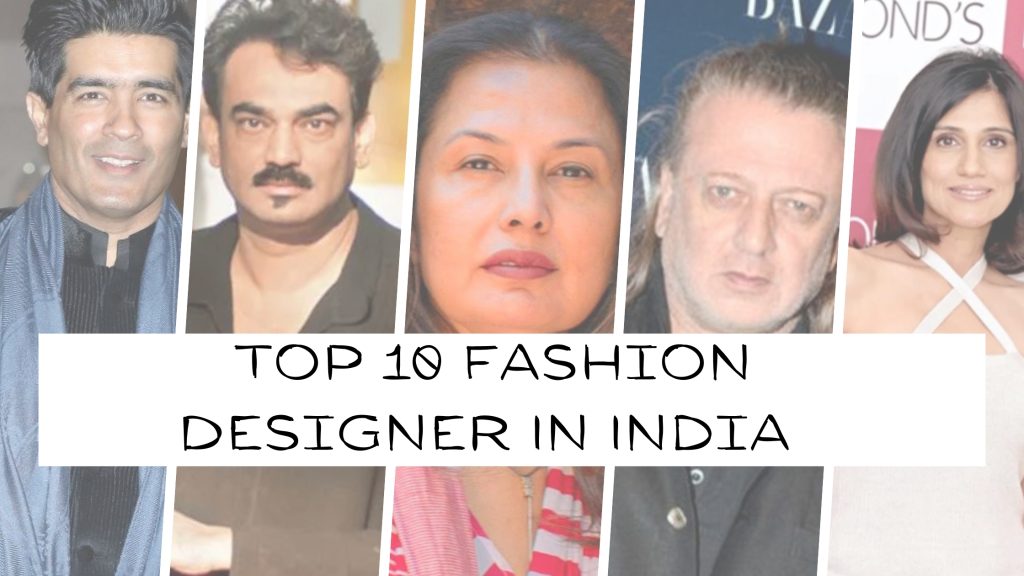
Top 10 Fashion Designer In India

Fashion Industry of India

Fashion industry of India has seen a boom and gained popularity in world as a fashion centric nation. Earlier, not many people knew about India and Indian fashion. However, today India is a renowned nation famous for its elegant woman’s attire named “Saree” and the fabric. Today, Indian Fashion designers are well known faces in the International Fashion Industry and it is because of these fashion designers that India is in the list of top countries. The Indian fabric and Indian textile is equally popular and in demand in international markets.

India is a diverse nation and doesn’t have a unique or a standard dressing style. This diversification of dressing style has given Indian fashion designers ample scope of creativity. The end result of mixing such diverse dressing styles was FUSION. Right from the traditional salwar kameez or sarees to churidars, kurtis, the semi formal way of wearing it over trousers or jeans, capris and the highly elegant and contemporary style of draping sarees, from simply cotton blouses to halter-neck, puffed sleeves, deep necks, and lycra-fitted blouses. Apart from regional attires, the Bollywood element also holds a domineering part in Indian Fashion style.

Let us have a look at the faces who have taken Indian Fashion and Indian Fashion Industry at the top most level. These are the best known faces of the International Fashion Industry and are the Best Fashion Designers of India. 
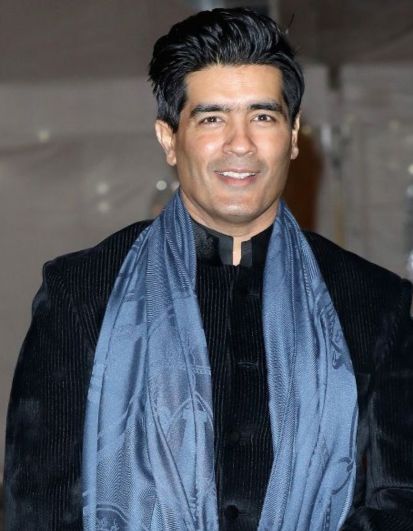
Manish Malhotra)

1. Manish Malhotra

At the age of 25, Manish Malhotra forayed into Bollywood by designing for Juhi Chawla in Swarg. Today, at 59, his name is synonymous with style in Hindi films. He revolutionized the fashion scene in Bollywood by envisioning a ‘look’ for the character. His tenure as a costume-designer has seen him clothe most of the leading actresses in the film industry from Sridevi, Urmila Matondkar, Karishma Kapoor, Kajol, Raveena Tandon, Manisha Koirala, Madhuri Dixit, Twinkle Khanna, Shilpa Shetty, Kareena Kapoor, to Aishwarya Rai, Rani Mukherjee and Preity Zinta. High on his success, Manish Malhotra decided to branch into mainstream designing in 1998 with his high-profile couture store Reverie – Manish Malhotra. He has done several wedding trousseaus for reputed families. His popularity soared during this period when he was exclusively asked to design clothes for Michael Jackson for his appearance during the Bollywood Awards held in New York. The performer was so please that he requested Manish to design outfits for his show in Munich and to design clothes for his children.
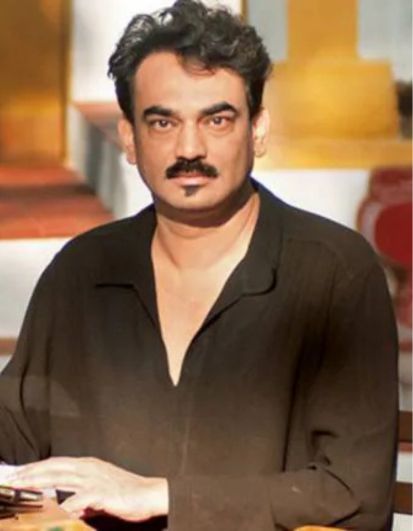
Wendell Rodricks

2.Wendell Rodricks

Designer Wendell Rodricks started out as a catering graduate but found fashion designing was more suited to his palate. His minimalist chic style is a rage among Indian clothes lovers and he is known for his passion for white. He has written special features for Apparel, regular columns for Femina, Goa Today and freelance fashion journalism in major Indian news media. The multi-talented designer`s work includes theatre design, advertising styling and forecast portfolios. In 1994, the Ministry of Culture displayed the Wendell Rodricks Shiva Temples Collection at the Festival of India in Peking, Canton & Shanghai. The designer is a keen art patron and promotes Goan artists through special promotions at the Wendell Rodricks Couture Salon. The Fundacao Oriente awarded a scholarship to the designer to intern at the prestigious Museu Nacional do Traje in Lisbon, Portugal. Wendell Rodricks also interned at The Museum at the Fashion Institute of Technology, New York to learn costume preservation and conservation.
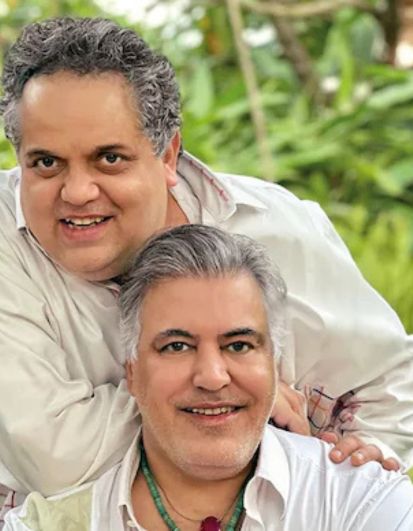
Abu Jani and Sandeep Khosla

3. Abu Jani and Sandeep Khosla

‘The boys’, as the twosome of Abu Jani and Sandeep Khosla are known in the fashion circuit, can be considered among first names in that made it big, by way of success, attention, fame and hype. It is a creative alliance that exudes attitude and talent. They were one of the first to display their creations at Harrods. Ever since, the Abu Jani and Sandeep Khosla show is a much awaited, though not so frequent event. Though they lack in professional training, they push ethnic fashion to the limits, almost to the dictates of their fancies. No wonder they claim that they do not make garments, they make heirlooms.
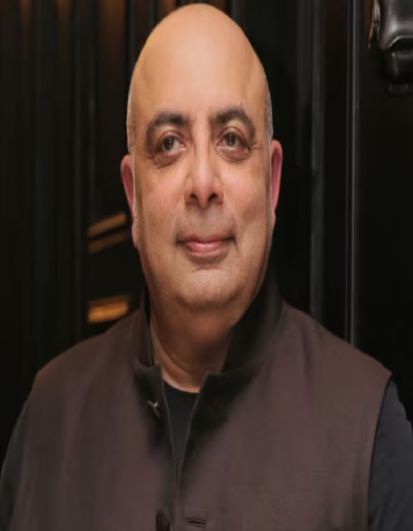
Tarun Tahiliani

4. Tarun Tahiliani

He is one of the most celebrated fashion designers of India. He acquired a degree from The Fashion Institute of Technology, New York. When Tarun Tahiliani came back to India, he realized that there was a huge scope in India in the designer wear sector. He brought a revolution in the field of fashion in 1987, by opening the first fashion boutique in India, ‘Ensemble’. He established the Tarun Tahiliani Design Studio, situated in New Delhi. His own brand label is known as, Ahilian. The brand is known for its creative style and uniqueness. The designer clothes created by him are sold in Tokyo, New York, London, Hong Kong, Dubai and in his stores in New Delhi and Mumbai.
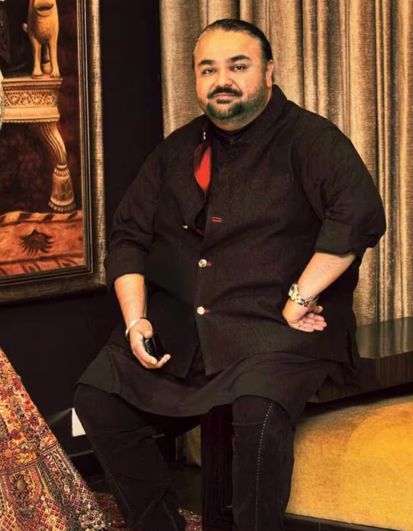
JJ Valaya

5. JJ Valaya

Born and raised in the historical city of Jodhpur in Rajasthan, India’s premier fashion designer, JJ Valaya, has made a name for himself as one of the most original and inspired designers working today. The revolutionary fusion of traditional crafts and contemporary haute couture generates an alluring, urbane, one-of-a kind handiwork is the signature of the House of Valaya. Valaya has rejuvenated and redefined age-old Indian crafts as a profitable niche within the cosmopolitan market, allowing the valued artistic processes to live on despite the pressures of globalization. In 1994, Valaya became the first Indian couture label to have a solo show in India. Met with enthused reactions by fashion critics and buyers, the label opened JJ Valaya Life, India’s largest single designer store till date. Since 1997, the House of Valaya has shared the catwalk with many of the world’s top designers in Hong Kong, Singapore, Bangkok, London, Dubai, New York and Paris. As one of the most respected designers in contemporary fashion, JJ Valaya continues to wow fashion’s toughest critics with his two apparel lines, Couture and Diffusion, and his product labels Valaya Home and Studio Valaya.
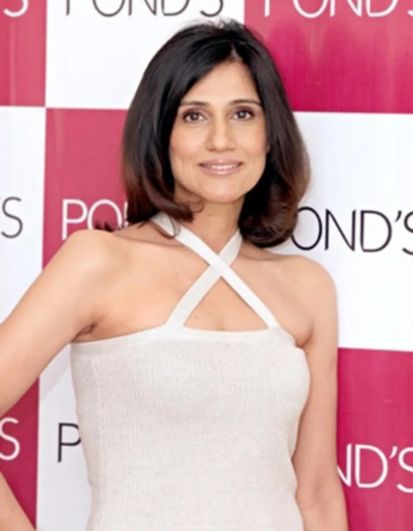
Rina Dhaka

6. Rina Dhaka

Rina Dhaka is India’s leading fashion designer who burst onto the fashion world in late 1980s. Winner of Yuv Rattan Award, she is counted among the creative and innovative designers of the country. After college, Rina Dhaka did a training project with Intercraft, and with designer Evan Grandhal. She also set up a ‘Salwar Kameez’ boutique for one of her acquaintances. Around this time ‘Mutiny’ and ‘Ensemble’ were just coming up as fashion houses and she made a line of designs for them. She is best known for her theme collections – sheer trousers, crochet, and stretch jersey, woolens and spider web motifs. Her forte remains western wear, and she prides on the fact that her pieces can be worn as separates. Rina Dhaka emphasises silhouettes. She is not afraid of experimenting. In one of her collections, she had mixed fur and boots with her Indian outfits. Rina Dhaka has held shows in London, Paris, New York, Singapore, Hong Kong, Dubai, and Jakarta. Her Singapore shows in 2001 and 2002 were major success. International fashion magazines ‘Vogue’ and ‘Elle’ featured her work. With brothers Shantanu and Nikhil joining her in late 1990s, Rina Dhaka’ s fashion design has become a family affair. Her designs are available in at Carma -Delhi, Design Studio-Mumbai, Kimaya-Mumbai, Selfridges-London, Coin-Italy and Lord and Taylor-New York.
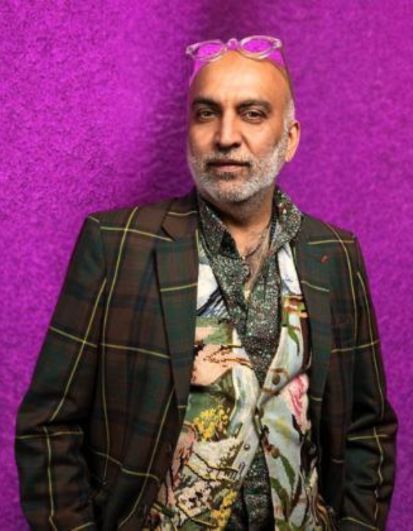
Manish Arora

7. Manish Arora

In 1997 Manish Arora launched his Label “Manish Arora” and started retailing in India. Three years later in 2000, Manish represented India at the Hong Kong Fashion Week and participated at the first ever India Fashion Week held in New Delhi. The following year Manish launched his second Label “Fish Fry” and showed this collection in six leading cities in India and was stocked at Lord & Taylor, New York. Arora’s future-in-outer-space inspired line at the Wills India Fashion Week 2007 attracted international viewers. A collaboration with MAC in the pipeline, a successful eyewear range for Inspects just launched and two new stores ready to open in India in the next couple of months Manish Arora is one busy designer. Chosen for his vision and sense of style and colour references, MAC has enlisted designer Manish Arora to collaborate on a new, Raj-inspired beauty range. The Indian designer, known for his colourful fashion shows, has created a collection of lipglasses, lipsticks, blush and a fabulous eye palette (Eyes on Manish, £30) with bright shades from Yellow to Bright Pink and Acid Green for MAC. And, if what’s inside isn’t enough, the packaging is a fashion accessory in itself.
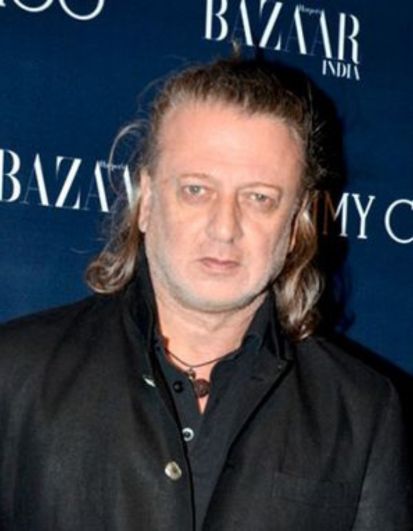
8.Rohit Bal

Titled as the ‘India’s Master of fabric and fantasy’ by the Time magazine in 1996, Rohit Bal’s sense of aesthetics is finely honed, and each of his creations is handcrafted to perfection, with meticulous attention to detail. He has access to the best the industry has to offer in terms of materials and workmanship. From villages where local craftsmen weave dreams with magic fingers, to factories, workshops and outlets where retailers jostle for survival, to the opulent grandeur of glitzy boutiques and malls at the best addresses in the big cities of high fashion, Rohit Bal can lead one to the doors of discovery, and he holds the key. Rohit Bal graduated from New Delhi’s St. Stephen’s College with a first class (Hons.) degree in History. He worked for a few years with his brother’s export company and in 1990 he created his first line, traditional designer wear for men and the rest history. Some of his clients include celebrities like Uma Thurman, Cindy Crawford, Pamela Anderson, Naomi Campbell and Anna Kournikova. Most of the Rohit Bal’s fashion shows in India, New York, Paris, and Singapore are sponsored by The Swatch Group, and he is the brand ambassador for their Omega Watches, since 2001.
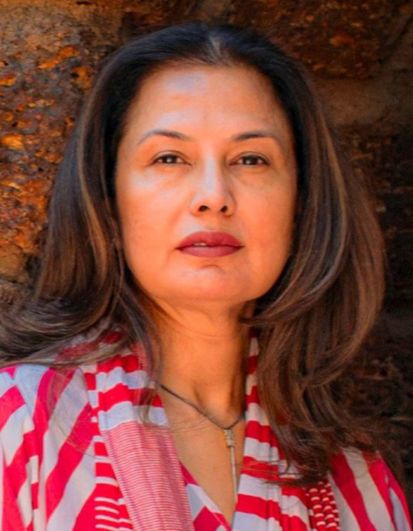
Ritu Beri

9. Ritu Beri

She is known as the first Indian designer to present a collection in Paris. There is no comparison for her style and elegance. Today her designs have become a highlight in Delhi, Mumbai, Bangalore, USA, London and Paris. Ritu Beri’s ready-to-wear line is an impressive couture collection that had the French media raving about her. She is one of early fashion designer whose collection made it quite big internationally. Ritu started her illustrious career in fashion when she created her first line of clothing in 1990, called Lavanya. It was a complete success for Ritu in India and on the international market, with the range selling out very quickly. Ritu graduated from Delhi University in 1987 and after this she decided to do something artisitc and ever since being interested in fashion, the natural choice was to try designing outfits. Ritu enrolled in the newly-opened National Institute of Fashion Technology in 1988. The tertiary education centre is linked to the F.I.T (Fashion Institute of Technology) in New York, and had just been established in Delhi. Lavanya was her graduation collection, if you will, created in December of 1990, after she became one of the first students to complete the fashion study course.
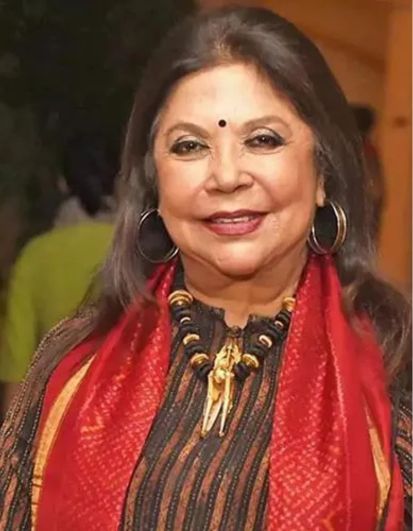
Ritu kumar

10.Ritu Kumar

One of the earliest and reputed fashion diva amongst fashion buffs, Ritu Kumar has developed a unique style of her own. Her designs reflects the ancient traditions of Indian craftsmanship in a contemporary fashion. With a background of art history and musicology, which has enriched her horizons, Ritu Kumar’s understanding of ancient designs and the innovative use of traditional crafts has created a new classicism. Ritu holds the status of a revivalist in the Indian fashion industry, which has successfully bridged the gap between traditionalism and modernity. Ritu Kumar has been designing the wardrobes of the three winning Miss India’s , for their participation in International Beauty Pageants (Miss Universe , Miss World and Miss Asia Pacific respectively ). In April 2002, Ritu Kumar launched her new sub brand, ‘LABEL’. ‘LABEL’ cater today’s woman, who is increasingly independent, discerning and global. It is a modern offering, focusing on the cut, color, drape and feel of the garment. This brand has a universal appeal aimed at today’s mobile lifestyle. It is fashionable, affordable and like all Ritu Kumar products, it is of the highest quality.

If you are looking to become a fashion designer just like one of them, book a consultancy on our website today: https://pahaldesign.com/ 

For design related information visit www.designboom.com

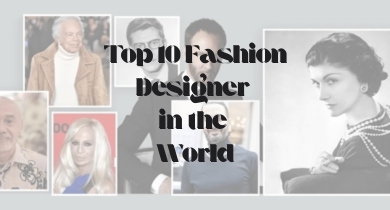
Fashion designers are the people who not only design clothes, but also design dreams. The list for the best fashion designers is created based on the success and fame earned by a designer. The following list consists the names of the most famous and incredible designers in the world. Here, in this article we’re going to be sharing the top most amazing designers we all know. Without wasting any more time, let’s find out the top ten best fashion designers in the world 2026.

CALVEIN KLEIN

1. Calvin Klein

The short of version of Calvin Klein (CK) is famous and popular almost all over the brand by everyone. In 1968 this brand was founded by Calvin Klein, a famous American fashion designer. He initiated his career by opening a store of men and women’s coat in New York City. Since then, he hasn’t looked behind and has expanded his business with an incredible pace and has been ruling the fashion industry very strongly. He truly deserves to be the number 1 fashion designer in the world 2012.

Donatella Versace

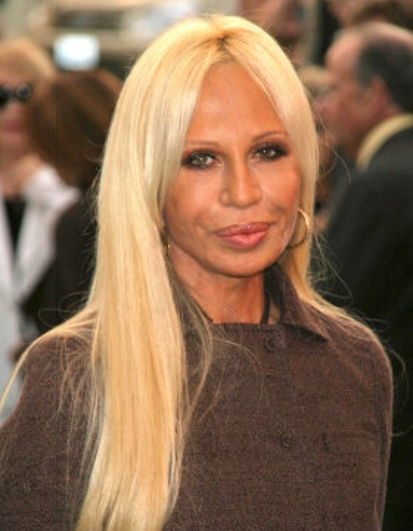
2. Donatella Versace

He is the Vice President and the chief designer of the Versace Group. Donatella is the first ever fashion designer for using an A-list celebrities to promote her designs on the catwalk, rather than going for nameless models. When promoting her brand in Hollywood, she chose Madonna, Jennifer Lopez, Christiana Aguilera, Demi Moore and others to serve the purpose of promoting her brand.

Valentino Garavani

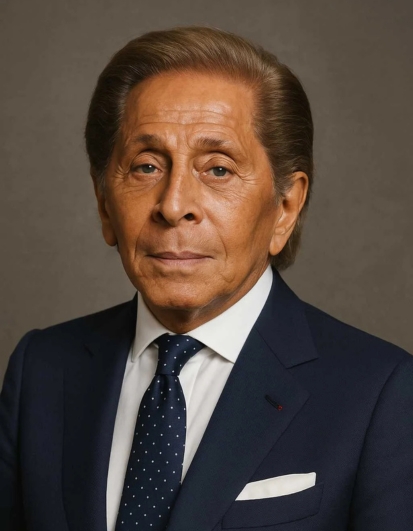
3. Valentino Garavani

He is the founder of the famous brand ‘Valentino Spa.’ He is an Italian designer and an incredible living legend without any doubts. He is best known for designing clothes for some of the famous celebrities around the globe. Princess Margaret, Queen Paola of Belgium, Jacqueline Kennedy and Elizabeth Taylor are some of the famous and regular customers of his

Giorgio Armani

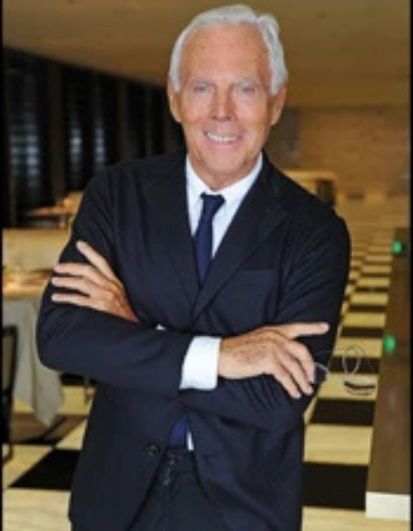
4. Giorgio Armani

Giorgio Armani is known to be the only designer who changed the trend of fashion industry after creating the brand “Armani” back in 1975. Armani is also the first ever designer to ban models who has a Body Mass Index under 18. He is truly a living legend and a great fashion designer.

Choco Chanel

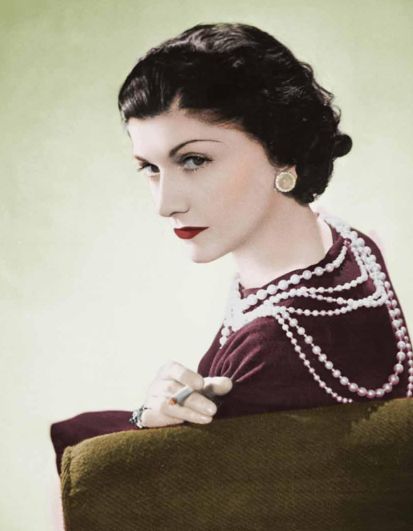
5. Coco Chanel

She is definitely a leading figure in the fashion industry. She was a French designer and was famous for her famous brand ‘Chanel.’ Up till now, she is the only single fashion designer to be named on the most important people of the century by Time Magazine

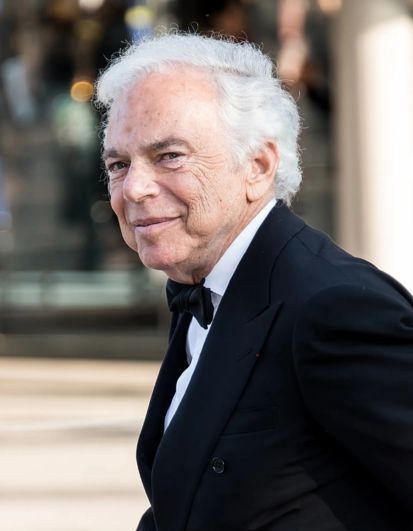
Ralph Lauren

6. Ralph Lauren

Ralph Lauren is an incredible designer world has ever seen. He is widely known for his excellent designing and for the brand he introduced ‘Polo Ralph Lauren.’ In 1972, he earned his fame when he introduced a notable short sleeve shirt with the Polo logo on it. He is definitely one of the best designers around.

Tom Ford

7. Tom Ford

Tom is widely famous for overhauling ‘Gucci’ in its bad days. Tom Ford is the founding father of the brand ‘Tom Ford’ which totally dominates the accessory and menswear market.

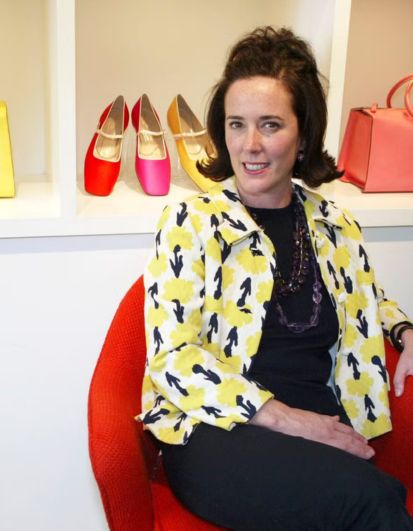
Kate Spade

8. Kate Spade

She is the co-founder of the brand “Kate Spade New York,” she holds a graduate degree in journalism from Arizona State University. She is widely known for her designer handbags and is considered to be one of the best bags around.

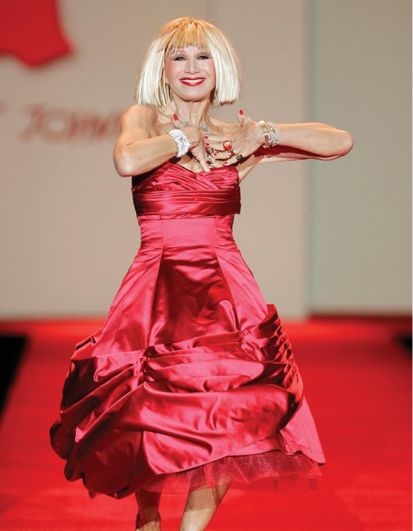
Betsey Johnson

9. Betsey Johnson

She is famous for her feminine and whimsical designs all over the world. She truly holds a deep knowledge of costumes. Her name was also mentioned in the “Fashion Walk of Fame” back in 2002 and right after that she expanded her business by introducing new line of handbags, scarves, accessories and hats into her specialization.

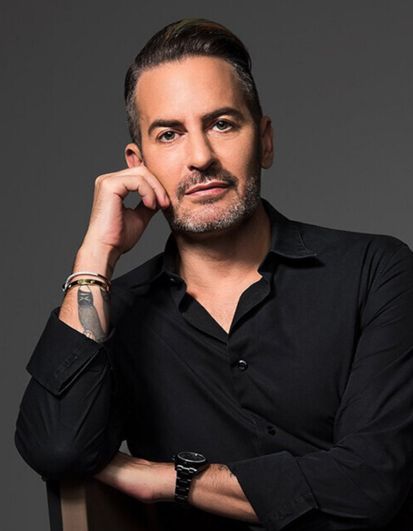
Marc Jacobs

10. Marc Jacobs

Jacobs belongs to a Jewish family and is the head designer of “Marc by Marc Jacobs, “Louis Vuitton”, “Diffusion Line” and “Marc Jacobs.” While he was studying at the Parson College of Design, he sold out his first ever stack of knit sweaters and with in no time he became the first of celebrities. In 2010, he was also mentioned in the list of 100 most influential people in the world, by Time Magazine.

If you are looking to become a fashion designer just like one of them, book a consultancy on our website today:https://pahaldesign.com/ 

For Design related more information visit www.style.com

http://www.vogue.co.uk/spy/art-in-fashion

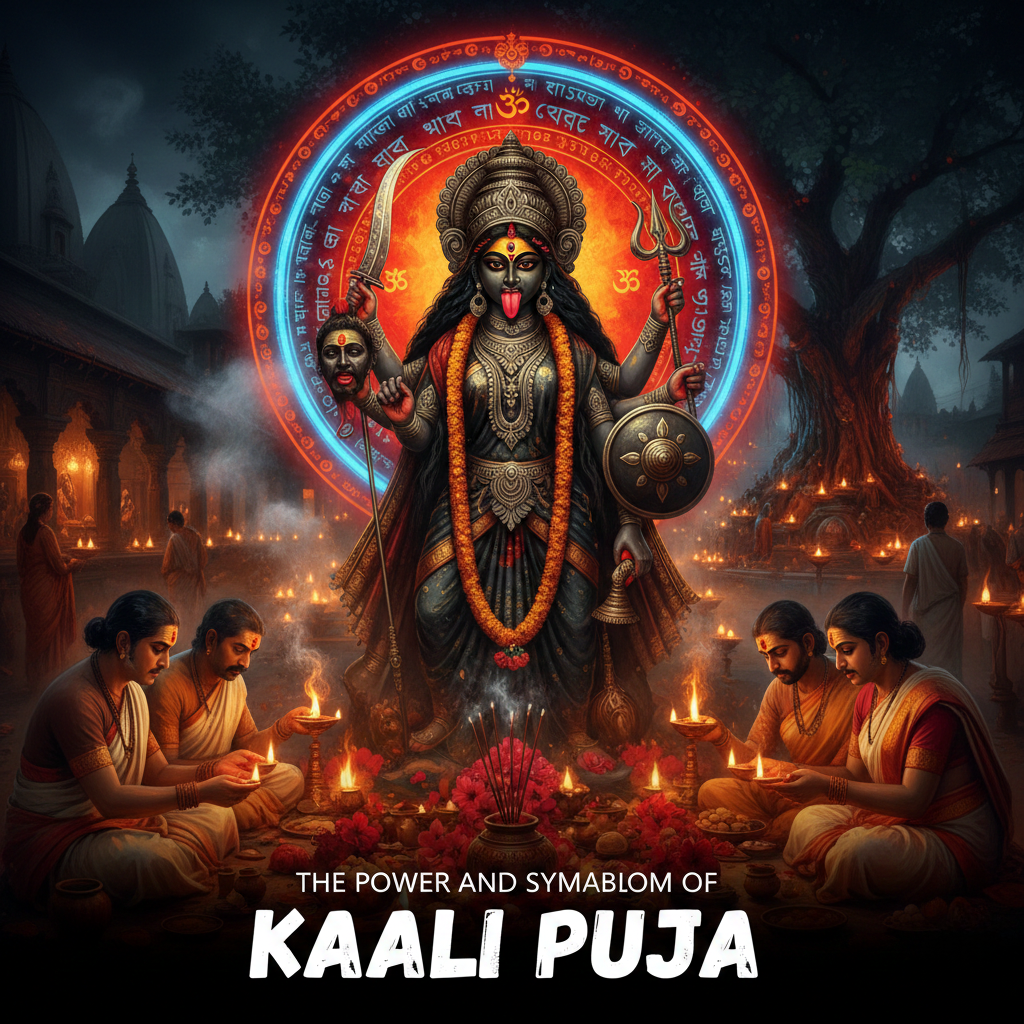
Kaali Puja, also known as Shyama Puja, is a deeply spiritual festival celebrated with devotion across India, especially in West Bengal, Odisha, and Assam. It coincides with the new moon night of Diwali and honors Goddess Kaali, the fierce manifestation of Shakti — the ultimate feminine energy of creation and destruction.

Maa Kaali represents the victory of good over evil and the eternal cycle of life, death, and rebirth. Her black complexion symbolizes the infinite, her red tongue signifies the power of transformation, and her garland of skulls reflects the triumph of wisdom over ignorance. She is the destroyer of darkness and ego, reminding devotees to conquer inner fears and attachments to attain true liberation.

During Kaali Puja, devotees decorate altars with red hibiscus flowers, lamps, and offerings of sweets, rice, and lentils. Tantric rituals and hymns are chanted to invoke the goddess’s blessings for strength, courage, and protection. The atmosphere resonates with the sounds of bells and drums, symbolizing the awakening of inner consciousness.

Beyond religious devotion, Kaali Puja carries a deeper creative message. She represents transformation — a process every artist, designer, and creator experiences. Just as Maa Kaali destroys the old to give birth to the new, creativity too thrives on breaking boundaries and reinventing forms.

At Pahal Design, we celebrate Kaali Puja as a reminder that creation is inseparable from transformation. The goddess inspires us to channel fearless creativity, challenge conventions, and embrace change with boldness and faith.

May Maa Kaali bless us all with courage, clarity, and creative energy.

✨ Jai Maa Kaali ✨

Deepavali, or Diwali, is one of India’s most cherished festivals — a time when homes sparkle with lamps, streets echo with laughter, and hearts overflow with joy. Yet, beyond the shimmer of lights and sweetness of celebrations lies a profound spiritual essence — a reminder to awaken the light within us.

The word Deepavali comes from deepa (lamp) and avali (a row), signifying a series of lights that dispel darkness. It symbolizes the triumph of light over shadow, knowledge over ignorance, and remembrance over forgetfulness of the Divine.

Traditionally, Deepavali marks Lord Rama’s return to Ayodhya after 14 years of exile. The people of Ayodhya illuminated the entire city to celebrate His homecoming — a symbolic act of welcoming divine presence back into their lives. Just as they lit lamps to honor the Lord’s return, we too must light the lamps of devotion and awareness within our own hearts.

When the light of God is absent, darkness takes form as fear, restlessness, and discontent. In the Bhagavad Gita, Lord Krishna explains that wisdom and devotion together destroy this inner darkness. By lighting a lamp, we are in fact igniting our spiritual consciousness — making space for peace, clarity, and divine love to dwell.

Another story often remembered during this time is Damodar Lila — when little Krishna mischievously broke pots of butter, much to Mother Yashoda’s dismay. When she tried to bind Him as gentle punishment, she found every rope two inches short. Finally, when she was exhausted, Krishna allowed Himself to be tied — those missing two inches representing our sincere effort and the Lord’s grace.

This story beautifully teaches us that without devotion, we cannot receive divine mercy; and without mercy, our efforts remain incomplete. Both are needed for true spiritual perfection.

As we celebrate Deepavali, let us not only light our homes but also illuminate our inner world — with devotion, humility, and love. Let each flame remind us to invite the Lord back into our hearts, where He truly belongs.

If you’re dreaming of getting into top design colleges like IIT Bombay, IIT Delhi, IIT Guwahati, or IIT Hyderabad, then cracking UCEED (Undergraduate Common Entrance Examination for Design) is your first step!

UCEED 2026 will test not just your drawing skills, but also how you think, observe, imagine, and connect ideas with the world around you. The exam has two parts – Part A and Part B, and understanding the syllabus deeply will help you prepare smartly.

UCEED (2010-2025) Original Exam papers

Part A – Design and Analytical Thinking

Part A focuses on your observation, reasoning, and creativity through objective-type questions. It’s about how you see, analyze, and interpret the world — skills that every great designer needs.

🔹 1. Visualization and Spatial Reasoning

You’ll be tested on how well you can visualize and mentally manipulate 2D shapes and 3D objects. Imagine folding paper, rotating cubes, or understanding the geometry behind everyday objects.

🔹 2. Practical and Scientific Knowledge

Design and science go hand-in-hand. This section checks your understanding of basic scientific principles and how things work in real life — from levers to light to everyday gadgets.

🔹 3. Observation and Design Sensitivity

Great designers notice what others miss. This part tests your ability to observe minute details, identify patterns, and think critically about form, function, and context.

🔹 4. Environment and Society

Design isn’t just about aesthetics — it’s about solving real-world problems. Be ready to answer questions on environmental issues, culture, and how design impacts society.

🔹 5. Analytical and Logical Reasoning

Here, your reasoning and problem-solving skills take the spotlight. Expect puzzles, data interpretation, and logic-based questions that test your qualitative and quantitative thinking.

🔹 6. Language and Comprehension

You’ll need to understand and interpret Standard English texts — passages, conversations, or descriptions — to assess your comprehension and interpretive skills.

🔹 7. Creativity

This is where your imagination shines! You’ll face questions that test your ability to think out of the box, use analogies, and connect ideas through symbols, metaphors, and visual logic.

Part B – Drawing and Design Aptitude

Part B is hands-on. It tests your ability to sketch, visualize, and communicate ideas through drawing.

🔸 1. Drawing Skills

You’ll need to draw products, people, or scenes accurately with attention to proportion, perspective, and line quality. Composition, light, and shading also matter — because your drawing should tell a story.

🔸 2. Design Aptitude

This section measures how you apply creativity to real-life challenges. It’s about design thinking, empathy, and practical innovation — solving problems visually and meaningfully.

ngg_shortcode_0_placeholder

FAQ’s

What is the structure of the UCEED exam and what topics does it cover?

The UCEED exam is divided into two parts, Part A and Part B. Part A focuses on design and analytical thinking, testing visualization, scientific knowledge, observation, environment, reasoning, language comprehension, and creativity. Part B emphasizes drawing skills and design aptitude, assessing the ability to sketch, visualize, and communicate ideas visually.

How should I prepare for Part A of the UCEED exam to enhance my chances of success?

Preparation for Part A should include practicing visualization and spatial reasoning exercises, understanding basic scientific principles, improving observation skills, studying environmental and societal issues, enhancing logical reasoning abilities, strengthening language comprehension, and fostering creativity through various problem-solving activities.

What skills are assessed in Part B of the UCEED exam, and how can I improve my performance in this section?

Part B evaluates your drawing skills and design aptitude. To improve performance, practice sketching products, people, and scenes with attention to proportion, perspective, and shading. Additionally, develop your ability to think creatively, approach design challenges with empathy, and communicate ideas clearly through visual means.

Are there any specific requirements or instructions regarding the use of a scribe during the UCEED exam?

Yes, a scribe is allowed to assist candidates in reading questions or entering answers as per the candidate’s instructions. However, the scribe is not permitted to explain the questions or suggest solutions, ensuring that the exam remains fair and based on the candidate’s own abilities.

Will there be any spot round of counselling or admissions for UCEED candidates?

There are no spot admission rounds for IITs after the counseling process. However, IIITDM Jabalpur may conduct a spot round of admissions at the institutional level if there are remaining vacant seats after the main counseling process.


If you have any doubts then feel free to connect us at 8800-22-6864

Pahal Design Centres 


On this World Standards Day, we celebrate the benchmarks that drive progress, innovation, and excellence.

At PAHAL Design, we believe that raising our standards — in creativity, design education, and integrity — is the key to elevating our world. 🌍✨

Let’s continue to set higher goals and inspire the next generation of design thinkers.

#WorldStandardsDay #PahalDesign #DesignExcellence #Innovation #CreativeEducation #Leadership #DesignThinking

Every great designer starts with one brave step. 💡

Take yours with WUDAT 2026!

🗓 4th January 2026 — Mark the date, unleash your creativity!

🎨 Apply now and begin your journey to the world of design excellence.

APPLY NOW

For any further details connect at 8800-22-6864

#WUDAT2026 #DesignYourFuture #CreativeMinds #DesignExamAlert #WUD #PahalDesign #DesignJourney #FutureDesigner #DesignEntrance #ArtAndDesign #DesignEducation #CreativeCareer

Student Type: Class 12

Institute: Pahal Design

Exam Date: 21 December 2025 (Prelims)

Study Duration: 6 months (Oct 2025 – Mar 2026)

Perfect, thank you 🙌

You’re a Class 12 student with Pahal Design coaching (12 hrs/week), strong in Creative Thinking, and want to improve Time Management — and you’d like Weekly Mock Tests included.

Here’s your 6-Month Structured NID DAT (B.Des) 2026 Prelims Plan – Oct 2025 to Mar 2026

🗓️ MONTH 1: OCTOBER 2025 — FOUNDATION & CONSISTENCY

Goal: Strengthen sketching discipline + basics of design aptitude

Weekly Focus:

Week 1: Line quality, proportion, shading, basic objects (cups, bottles, furniture) Week 2: Human figures, gesture drawing, basic anatomy Week 3: Perspective (1-point, 2-point), indoor/outdoor spaces Week 4: Observation exercises — draw from life (daily 15–20 min)

Theory + Aptitude:

Daily 15–20 min GK (design, art, culture, logos, current affairs) 2 reasoning exercises (pattern, analogy, visual puzzles) each week

Mock Test: 1 every Sunday (2 hours)

→ Focus on completing all questions within time.

Creative Challenge: “Everyday Object, New Use” — redesign an object with a new function.

🗓️ MONTH 2: NOVEMBER 2025 — IDEA DEVELOPMENT & SPEED

Goal: Improve idea generation + learn to draw fast & clean

Weekly Focus:

Week 1: Storyboard sketches – create 4-frame visual stories Week 2: Product sketching – draw 10 everyday products in 30 mins Week 3: Scene composition – perspective + storytelling Week 4: Design thinking prompts (“How to reduce waste?”, “Redesign a classroom”)

Theory + Aptitude:

Logical reasoning: sequences, odd-one-out, spatial reasoning Visual GK: identify famous designs, logos, products

Mock Test: Every Sunday (3 hours full-length)

→ Target 90+% completion within time.

Creative Challenge: “Festival Reimagined” – redesign a festival logo/poster.

🗓️ MONTH 3: DECEMBER 2025 — EXAM SIMULATION PHASE

Goal: Full Prelims simulation, build confidence before exam

Weekly Focus:

2 full-length mocks per week Time practice: sketch completion in < 15 min per question Daily warm-up: 10-min object sketch + 1 creative idea prompt

Theory + Aptitude:

Quick revision: reasoning, GK (art movements, NID facts, design pioneers) Review all mock tests and note recurring mistakes

Mock Test:

Sunday = Full 3-hour DAT Prelims simulation Wednesday = Sectional speed test (Creative / Aptitude)

Creative Challenge: “Design for a Social Cause” – poster or visual concept.

🗓️ MONTH 4: JANUARY 2026 — FOUNDATION REVISIT + MAINS PREP START

Goal: Revisit weak areas + start early exposure to Studio Test-type activities

Weekly Focus:

Perspective + proportion refresh Quick idea thumbnails (draw 5 ideas for 1 topic) Basic model-making concepts (paper, clay, wire exercises)

Mock Test: 1 full paper weekly + 1 quick 60-min challenge midweek

Creative Challenge: “Redesign your school bag / workspace.”

🗓️ MONTH 5: FEBRUARY 2026 — ADVANCED IDEATION + MASTERY

Goal: Expand imagination and improve clarity in presentation

Weekly Focus:

Week 1: Product + environment combos Week 2: Comic strip storytelling Week 3: Unusual combinations (e.g., “Tree + Phone” design challenge) Week 4: Personal portfolio sketches

Theory + Aptitude:

Solve 1 reasoning set daily Design awareness flashcards (NID, NIFT, Indian crafts, famous logos)

Mock Test: 2 per week (alternate days)

Creative Challenge: “Nature + Technology” concept illustration.

🗓️ MONTH 6: MARCH 2026 — FINE-TUNING & MAINS BRIDGE

Goal: Maintain speed, polish creativity, and transition to Mains prep

Weekly Focus:

Time trials: finish full papers in 2.5 hours Focused improvement on weak areas from mock analysis Brainstorming drills (idea web, mind mapping)

Mock Test: Every Sunday (with peer or mentor review)

Creative Challenge: “Future Living” – visualize city life in 2050.

For any details call 8800-22-6864

Our Fashion Styling students had the incredible opportunity to assist Nora Fatehi during an editorial shoot for Cosmopolitan, held right here on campus.
At Istituto Marangoni Mumbai, we continuously strive to bridge the gap between academics and industry. This hands-on experience provided our students with real-world exposure to professional styling, creative direction, and the high standards of a leading editorial production.
Go behind the scenes : https://bit.ly/Norafateh
IMStudents #IndustryExperience #CosmopolitanIndia #NoraFatehi #FashionStyling #IstitutoMarangoniMumbai

World University of Design (WUD), Haryana, is India’s premier institution dedicated entirely to creative education, ranked A+ (Diamond Band) by QS I-GAUGE for academic excellence. Spread over 12 acres with specialized labs, hostels, and world-class studios, WUD offers 30+ programs across Design, Architecture, Fashion, Communication, Visual Arts, Performing Arts, and Business. The faculty includes alumni from NID, NIFT, IIT, and top global institutions.

With ₹10 crore worth of scholarships awarded annually and collaborations with 20+ international universities under Cumulus and Erasmus+, WUD empowers students to think, create, and innovate. Its outcome-based education model, industry memberships with CII, FICCI, and ASSOCHAM, and a vibrant, diverse student body from 22 Indian states make it a universe of creative possibilities.

Schedule a free counselling session WhatsApp WhatsApp