NIFT Personal Interview for MFM, M.Ftech, M.Des 2026
NIFT Personal Interview 2026 Preparation For MFM | M.Des | M.FTech Aspirants
NIFT conducts a Personal Interview (PI) for candidates who qualify the first phase written exam; for master’s programmes, shortlisted candidates must appear for PI, while group discussions are case-study based and assess teamwork and managerial ability. The PI carries a 30% weightage and is a key factor in determining the NIFT All-India Rank.
Course-Specific Question Preparations
| Course | Preparation Focus |
|---|---|
|
MFM |
Brand , Retail , Business |
|
M.Des |
Creativity & Design Thinking |
|
M.FTech |
Innovation & Technology |
Prepare to perform your best and crack the NIFT personal interview by exploring must-know questions and answers. Click below to access the latest material.
What does NIFT Evaluate in the Personal Interview ?
During the PI round, candidates are assessed by an expert panel on the following key parameters:

Career orientation
Aptitude for the Chosen course
Academic & Co-Curricular Achievements
Communication Skiils
General awareness, creative and lateral thinking
Join Our NIFT PI Preparation Programme
- 15‑day PI programme for MFM/M.FTech/M.Des, covering recent case studies and interview questions to familiarise you with the PI pattern.
- 18 students in NIFT Master’s Top 50 (MFM/M.Des/M.FTech) – the highest from any design institute in India.
- Mock PIs conducted by NIFT alumni to expose you to technical and course-specific questions.
- 15‑day, 40‑hour design workshop with focused prep on basic and technical questions for M.Des/MFM/M.FTech, supported by specialised Pahal Design study material.
- India’s No. 1 institute with the maximum selections in NIFT Masters and 10 students in NIFT AIR Top 50 securing preferred campuses.
- Direct interaction with NIFT toppers to understand effective PI strategies.
- Additional mock PIs by senior design experts.
- Small batches of 8–10 students to ensure detailed, personalised feedback.
Tips for a Successful Interview
The impression you make in an interview can often outweigh your credentials. Your poise, attitude, social skills, and communication are assessed along with your experience and education. It should be a genuine conversation, a two-way exchange of ideas.
1. Be on time
Arrive 10–15 minutes early and know the interviewer’s name and how to pronounce it.
2. Prepare well
Research the organisation, prepare a few smart questions, and bring a pen and small notepad (use it after, not during, the interview).
3. Make a strong first impression
Greet with a firm handshake and a smile, maintain natural eye contact, and follow the interviewer’s lead to build rapport.
4. Stay calm and confident
Nervousness is normal. Focus on your strengths, transferable skills, and willingness to learn instead of apologising for a lack of experience.
5. Communicate clearly
Listen carefully, clarify questions if needed, and answer concisely. Use correct grammar and always tell the truth.
6. Handle personal questions gracefully
Some may be inappropriate; respond calmly and professionally without losing composure.
7. Close professionally
End on a positive note, ask about next steps, thank the interviewer, and leave courteously.
8. Always follow up
Send a brief thank‑you note to express appreciation and, if true, restate your interest in the role.
Why Personal Interview Preparation Matters?
With 30% weightage, the Personal Interview can significantly improve your final rank — even if your written score is average.
A strong PI performance demonstrates:
1. Leadership potential
2.Industry readiness
3.Creative mindset
4.Communication excellence
All of which are essential for success at NIFT.
Prepare smart , Perform Confidently , Secure your dream NIFT campus .
Enroll in the 15 – Day NIFT PI Programme today.
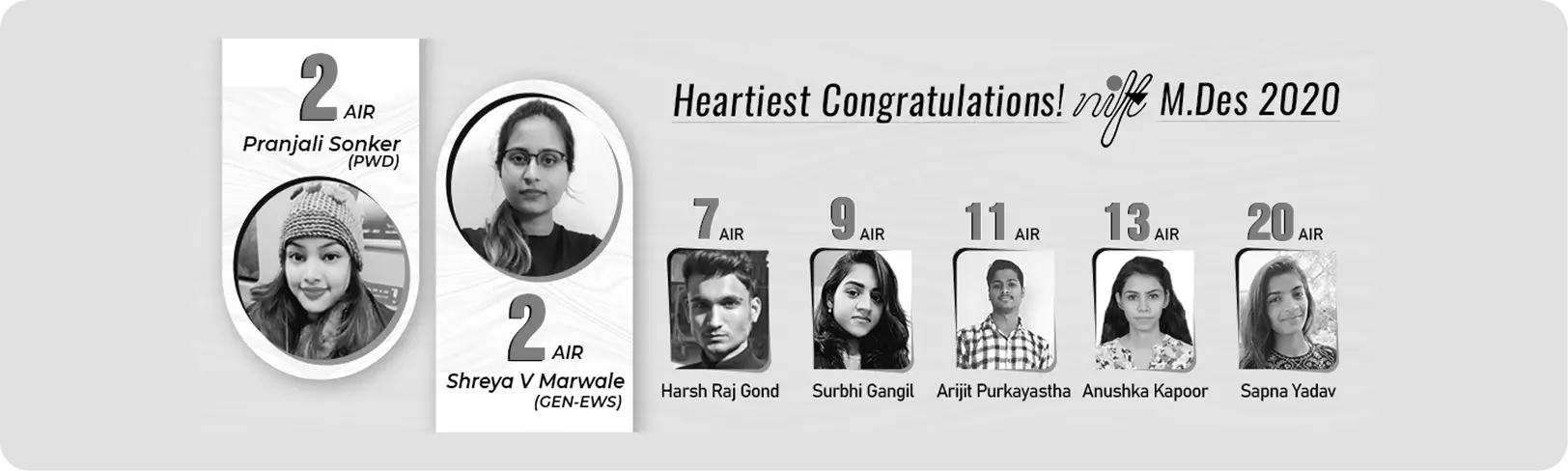
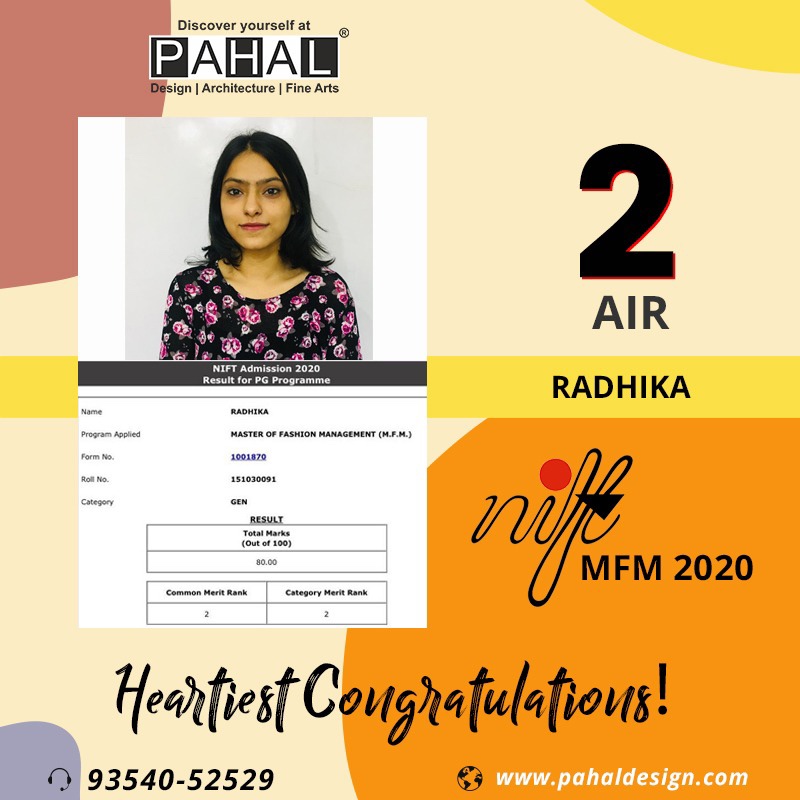
Pahal Design NIFT (MFM/M.Des/M.Ftech) Results
Last Merit Rank Admitted in 2018
Pahal Design Personal Interview Videos
Pahal Design Personal Interview Centres (Batch Starts every week)
NIFT Personal Interview (PI) 2026 – FAQs
Yes. The Personal Interview (PI) is mandatory for admission into MFM, M.Des, and M.FTech programmes after clearing the written exam.
The PI carries 30% weightage in the final selection process and plays a major role in determining your NIFT All India Rank (AIR).
The interview is conducted by a panel and usually focuses on:
- Career goals
- Academic background
- Knowledge of design / fashion / technology
- General awareness
- Creative thinking
- Communication skills
Typically, the interview lasts 15–25 minutes, depending on the panel and candidate profile.
Questions may include:
- Why do you want to join NIFT?
- Why this specific course (MFM / M.Des / M.FTech)?
- Career plans after NIFT
- Current fashion or design trends
- Situation-based or case questions
- Questions related to your graduation background
Yes, especially for:
- M.Des – Basic design thinking
- M.FTech – Technical understanding of textiles / engineering
- MFM – Business, branding & management awareness
Yes. NIFT conducts a case-study based Group Discussion to evaluate:
- Teamwork
- Leadership
- Problem-solving ability
Managerial skills
Absolutely. A strong PI performance can significantly boost your final rank — even if your written score is average.
You should prepare:
- Self-introduction
- Career goals
- Portfolio (for M.Des)
- Graduation subject knowledge
- Current industry trends
- Strengths & weaknesses
Portfolio is mainly relevant for M.Des candidates but is not mandatory for MFM and M.FTech.
NIFT evaluates:
- Clarity of vision
- Creativity
- Communication
- Awareness of industry
- Confidence
- Aptitude for the course
Effective preparation includes:
- Mock interviews
- Case study practice
- Industry awareness
- Profile analysis
- Communication training
Yes for continuity and practice coaching is required as other students will also give you competition.
Yes. Many successful candidates come from:
- Engineering
- Commerce
- Arts
- Science backgrounds
The key is demonstrating aptitude and clarity of purpose.
Yes. Your overall rank — influenced by PI — determines your campus preference allotment.