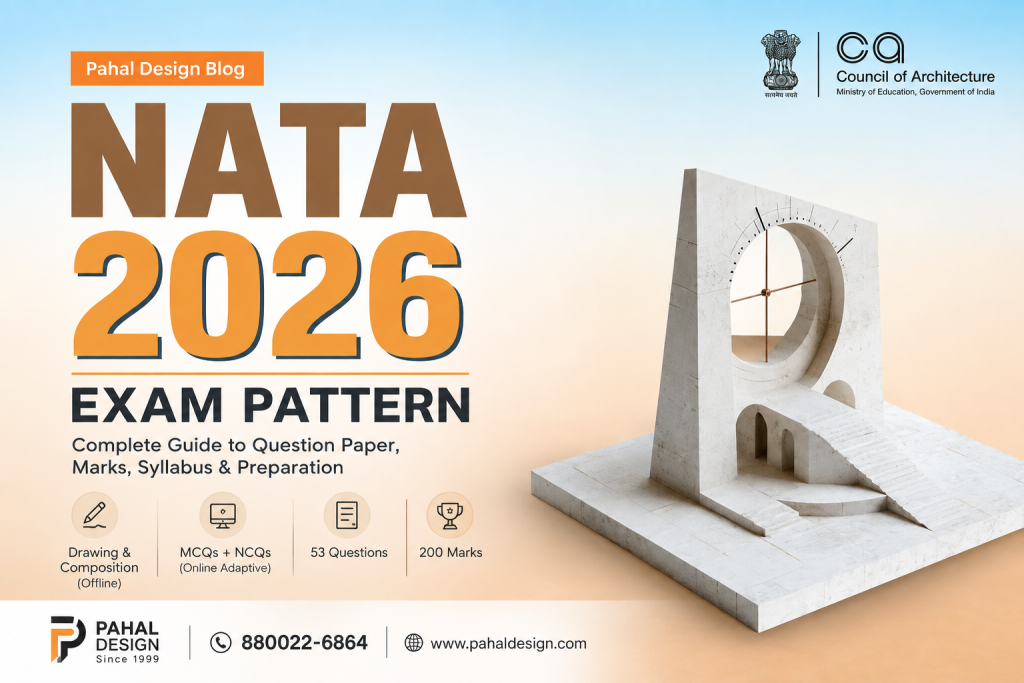
The NATA 2026 exam pattern is important for every student planning to pursue a Bachelor of Architecture (B.Arch) in India. Conducted by the Council of Architecture (CoA), the National Aptitude Test in Architecture evaluates a candidate’s drawing ability, visualisation, observation, logical reasoning, architectural awareness and overall aptitude for architecture.
For NATA aspirants, understanding the examination structure before beginning serious preparation can make a significant difference. The NATA 2026 question paper carries a total of 200 marks and is divided into two major parts: Drawing & Composition and online aptitude-based questions.
Here is a detailed breakdown of the NATA 2026 exam pattern, question distribution, syllabus and preparation strategy.
According to the announced pattern, NATA 2026 is structured into two parts:
Part A – Drawing & Composition
Part B – MCQs + NCQs
This combination tests both the candidate’s creative abilities and analytical aptitude, making balanced preparation extremely important.
Part A is an offline test carrying 80 marks. It consists of three different sections designed to evaluate creativity, drawing ability, visualisation and three-dimensional thinking.
Questions: 1
Marks: 25
Students may be required to create a visual composition and demonstrate an understanding of colour application, balance, proportion and visual aesthetics.
Preparation should focus on:
Questions: 1
Marks: 25
Medium: Black & White
This section evaluates fundamental drawing abilities, including:
Regular sketching practice can help students develop the speed and confidence required to complete this section effectively.
Questions: 1
Marks: 30
The 3D Composition section carries the highest marks in Part A.
Candidates may be required to create a three-dimensional composition or model using the material or kit provided during the examination.
Students should develop an understanding of:
This section is particularly important because architecture requires students to think beyond two-dimensional drawings and understand how forms interact with physical space.
Part B is an online adaptive examination carrying 120 marks.
The paper consists of:
42 MCQs + 8 NCQs = 50 Questions
Part B evaluates the candidate’s aptitude, reasoning, observation, architectural awareness and problem-solving capabilities.
Candidates should develop their ability to understand shapes, forms, patterns, directions and spatial relationships.
Practising mental rotation, 2D-to-3D visualisation, figure analysis and spatial puzzles can be useful.
This section tests the candidate’s ability to analyse information and reach logical conclusions.
Questions may involve:
Architecture awareness is particularly important for NATA aspirants.
Students should develop knowledge about:
Rather than memorising isolated facts, students should try to understand why important buildings and architectural movements are significant.
Candidates should stay updated with important national and international developments, particularly topics connected with:
Communication and comprehension skills are also tested. Students should strengthen vocabulary, grammar and their ability to understand written information accurately.
Architecture demands strong observation.
Students should practise identifying details in everyday environments, objects, buildings and visual compositions.
This section may evaluate a student’s understanding of aesthetics, functionality, relationships between objects and sensitivity towards design.
Rather than relying only on memorisation, students should develop the ability to analyse unfamiliar situations and find logical solutions.
Architecture aspirants should constantly ask:
Why is something designed this way, and how could it be designed better?
This approach can help build genuine design aptitude.
Students should revise fundamental mathematical and geometrical concepts relevant to aptitude and architecture.
Important areas may include:
| Section | Questions | Marks |
|---|---|---|
| A1 – Composition & Colour | 1 | 25 |
| A2 – Sketching & Composition | 1 | 25 |
| A3 – 3D Composition | 1 | 30 |
| Part B – MCQs + NCQs | 50 | 120 |
| Total | 53 | 200 |
The pattern clearly demonstrates that NATA preparation cannot focus only on drawing. Part B alone contributes 120 out of 200 marks, while Part A requires specialised creative and architectural aptitude.
A successful NATA 2026 preparation strategy should combine drawing practice, aptitude preparation and architectural awareness.
Students should regularly practise perspective drawing, composition, colour application and sketching while simultaneously working on logical reasoning, visual aptitude, mathematics and architecture-related general knowledge.
For the 3D composition component, practising with basic forms and model-making materials can help candidates develop spatial understanding.
Timed mock tests are equally important. Since both major parts have defined time limits, students must learn to balance accuracy, creativity and speed.
NATA is different from a conventional academic examination. Drawing, observation, visualisation and design thinking are skills that improve gradually through consistent practice.
Starting early gives students more time to:
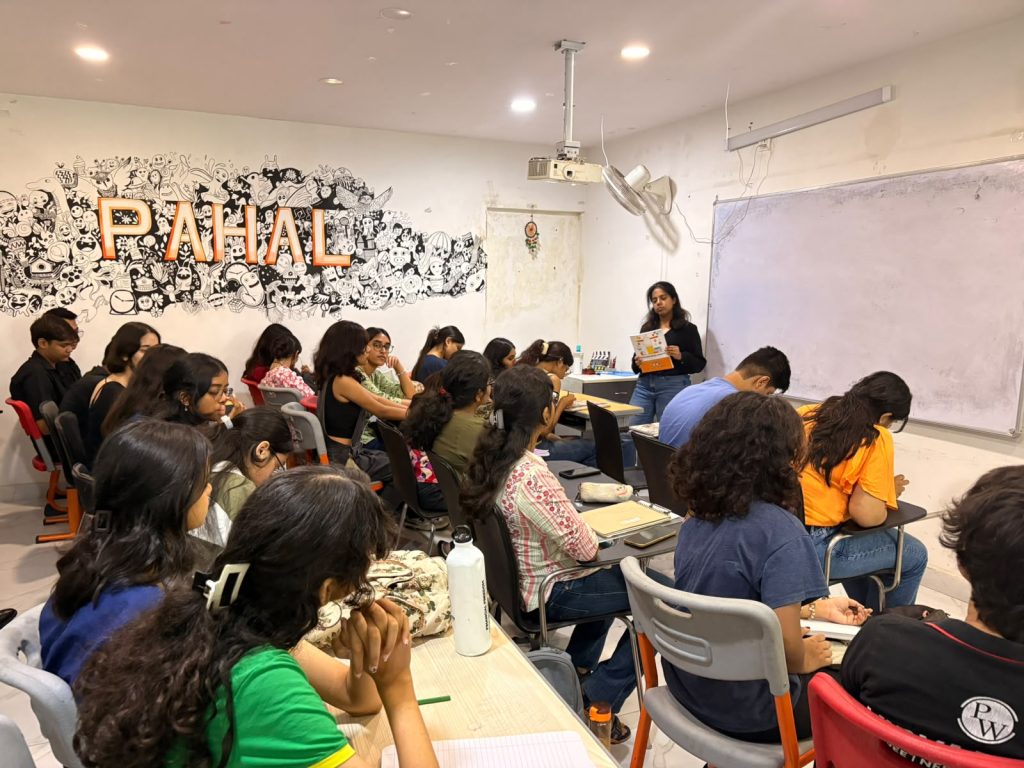
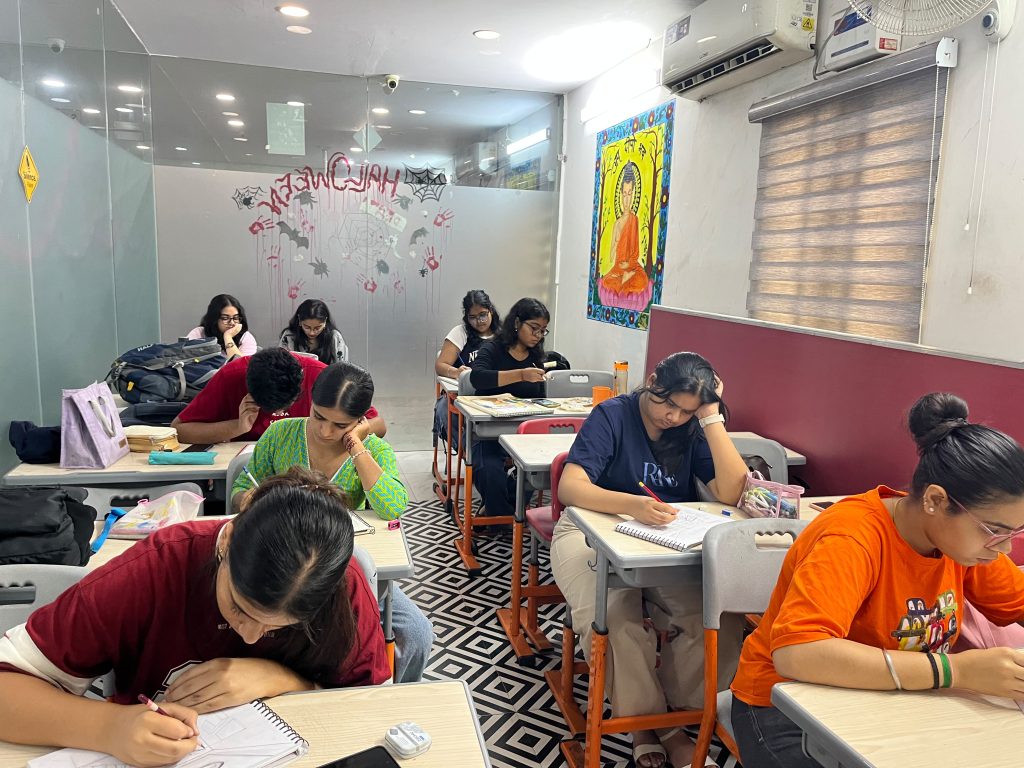
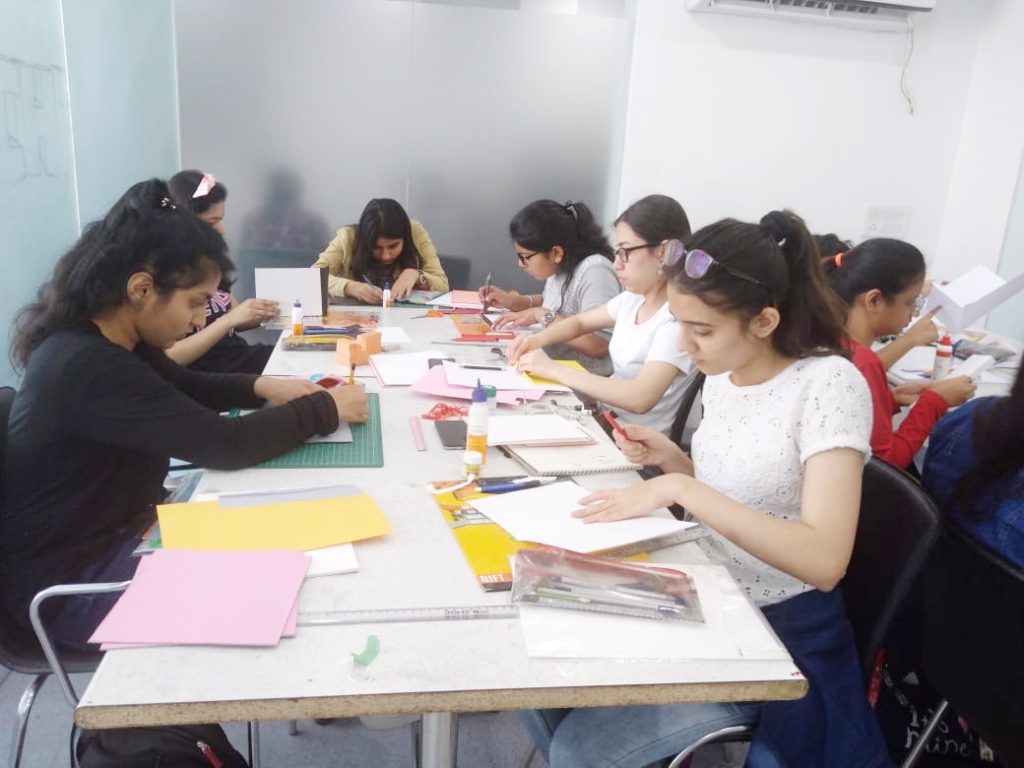
At Pahal Design, NATA aspirants are trained with a structured approach covering the major areas required for architecture entrance preparation.
The preparation focuses on drawing, sketching, perspective, composition, 3D visualisation, architecture aptitude, reasoning, observation and exam-oriented practice.
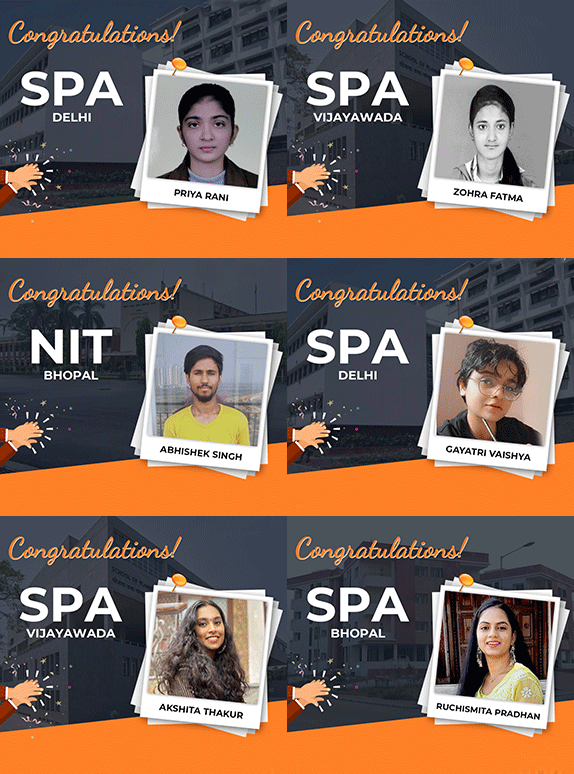
Students preparing for NATA and JEE Paper 2 B.Arch can benefit from systematic practice, faculty guidance, mock examinations and targeted preparation based on the latest examination requirements.
The objective is not simply to teach students how to draw, but to help them develop the observation, creativity, visualisation and problem-solving abilities required for architecture entrance examinations.
The NATA 2026 exam pattern gives substantial importance to both creative and aptitude-based abilities. With 80 marks for Drawing & Composition and 120 marks for MCQs and NCQs, candidates need a balanced preparation strategy.
Understanding the paper pattern early, practising consistently and developing strong visual and architectural thinking can give aspirants a significant advantage.
For students targeting B.Arch admission through NATA 2026, now is the right time to build a structured preparation plan and practise every component of the examination.
Pahal Design – NATA & Architecture Entrance Exam Preparation
Website: www.pahaldesign.com
Contact: 880022-6864